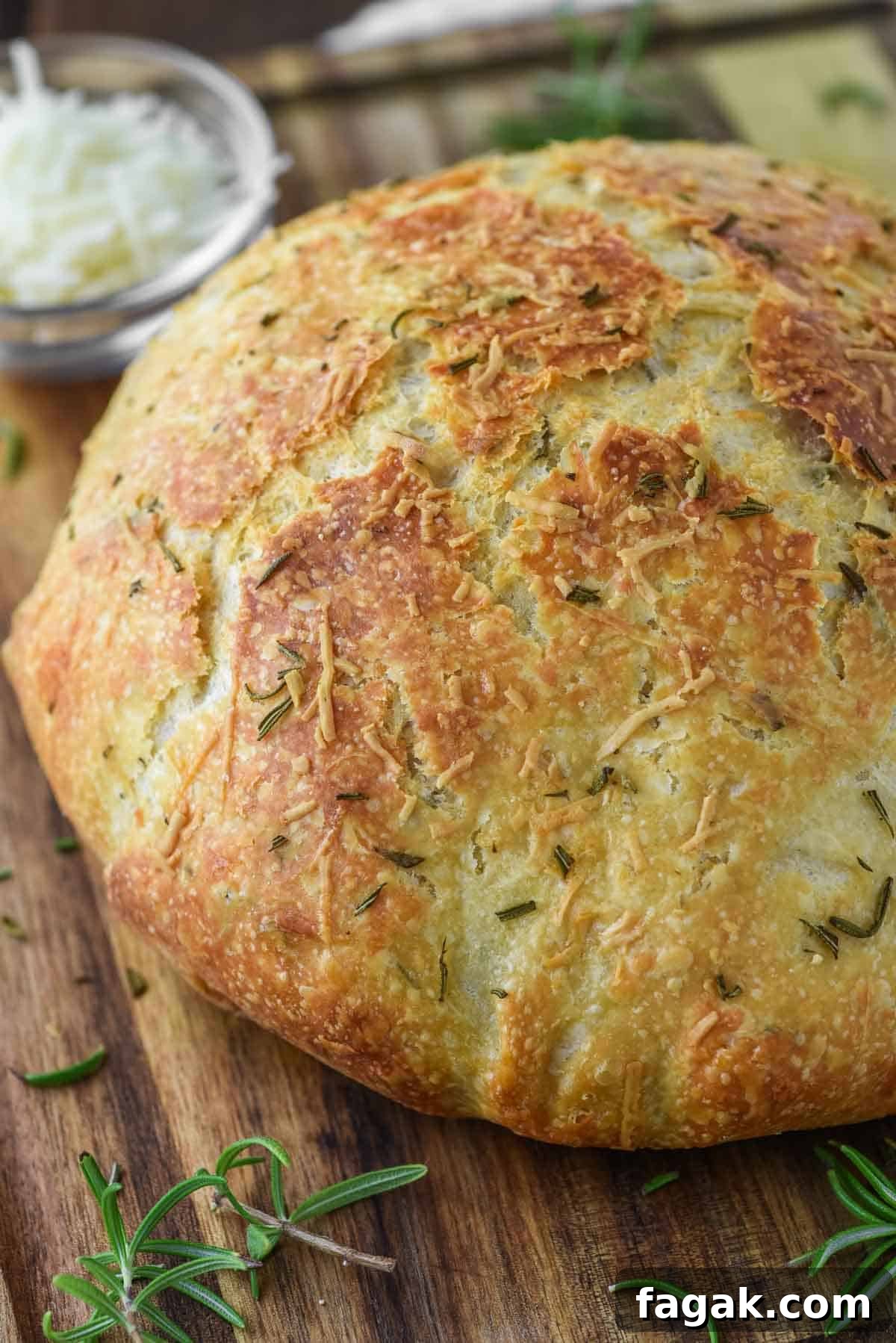
Upgrade your bread game with this effortless Dutch oven no‑knead Rosemary Parmesan bread — a fragrant, savory loaf that requires very little hands‑on time.
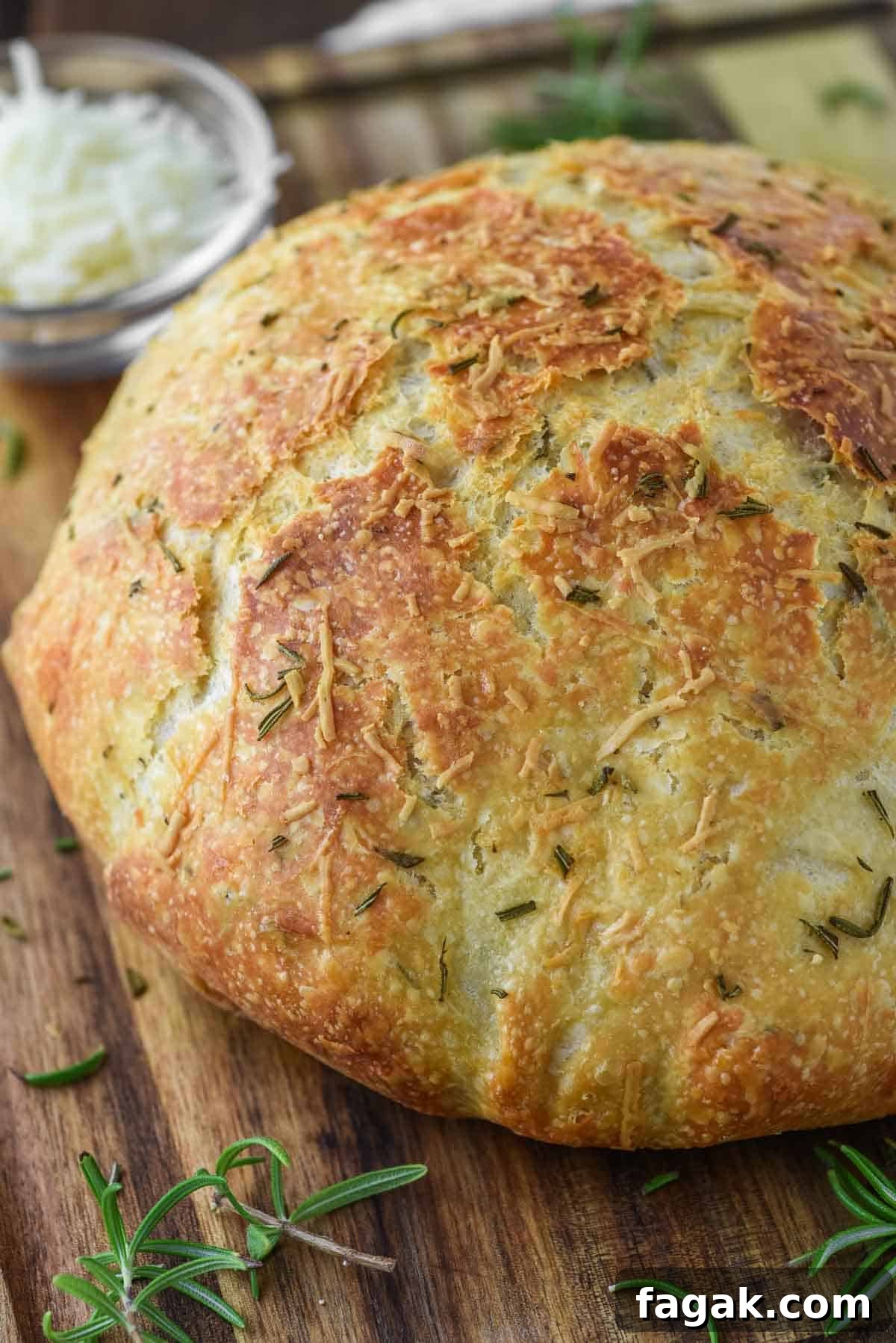
Few things smell as comforting as homemade bread baking in the oven. This rosemary Parmesan no‑knead loaf is one of the easiest ways to enjoy bakery‑style bread at home. It uses a long, slow fermentation instead of kneading, and baking it in a preheated Dutch oven creates a crisp, golden crust with a soft, tender crumb inside. The combination of fresh rosemary and freshly grated Parmesan adds an aromatic, savory depth that pairs beautifully with soups, salads, or simply buttered slices.
Why This Recipe Works
- Minimal effort — A wet, low‑yeast dough develops gluten through time rather than kneading, so the heavy lifting is mostly hands‑off.
- Dutch oven steam — The covered pot traps steam, producing a crisp crust and a well‑risen interior.
- Reliable results — Clear steps and generous resting time make this method forgiving for beginners and veterans alike.
- Delicious flavor — Fresh rosemary and nutty Parmesan blend for a fragrant, savory loaf that elevates simple meals.
Ingredient Notes
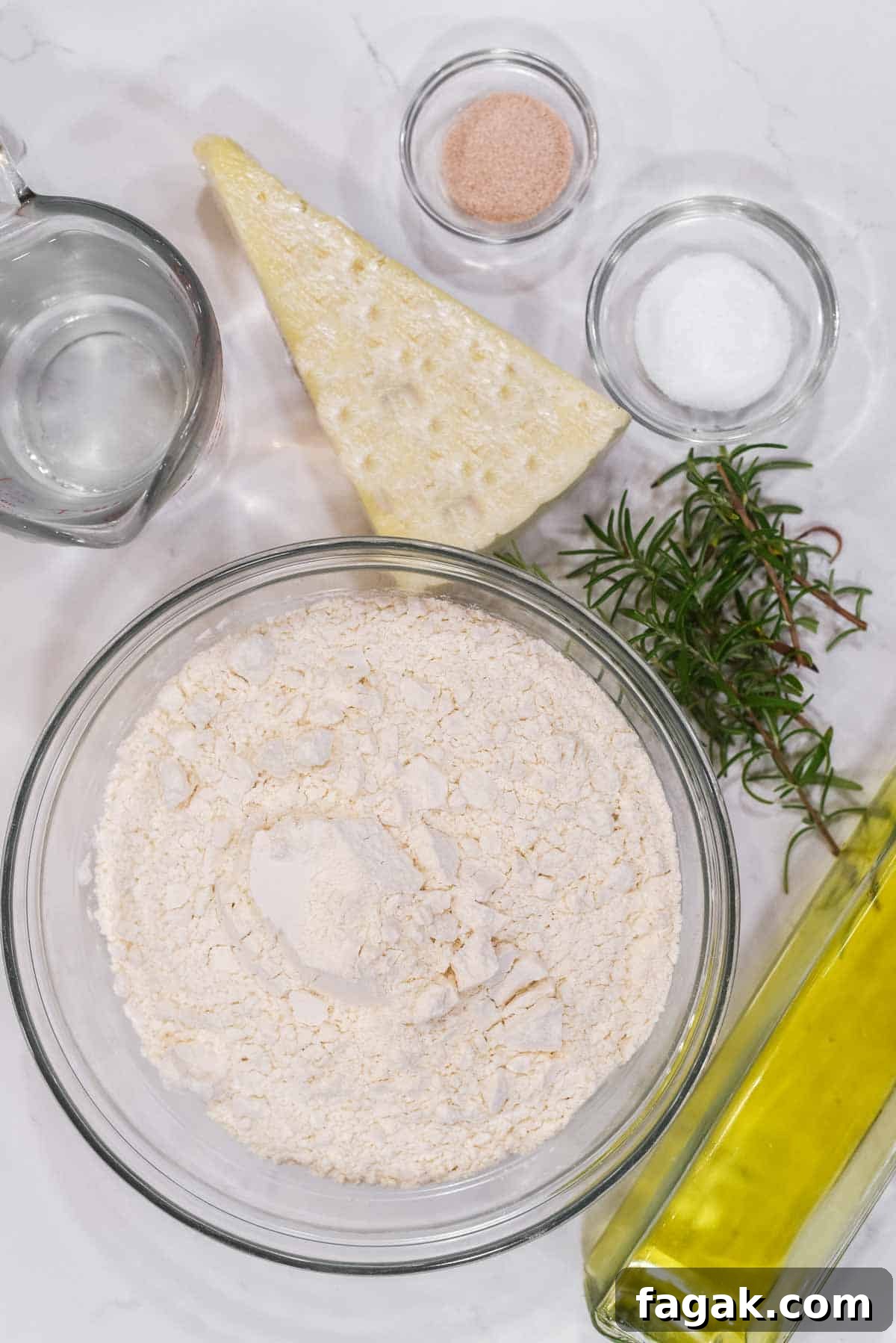
- All‑purpose flour — Provides the right protein level for structure and a tender crumb.
- Salt — Enhances flavor and supports gluten development. Use fine sea salt or kosher salt.
- Yeast — Active dry or instant yeast work. If using active dry yeast, dissolve in warm water first.
- Parmesan cheese — Freshly grated Parmesan delivers the best flavor and texture; avoid pre‑shredded blends that often include anti‑caking agents.
- Rosemary — Fresh rosemary gives the brightest aroma; if substituting dried, use less since it’s more concentrated.
- Warm water — About 105°F–110°F to wake the yeast without killing it and to help the dough hydrate.
- Olive oil — Brushed on before baking to help the toppings adhere and to add a little richness.
Step-by-Step Photos
The ingredient list and full instructions are in the recipe card below.
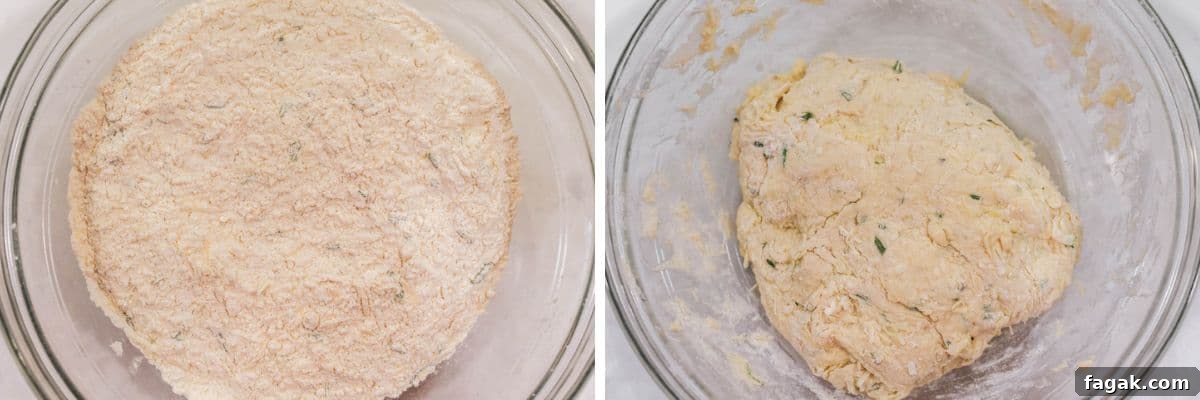
In a large bowl combine flour, salt, yeast, freshly grated Parmesan, and chopped rosemary. Pour in the warm water and stir until a wet, sticky dough forms.
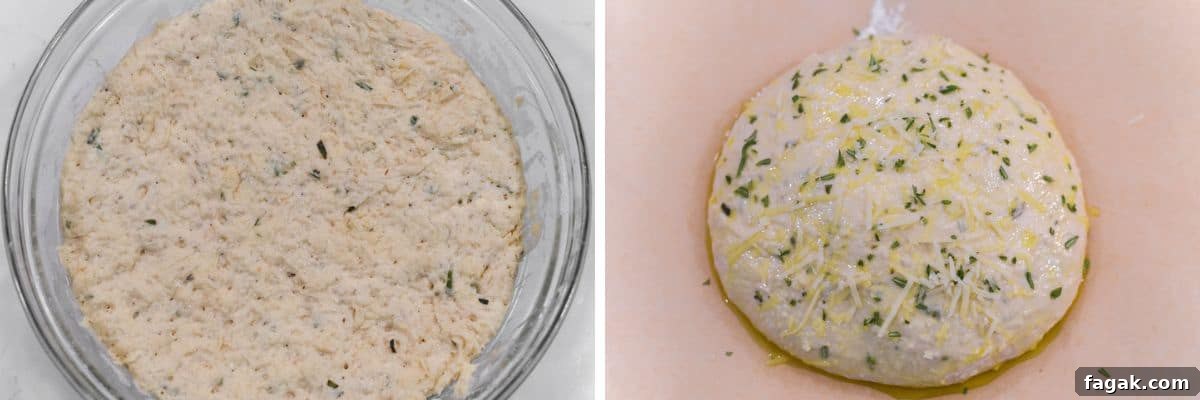
Cover the bowl and let the dough rest in a warm spot for 8–18 hours. The dough should rise, flatten slightly at the top, and develop bubbles; a longer rest usually improves flavor and texture.
Turn the dough out onto a well‑floured surface or a floured sheet of parchment. With floured hands, shape it into a loose ball. Cover and let rest 30 minutes while you preheat the oven to 450°F. Place a 2.75‑quart Dutch oven (lid on) in the oven to heat for 30 minutes.
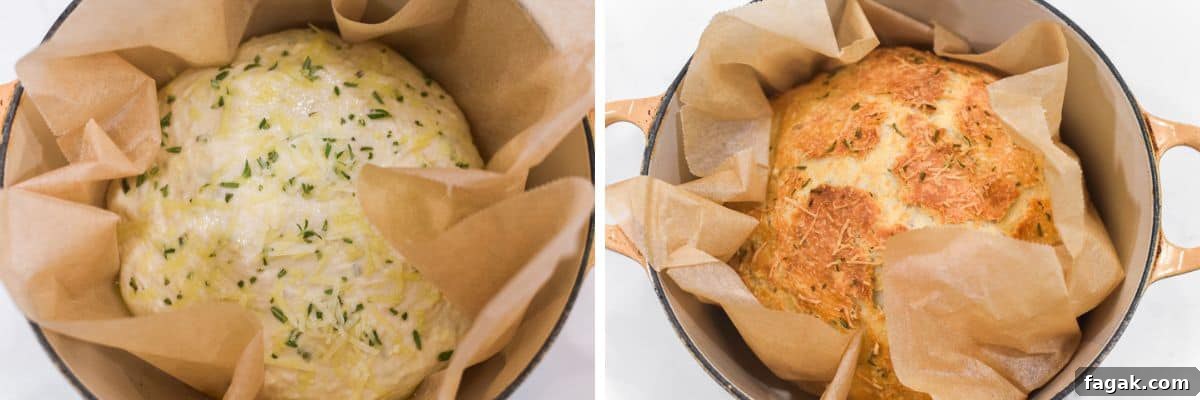
Brush the top of the rested dough with a little olive oil and sprinkle extra Parmesan and rosemary if desired. Carefully transfer the dough with the parchment into the hot Dutch oven, cover, and bake 45 minutes. Remove the lid and bake an additional 10–15 minutes until the crust is deep golden brown. Let cool slightly before slicing.
FAQs
No‑knead bread relies on long fermentation to form gluten strands and develop flavor. A wet dough and extended resting time allow gluten to form without intensive kneading.
A compact Dutch oven around 2.75 quarts works well for this recipe; very large or very small pots can change baking times and crust formation.
You can rest the dough up to 24 hours, but aim for at least 8 hours. Around 18 hours is a good balance for flavor and rise.
If you don’t have a Dutch oven, use a deep oven‑safe pot, a heavy skillet with a lid, or an oven‑safe casserole covered with foil. Ensure any vessel tolerates 450°F.
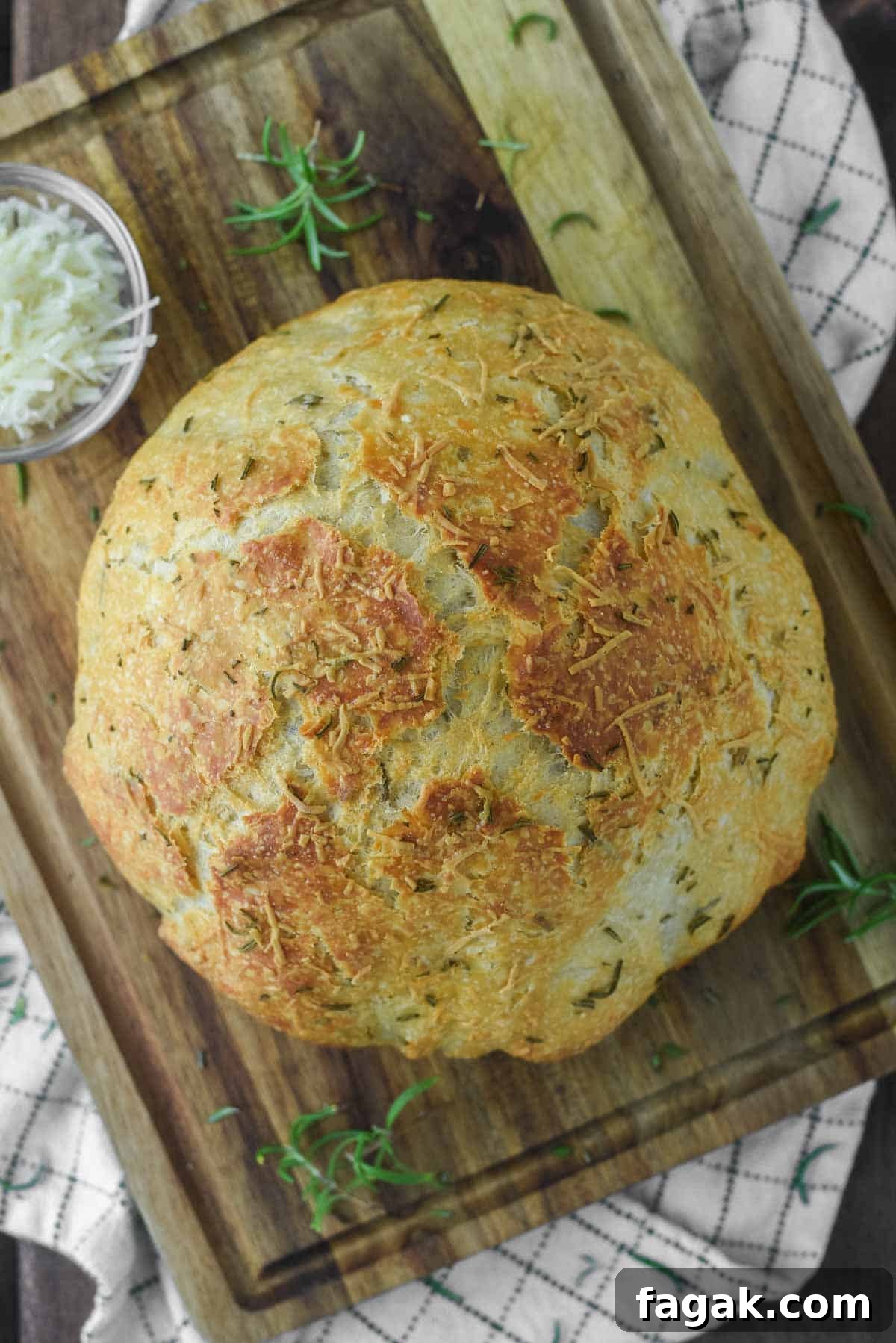
The crust should be a deep golden brown and the loaf will sound hollow when tapped on the bottom. An internal temperature of about 209°F (≈98°C) indicates doneness.
For best texture, eat soon after baking. Store at room temperature wrapped in foil or plastic for up to two days for best quality, up to five days if needed. Freeze up to three months and thaw at room temperature before serving.
Pro Tips / Recipe Notes
- You can substitute up to half the flour with whole wheat; add about 2 teaspoons extra water per cup of whole wheat to avoid dryness.
- Always use freshly grated Parmesan for superior flavor and texture.
- If using dried rosemary, cut the amount to roughly one‑third of the fresh measurement because dried herbs are more concentrated.
- Do not skip using parchment paper when moving the dough — the sticky dough is much easier to handle on parchment.
- Preheating the Dutch oven is key to achieving a rustic, crackly crust.
Other Bread Recipes
-
Irish Potato Bread
-
Cheese Rolls
-
No‑Knead Dutch Oven Bread
-
Brazilian Cheese Bread



If you try this rosemary Parmesan bread, please share how it turned out in the comments below. I love seeing photos and hearing substitutions or variations home bakers discover.

Rosemary Parmesan Bread
Ryan Beck
Pin Recipe
Ingredients
- 3 cups all‑purpose flour, plus more for shaping
- 1 ½ teaspoon salt (or 2 teaspoons sea salt)
- 1 teaspoon active dry yeast
- 1 ½ cups freshly grated Parmesan, plus more for topping
- 1 ½ tablespoons fresh rosemary, finely chopped, plus more for topping
- 1 ½ cups warm water (105°F–110°F)
- ½ tablespoon olive oil
Instructions
- In a large bowl mix the flour, salt, yeast, Parmesan, and rosemary. Add the warm water and stir with a spoon until a wet, sticky dough forms.
- Cover the bowl and let rest in a warm spot 8–18 hours, until the dough has risen and developed bubbles.
- Preheat oven to 450°F. Place a 2.75‑quart Dutch oven (lid on) inside the oven to heat for 30 minutes.
- Turn the dough out onto floured parchment and shape into a ball with floured hands. Cover and let rest 30 minutes. Brush with olive oil and top with extra Parmesan and rosemary.
- Carefully transfer the dough on the parchment into the hot Dutch oven. Cover and bake 45 minutes. Remove the lid and bake 10–15 more minutes until golden brown. Cool slightly before slicing.
Notes
- You can replace up to half the flour with whole wheat; add about 2 teaspoons extra water per cup of whole wheat flour.
- Freshly grated cheese tastes best.
- If using dried rosemary, use roughly one‑third of the fresh amount.
- Use parchment when transferring the dough — it’s sticky and much easier to handle with parchment.
- Preheating the Dutch oven helps achieve a rustic crust. The bread is done when the internal temperature reaches about 209–210°F.
Nutrition
Leave a comment or share a photo of your loaf.