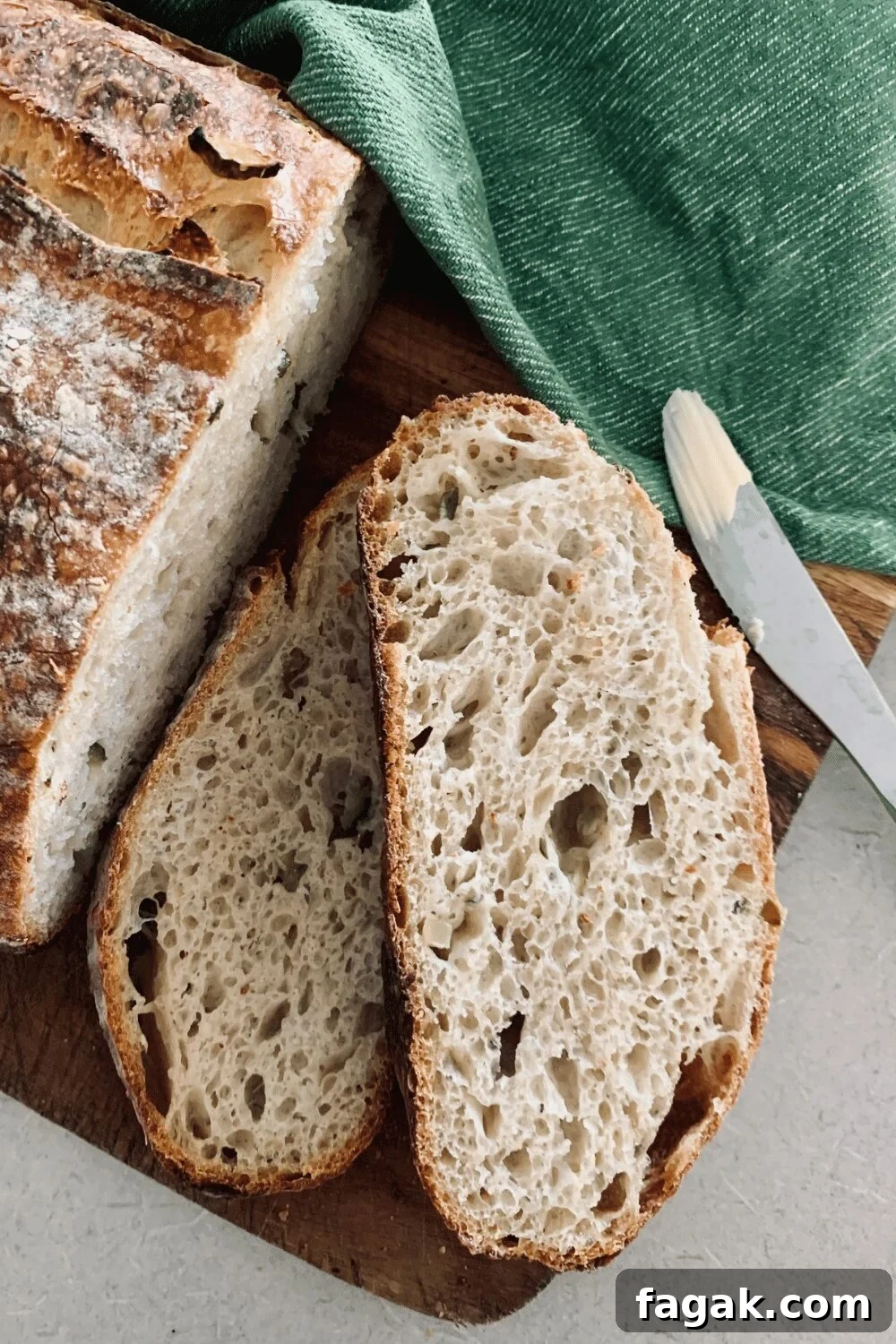
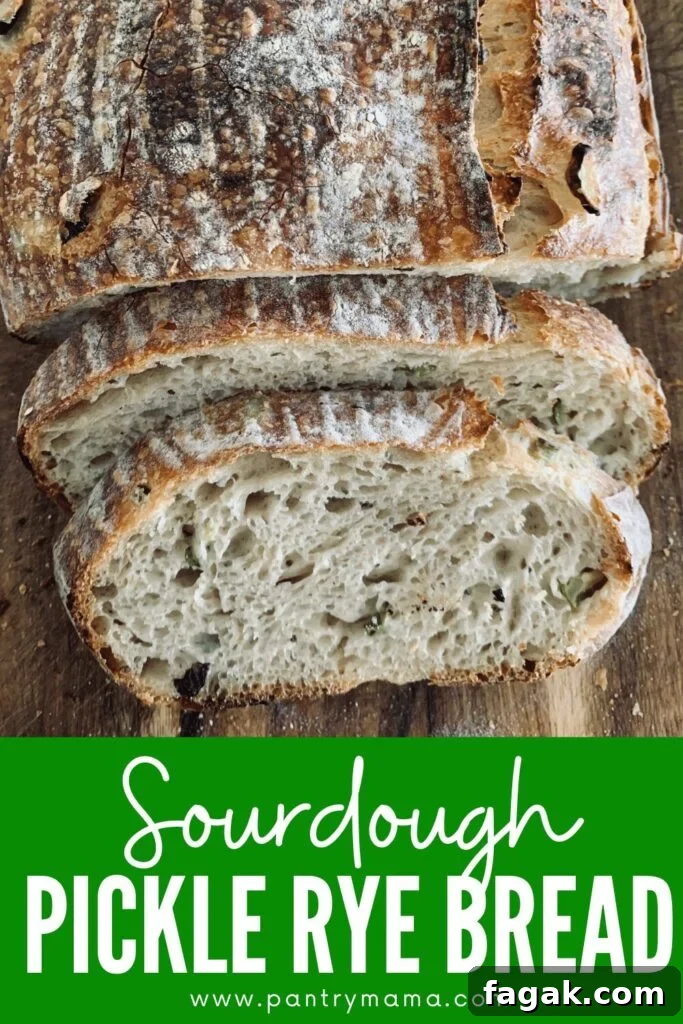
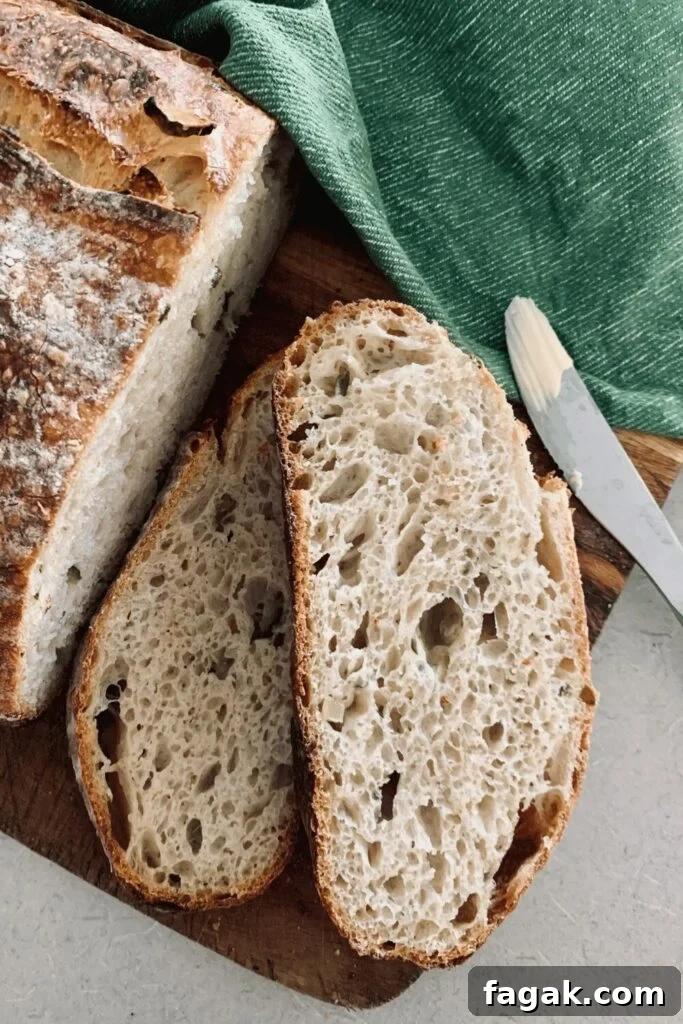
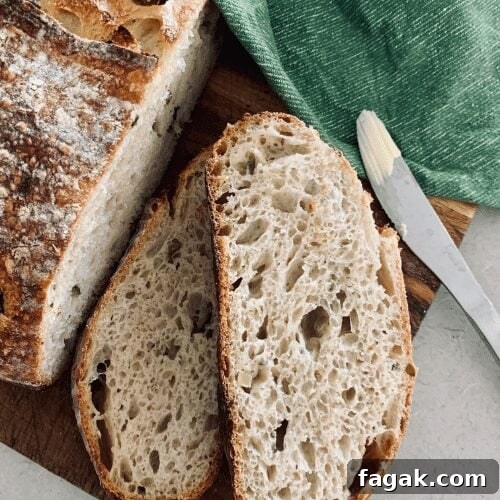
Pickle Sourdough Rye Bread is a flavorful loaf made for lovers of dill-cucumber pickles. This rustic sourdough has a distinctive tang from the pickle juice, rounded out by the earthy depth of rye and whole wheat flour. The balance of savory, slightly sweet, and crisp crust makes it ideal on its own, in grilled cheese sandwiches, or layered with cold cuts and extra cheese.
Which Pickles to Use?
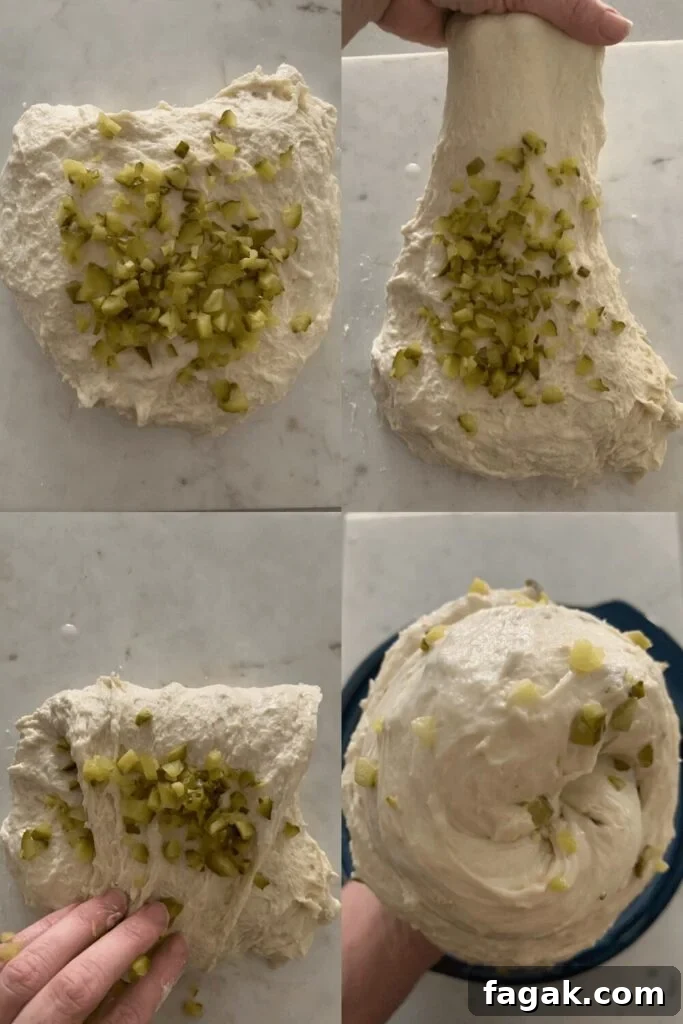
I recommend whole cucumber dill pickles for this recipe. Dice them finely so they distribute evenly through the dough. Whole pickles let you control the size of the pieces in the loaf, and the dill flavor complements the rye beautifully.
If you like, add a small amount of the jarred dill for extra herbiness — just mince it well so you don’t end up with clumps. The sugars in the pickle brine help create a crisp, thin crust when combined with the whole-grain flours. If you have extra dill pickles, this flavor also works well in focaccia-style bakes and cheddar breads.
Flour Substitutions for Pickle Sourdough Rye Bread
This recipe blends bread flour with rye and whole wheat for flavor and structure. You can adjust the flour mix to suit your taste and experience:
- You can bake the bread with only bread flour — if you do, reduce the water to about 150 g (for a total liquid of 350 g including the pickle juice).
- Use up to 250 g whole wheat in place of some bread flour if you prefer more whole-grain character. Whole wheat adds flavor and nutrition but can affect dough handling.
- Increasing rye above 100 g will intensify the rye flavor but will make the dough stickier and more challenging to handle. More than roughly 20% rye can reduce oven spring.
Will It Be Too Salty?
Despite using pickle juice as part of the liquid, this bread isn’t overly salty. If you prefer a milder loaf, you can omit the extra salt in the recipe or reduce it slightly. Taste preferences vary, so adjust the seasoning to suit your palate.
If you want more ideas for add-ins and flavor combinations for sourdough, explore flavored additions and variations to customize your bakes.

Pickle Sourdough Rye Bread Recipe
Equipment
- Mixing Bowl
- Banneton
- Dutch Oven
Ingredients
- 200 g Pickle Juice
- 170 g Water
- 50 g Active Sourdough Starter
- 350 g Bread Flour
- 50 g Whole Wheat Flour
- 100 g Rye Flour
- 3 g Salt
- 150 g Finely diced dill pickles
Instructions
-
Autolyse / Premix: Weigh the starter, water, pickle juice, flours, and salt. Mix briefly—use the end of a wooden spoon to combine until the dough is just brought together. Cover and rest about 1 hour; the dough will be shaggy.
-
Forming the Dough: Work around the bowl, stretching the dough up and folding it over until a smooth ball forms. About 20–25 folds should be sufficient. Cover and rest 30 minutes.
-
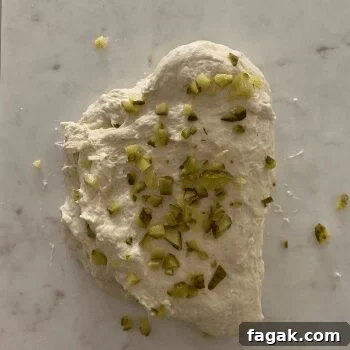
Stretch & Fold (Add Pickles): Perform your first set of stretch-and-folds without the pickles. Add the diced dill pickles on the second or third set so they incorporate evenly. Aim for four sets total with 15–30 minutes between sets. You can do these in the bowl or on the bench—whichever you prefer.

-
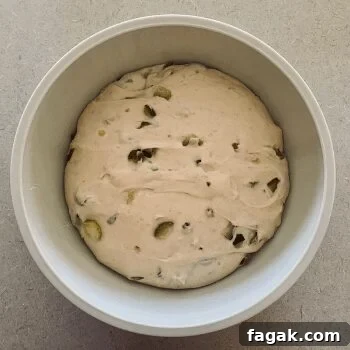
Bulk Ferment: Cover and let the dough ferment. Time depends on room temperature—warmer homes speed fermentation, cooler ones slow it. Stop the bulk when the dough has just about doubled and shows large bubbles.
-
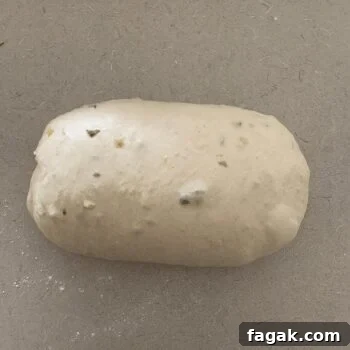
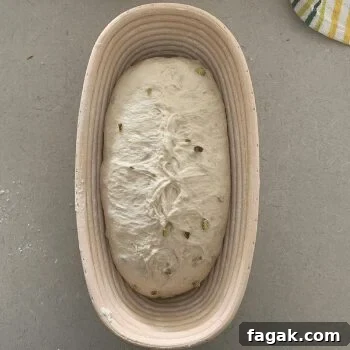
Shaping: Shape the dough to create surface tension. A batard works well, but shape as you like. Place the shaped dough in a banneton or similar proving basket.
-
Cold Ferment: Cover the banneton loosely and refrigerate for at least 5 hours and up to 36 hours. Cold fermentation deepens flavor—longer is generally better within that range.
-
Preparing to Bake: Preheat your oven to 230°C (450°F) and place the Dutch oven inside to heat for about an hour. Keep the dough cold until the last moment for better oven spring.
-
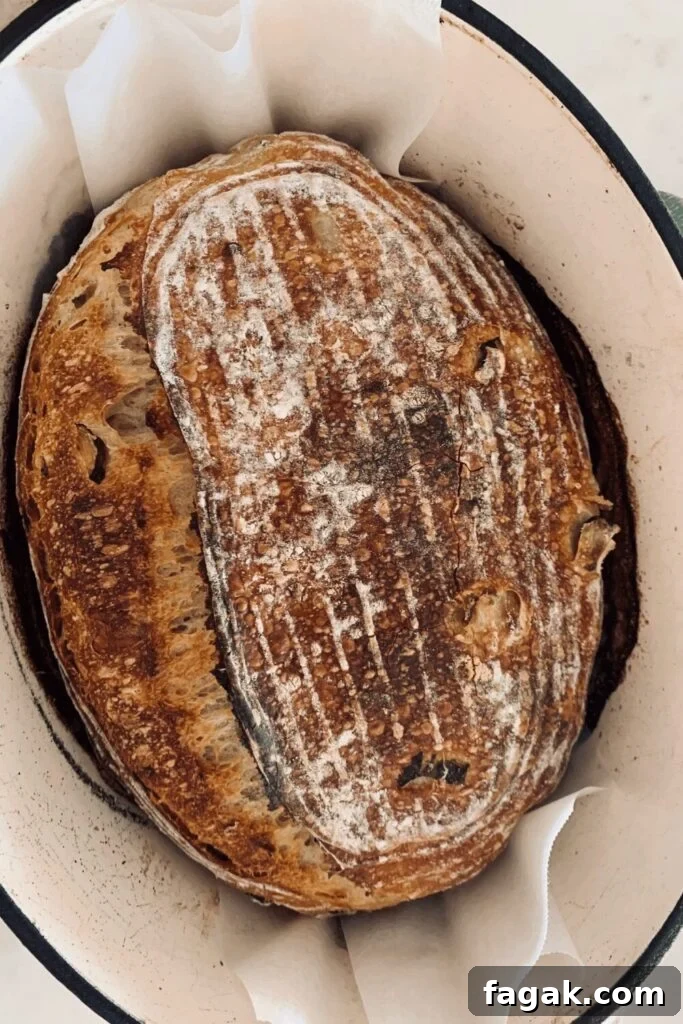
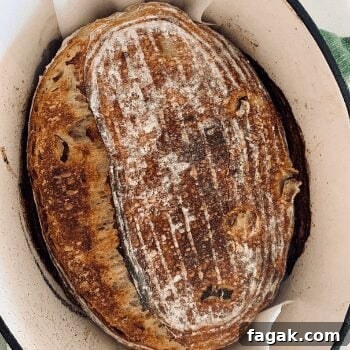
Baking: Transfer the cold dough onto parchment, score the top, then place it into the preheated Dutch oven using the paper as a sling. Cover and bake 30 minutes at 230°C (450°F) with the lid on, then remove the lid and bake another 10–15 minutes at 210°C (410°F) until well browned. Optional: spritz the dough with water before covering for extra steam.
-
Finishing: Remove the loaf from the Dutch oven and cool on a wire rack for several hours (4–6 is best) before slicing to allow the crumb to set.
Notes
- Starter: This recipe assumes you have an active sourdough starter fed a few hours before you begin. Use a well-risen, bubbly starter for best results.
- Stretch & Folds: If you perform stretch-and-folds on the bench, mist the surface with water rather than flour. The dough can be a bit sticky from the rye and pickle moisture, but it should still be manageable.
- Bulk Fermentation: Fermentation time varies with temperature. In a warm home the bulk can finish within a few hours; in a cool home it may take much longer. Aim to stop bulk when the dough has just doubled and shows large bubbles to avoid over-fermentation. Using less starter (for example 25 g) will slow fermentation if needed.
- Baking Tips: If the loaf base risks burning, place a baking sheet on a lower rack beneath the Dutch oven. If you suspect the crumb isn’t fully baked, turn off the oven and place the loaf directly on the rack with the door ajar for a few hours. Allow the bread to cool several hours before slicing.
Nutrition
Nutrition information is an approximation and should be used as a guide only.
Like this? Rate and comment below!