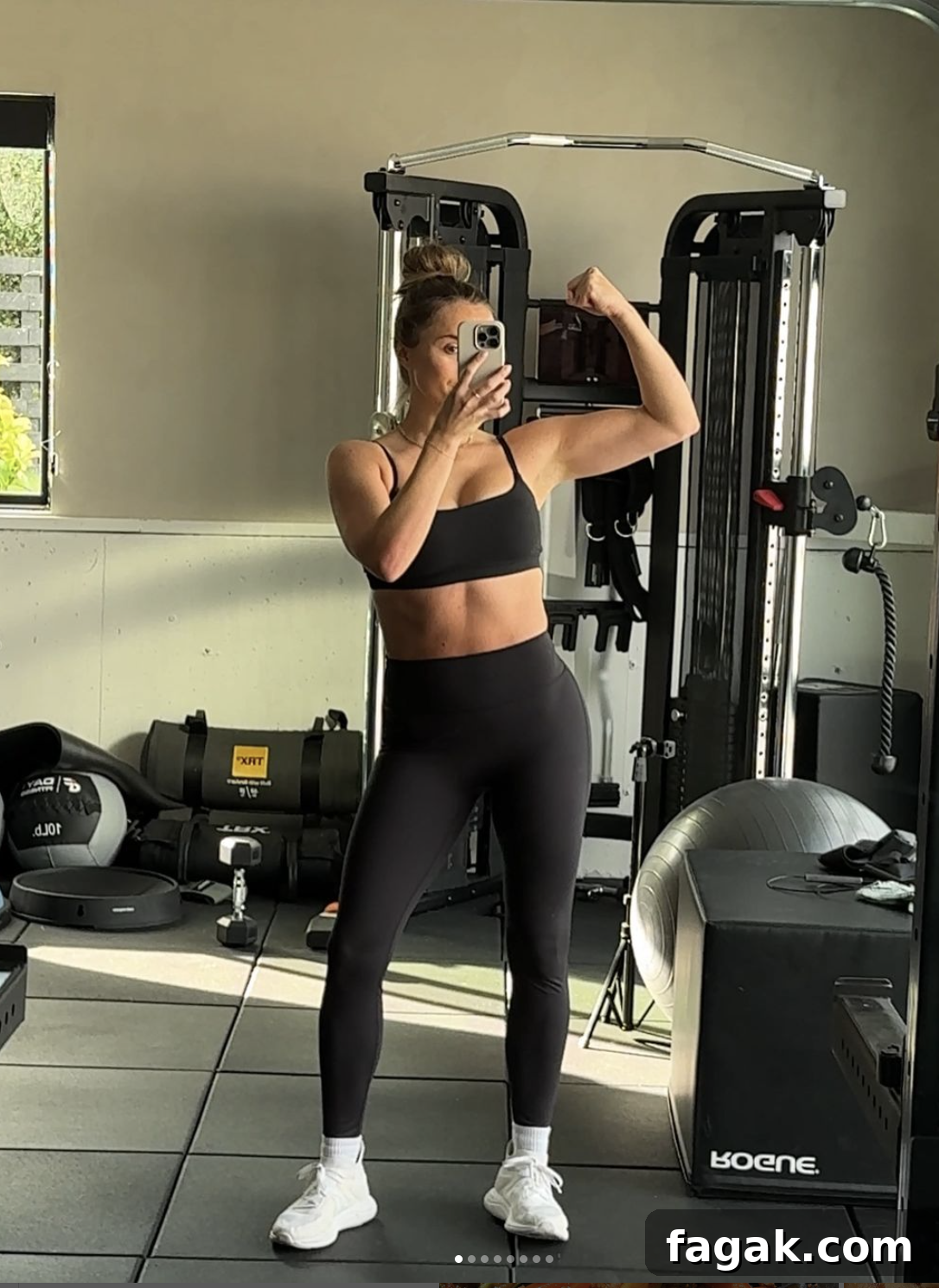
One key factor in avoiding plateaus and reaching your goals is progressive overload.
My gym-based fitness guide GOOD // SWEAT STRENGTH follows progressive overload style training across an 8-week program. Progressive overload means gradually increasing the stress (intensity or difficulty) placed on the body during exercise so you can keep progressing. I prefer this approach because it prevents stagnation—by consistently changing a training variable, your body continues adapting to fresh challenges and doesn’t get comfortable with the same stimulus.
What you should know about progressive overload:
- Increase stress gradually—aim for small weekly increments, often less than a 10% increase.
- Intentionally adjust different variables to prevent plateaus. Four key variables are: reps, endurance, resistance, tempo.
- Reduces injury risk—gradual increases help avoid overloading a single muscle group suddenly.
- Prevents boredom—regularly changing exercises, rep schemes, and difficulty keeps workouts engaging.
- Supports safe, sustainable progress—changes may be subtle week to week, but they allow longer-term gains with lower risk of burnout or injury.
How GOOD // SWEAT STRENGTH uses progressive overload:
When designing and testing the Strength guide, I deliberately adjusted reps and sets each week to produce steady increases in training stimulus. Weeks 1–4 focus on rep manipulation to build a foundation for muscle growth. In Weeks 5–8, endurance and tempo become more prominent as workouts become slightly longer and more challenging.
For example, a simple weekly increment used throughout the program looks like this:
Week One — Reps 10 | Sets 3
Week Two — Reps 12 | Sets 3
Another method used to avoid plateaus and increase total lifting capacity is employing Pyramid and Reverse Pyramid sets. Pyramid sets begin with a lighter weight and higher reps to warm the muscles and reinforce good technique, then progressively increase the weight while lowering the rep count (for example: 12 reps at a lighter weight, 10 reps at a low-medium weight, 8 reps at medium-hard, 6 reps at a challenging weight). Reverse Pyramid sets work in the opposite way: start with fewer reps at your heaviest workable weight, then increase reps while reducing weight across subsequent sets. Combining both pyramid styles helps you safely increase strength and adapt your nervous system and muscles to heavier loads over time.
If you have questions, drop them in the comments and tell me what topic you want a deeper dive on next.