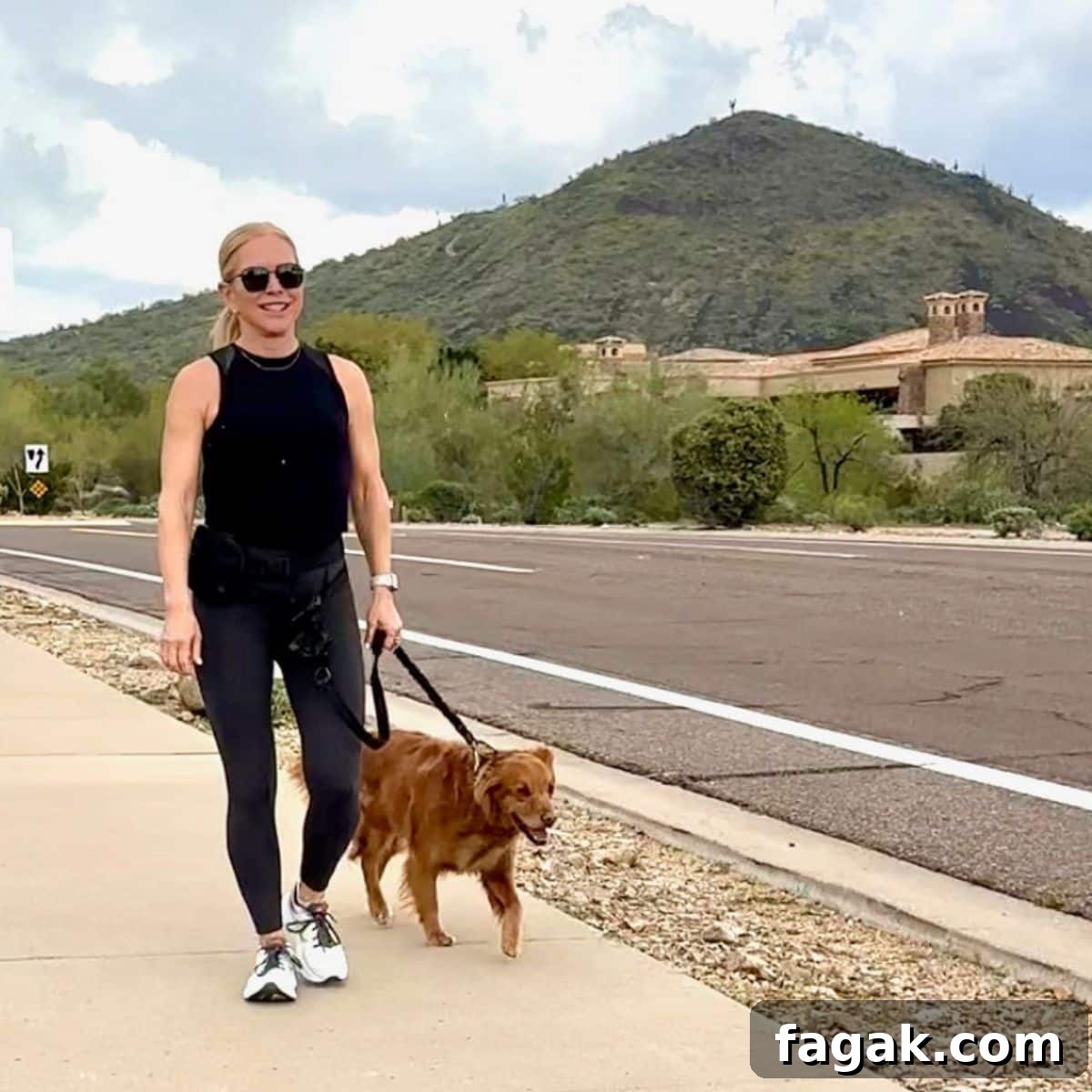
Let’s be honest—many women in midlife don’t want to jump, sprint, or do burpees anymore. And that’s perfectly fine. If traditional HIIT feels too intense or your joints protest, you’re not alone. That’s why Interval Walking Training (IWT) is such a great option.
It’s walking with purpose.
You alternate between brisk and moderate paces, turning an ordinary walk into a fat-burning, heart-healthy workout that’s genuinely doable. No special equipment. Less impact. Real results.
HIIT has its place depending on your fitness level, but if jumping and sprinting aren’t for you, IWT might become your favorite routine.
As a personal trainer and a woman in midlife, IWT is a weekly staple for me.
What Is Interval Walking Training (IWT)
IWT blends the accessibility of regular walking with the benefits of interval training. You simply switch between faster-paced walking and slower recovery periods.
You’re still walking—great for your joints—but you’re also strategically increasing effort to boost fitness and results.
Here’s a beginner-friendly example:
- Warm-up: 3–5 minutes at an easy pace
- Intervals: 1 minute of brisk walking (a pace where talking becomes challenging), then 2 minutes of moderate walking (where chatting feels easy)
- Repeat the cycle for 20–30 minutes
- Cool-down: 3–5 minutes of relaxed walking
Simple: walking with an intentional push.
Keep reading for a free workout with me below.
Benefits of Interval Walking Training
IWT delivers a powerful, joint-friendly way to boost metabolism, improve cardiovascular health, and increase endurance—making it an excellent fat-burning option for women over 50.
1. Low-Impact, High-Reward
Walking is accessible and sustainable. Add intervals and you improve heart health, calorie burn, and endurance without stressing knees, hips, or back. If joint stiffness is an issue, IWT keeps you active without causing extra pain.
2. Boosts Cardiovascular Health
Alternating paces challenges your heart and lungs and can improve VO2 peak—the measure of how well your body uses oxygen during exercise. A higher VO2 peak means better endurance and overall fitness.
3. Burns More Calories (Even After You Finish)
Interval training produces an afterburn effect—Excess Post-Exercise Oxygen Consumption (EPOC)—so your body keeps burning calories after the workout as it recovers. That makes your training time more efficient.
4. Improves Strength and Mobility
Brisk walking recruits leg muscles, glutes, core, and stabilizers, supporting balance and functional strength. This helps with everyday activities like walking hills, carrying groceries, or keeping up with grandkids. Including flexibility and mobility work enhances these benefits.
5. Easy to Modify and Progress
IWT adapts to any fitness level. Increase intensity by lengthening fast intervals, adding hills, or using a weighted vest when ready. These simple progressions keep workouts challenging and effective.
How To Start Interval Walking Training
Starting is easy—no equipment required. Lace up and try this approach:
- Start slow: Begin with 30 seconds brisk, then 1–2 minutes slower recovery.
- Warm-up and cool-down: Spend 5–10 minutes at an easy pace before and after.
- Find your “fast”: It’s a brisk power walk that makes conversation slightly harder—not a sprint.
- Use a timer: A simple stopwatch, fitness tracker, or phone timer helps you stick to intervals.
- Be consistent: Aim for 2–3 sessions per week, each about 15–30 minutes.
- Wear proper shoes: Good walking shoes with support and cushioning reduce strain and improve comfort.
Adapting Interval Walking Training to Your Fitness Level
IWT scales easily to match your fitness. Try these guidelines:
Beginner: Short fast intervals (30–60 seconds) with longer recovery. Focus on effort, not speed.
Intermediate: Use a 1:1 ratio (1 minute fast, 1 minute slow) or add incline walking for a greater challenge.
Advanced: Lengthen fast intervals, shorten recoveries, add a weighted vest, or include bodyweight moves during recovery periods.
Why Interval Walking Training Works for Women Over 50
Having experienced pregnancy, perimenopause, and postmenopause—and having coached thousands of women—I know consistency beats intensity. Walking is familiar and enjoyable, which makes it easier to maintain over time.
IWT upgrades a simple walk into an effective workout that supports heart health, metabolism, strength, and mood—without harsh impact or excessive fatigue. It’s practical, efficient, and empowering.
If you’re a midlife woman seeking a sustainable way to feel stronger, more energized, and confident, give IWT a try. It’s straightforward, adaptable, and it works.
Want to walk with me? Try the free 20-minute interval walking workout linked below.