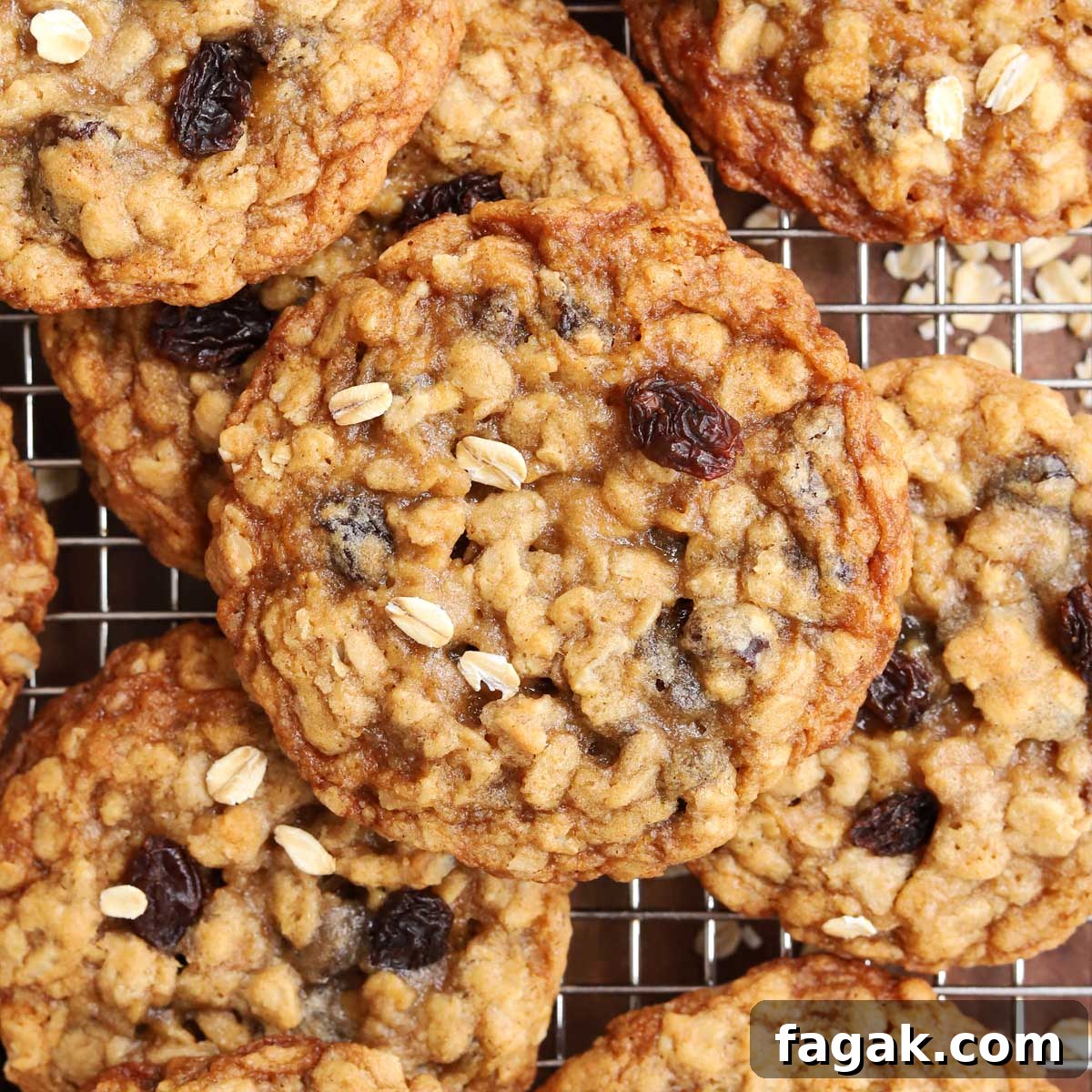
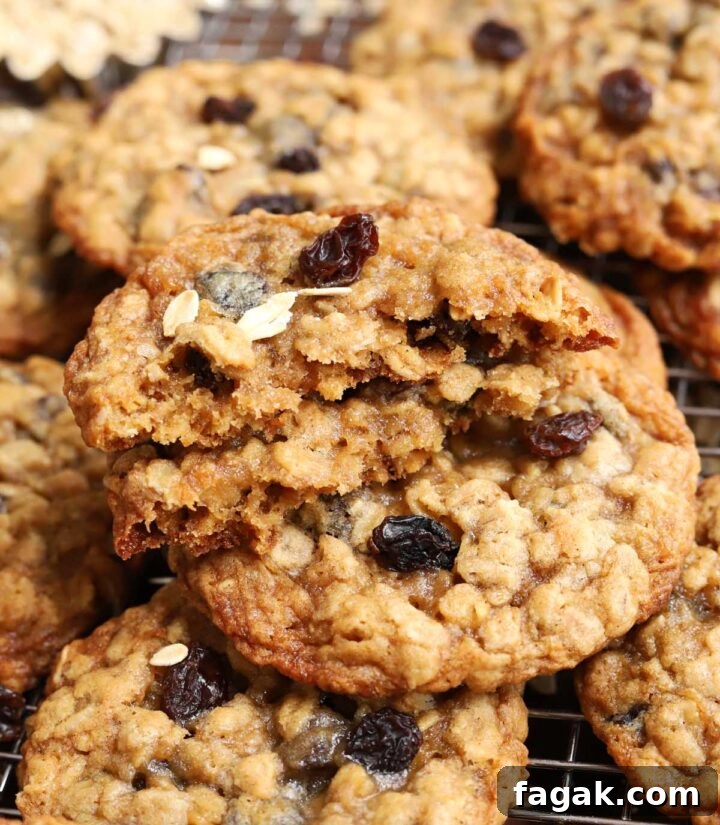
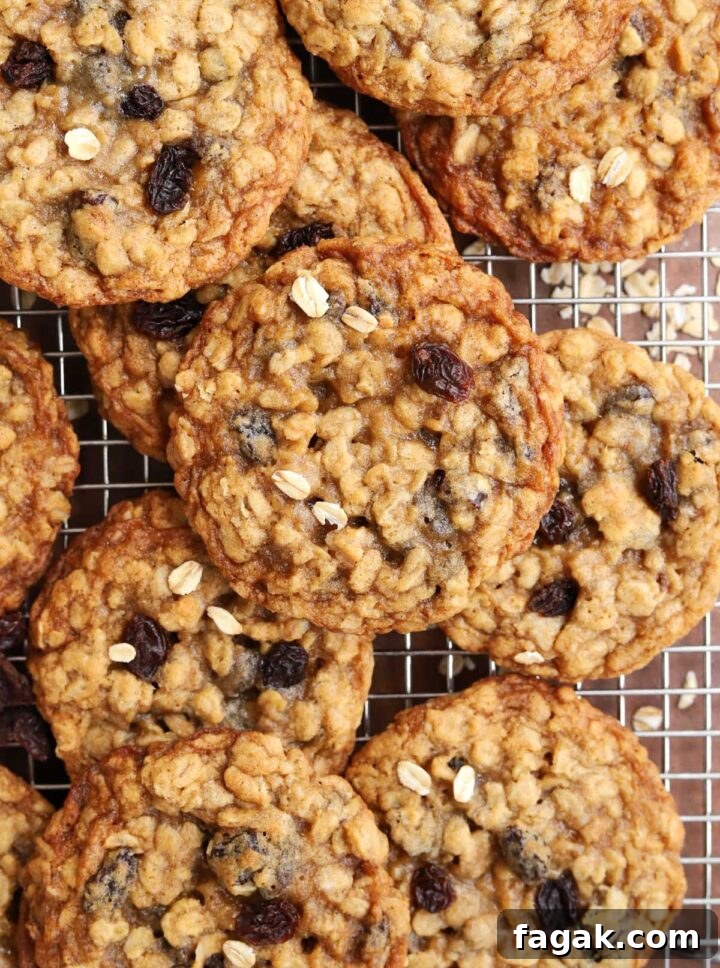
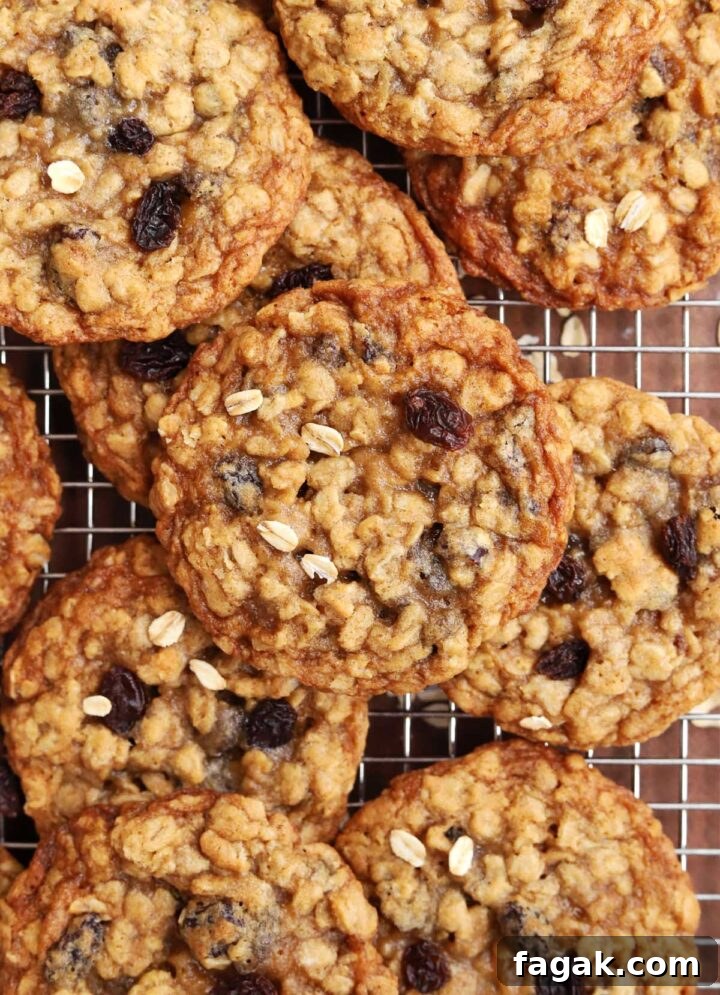
You have found an excellent recipe for Chewy Oatmeal Raisin Cookies that yields rich, flavorful cookies with soft, chewy centers and golden, caramelized edges. These cookies are buttery with warm brown-sugar and molasses notes that pair perfectly with plump raisins. They make a wonderful breakfast, snack, or companion to your afternoon coffee or tea. A good pinch of salt balances the sweetness and elevates the flavor. If you enjoy baking with oats, you may also like the other oatmeal and cookie recipes mentioned here.
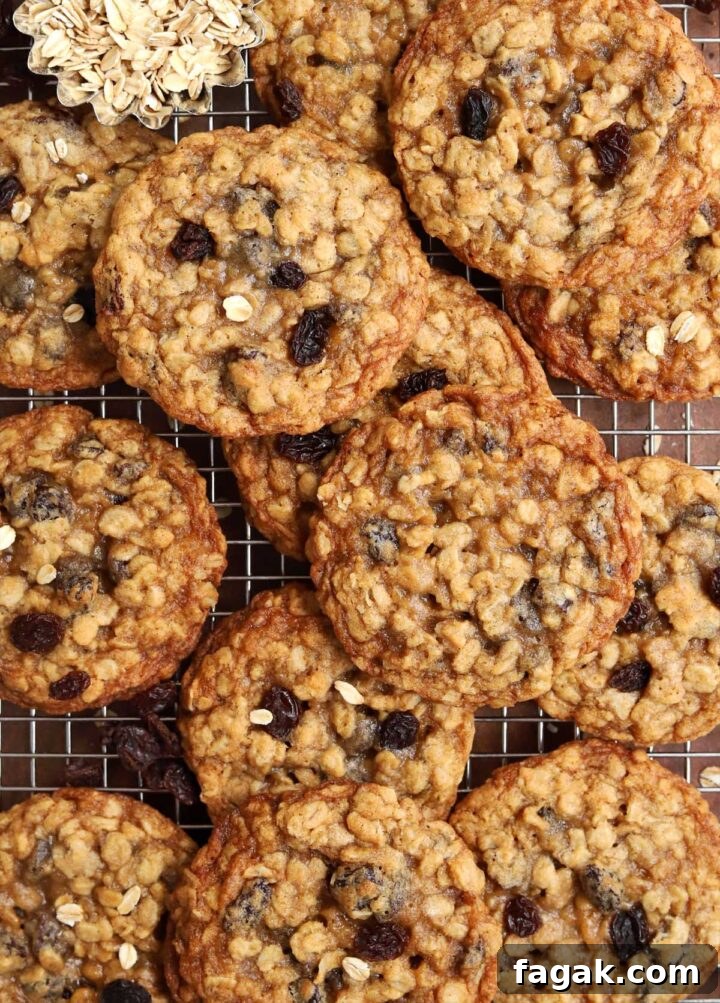
WHY THIS RECIPE WORKS
- Easy to make – The dough comes together quickly and can be mixed by hand with a bowl and spatula; no stand mixer required.
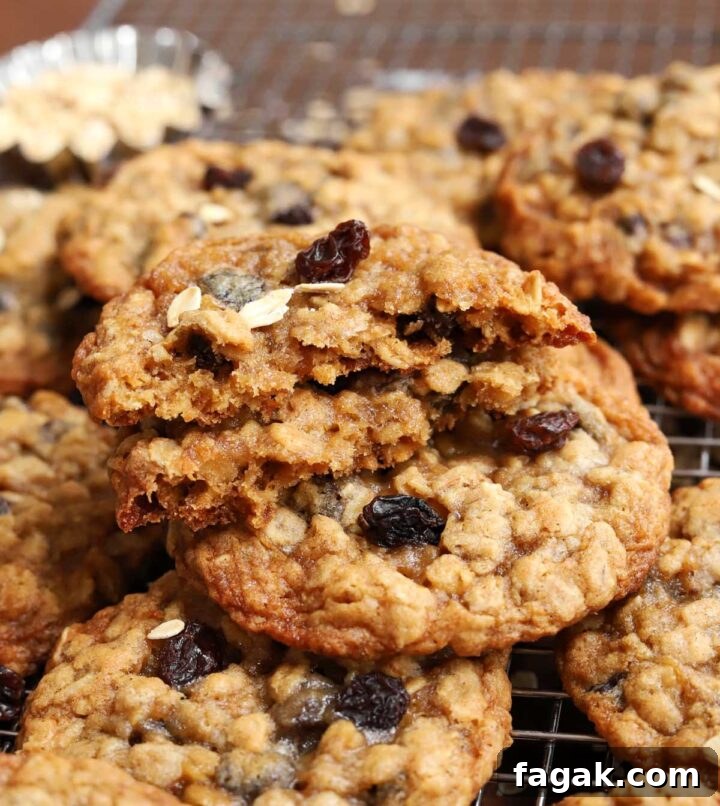
- Soft, chewy texture – These cookies are intentionally tender and chewy rather than dry or crumbly, and they remain chewy for days when stored properly.
- Balanced moisture – Accurate flour measurement prevents dryness; molasses and brown sugar help retain moisture and add depth of flavor.
- Rich flavor – Butter and brown sugar give caramel-like notes while oats provide hearty texture and flavor.
- Stores well – When kept in an airtight container at room temperature, these cookies stay soft and enjoyable for several days.
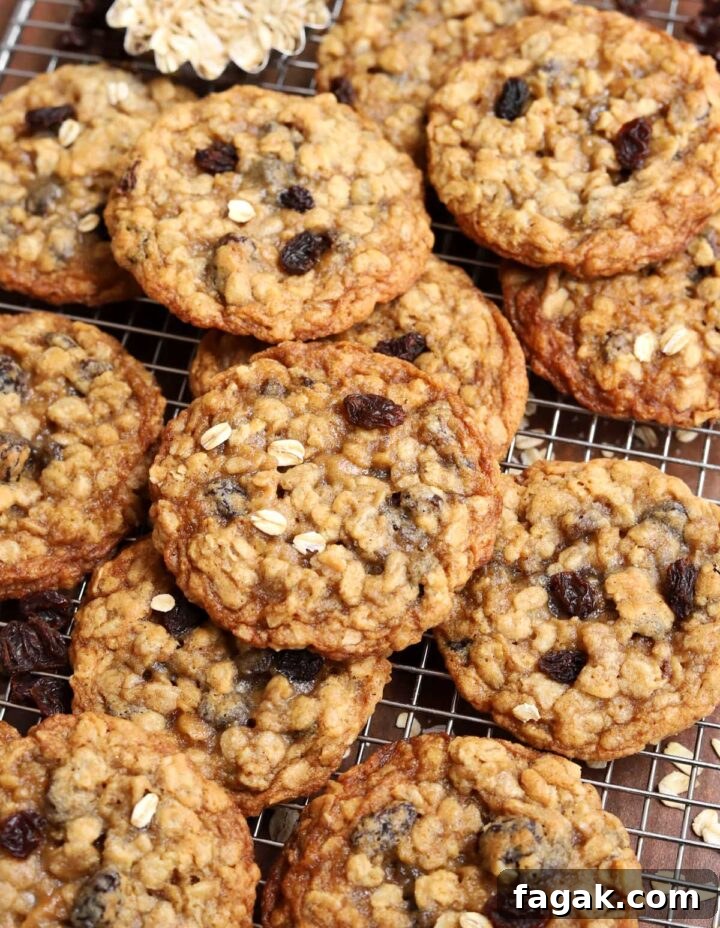
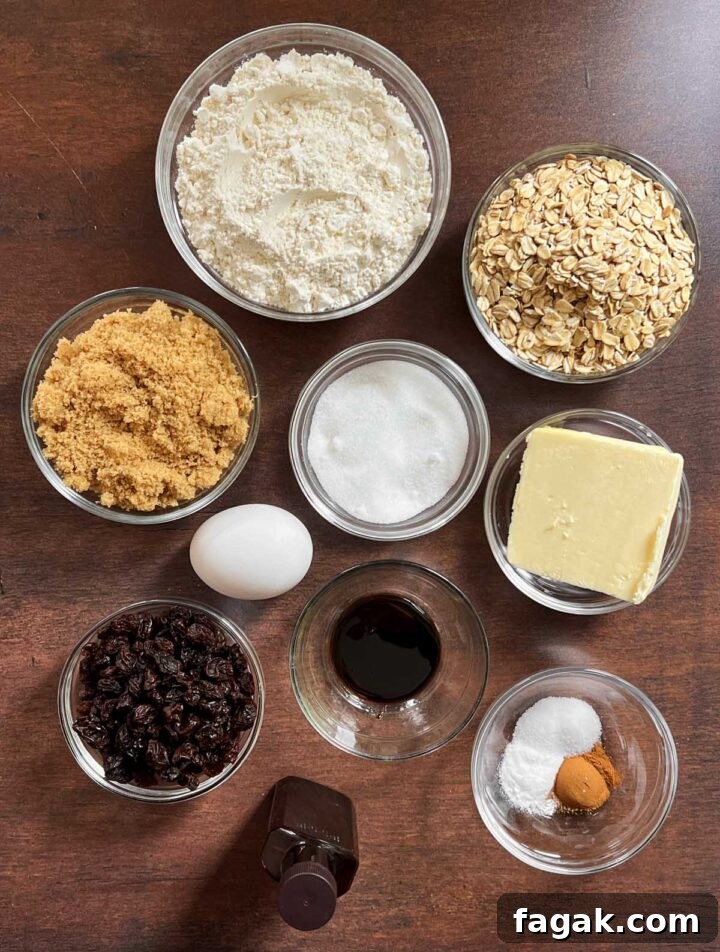
INGREDIENTS FOR CHEWY OATMEAL RAISIN COOKIES
- Unsalted butter – Softened to room temperature. Creaming the butter with sugar develops flavor and helps create caramelized edges.
- Brown sugar – Light brown sugar adds toffee-like depth. Dark brown will give a darker color and more molasses flavor if preferred.
- Granulated sugar – Helps produce slightly crisp, golden edges.
- Egg – One large egg provides moisture and structure for the dough.
- Molasses – A small amount adds complexity and helps keep the cookies soft by retaining moisture.
- Pure vanilla extract – Use a good-quality vanilla for best flavor.
- All-purpose flour – Unbleached flour works well for structure and texture.
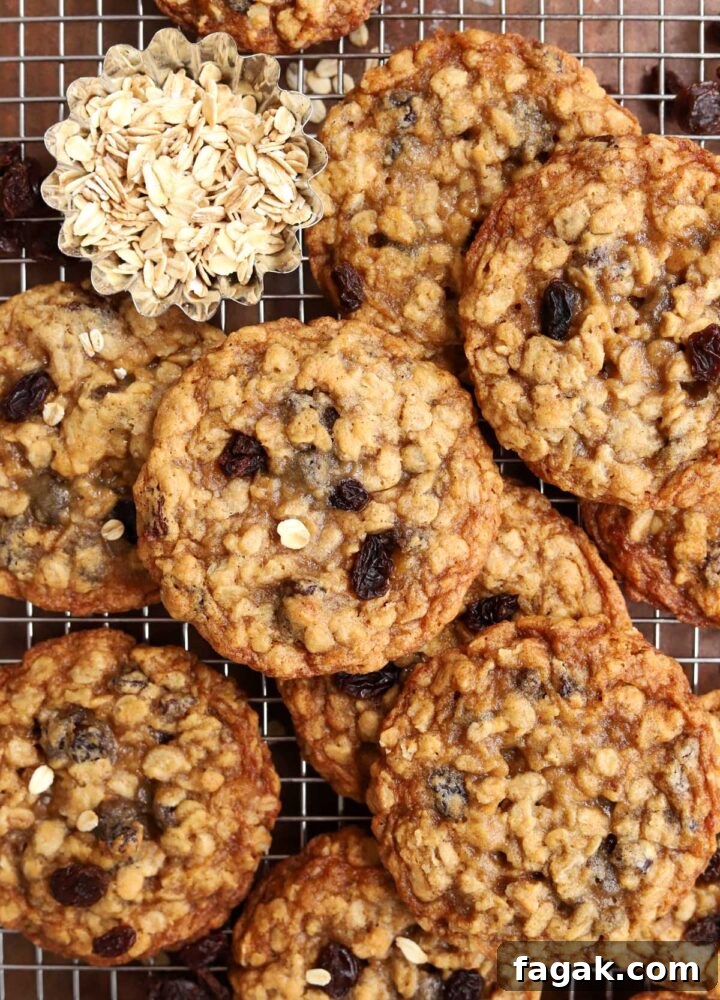
- Rolled oats – Large-flake old-fashioned rolled oats contribute texture and chew.
- Baking soda – Controls spread and assists browning.
- Ground cinnamon – Adds warm spice (optional but recommended).
- Salt – Enhances and balances the sweetness; adjust to taste if using salted butter.
- Raisins – Use Thompson raisins, golden raisins, or sultanas; choose plump, fresh raisins for best results.
- Pure vanilla extract – High-quality vanilla makes a noticeable difference in cookies.
- Rolled oats (old-fashioned) – Use large flakes for the best texture; quick oats will change the texture.
- All-purpose flour – Measure carefully to avoid a dry or overly dense cookie.
ROLLED OATS VS. QUICK OATS
Rolled oats and quick oats come from the same oat groats but are processed differently. Rolled oats are steamed, flattened, and dried into larger flakes that retain texture in baking. Quick oats are steamed longer, rolled thinner, and often chopped into smaller pieces, which makes them hydrate and cook faster. For chewy cookies with distinct oat texture, use old-fashioned rolled oats.
STEP BY STEP INSTRUCTIONS
- Step 1: Cream butter and sugars. Combine softened butter with brown and granulated sugar. Mix until smooth and slightly fluffy. You can use an electric hand mixer on medium speed or cream the butter and sugar by hand with a rubber spatula until the mixture resembles moist, fluffy sand.
- Step 2: Add egg, molasses, and vanilla. Mix in the egg until incorporated, then stir in the molasses and vanilla until even.
- Step 3: Add dry ingredients. Combine rolled oats with baking soda, cinnamon, and salt, then stir into the wet mixture. Fold in the flour just until combined, then fold in the raisins.
- Step 4: Chill the dough. Press plastic wrap directly onto the dough surface and refrigerate for 1 hour to let the oats hydrate and to firm the dough for controlled spreading.
- Step 5: Shape and bake. Preheat the oven to 375°F for thicker cookies (or 350°F if you prefer slightly wider, thinner cookies). Scoop 1 oz portions, roll into smooth balls, and place them about 2 inches apart on parchment-lined baking sheets. Do not flatten. Bake 8–10 minutes at 375°F (9–11 minutes at 350°F) until edges are golden and centers still look slightly soft. Allow cookies to cool on the sheet for 1–2 minutes, then transfer to a wire rack to cool completely.
EXPERT BAKING TIPS
- Measure flour accurately — Spoon and level or use a kitchen scale. Too much flour makes dry cookies; too little makes them spread too much.
- Avoid over-creaming — Incorporating excessive air when creaming butter and sugar can yield a crisper cookie. Mix just until combined for a chewier result.
- Portion evenly — Use a 1 oz cookie scoop or small scoop for consistent size and even baking.
- Adjust oven temperature for height — Bake at 375°F for thicker cookies with set edges and soft centers; bake at 350°F for slightly wider, evenly chewy cookies.
- Do not overbake — Remove cookies while centers still look a little underdone; they will finish setting on the hot baking sheet.
- Let cookies rest briefly — Cool on the baking sheet for 2–3 minutes before transferring as warm cookies are fragile.
RECIPE FAQ
Use old-fashioned rolled oats (large-flake). Steel-cut oats are not suitable for baking cookies and require much longer cooking to soften.
You can, but quick oats will produce thicker, less spread cookies with a different, slightly crumblier texture. For classic chew, stick with rolled oats.
Rolled oats are steamed and flattened into larger flakes, while quick oats are processed finer and thinner so they hydrate faster. The processing affects texture in baked goods.
Yes. If using unsalted butter, consider increasing the salt slightly (for example, to ½ teaspoon total) to ensure the flavor is balanced.
Chilling is important so the oats hydrate and the dough firms up. Without chilling, cookies may spread too much and lose chew. If you skip chilling, add 2 tablespoons more flour to help control spread, though this will slightly dilute flavor.
Store at room temperature in an airtight container for up to 5 days; they remain soft and chewy.
Yes. Cool completely, then freeze in resealable freezer bags for up to 3 months. For longer storage, wrap cookies individually before bagging.
If you love oats, check out these recipes:
Gooey Almond Oatmeal Chocolate Chip Cookie Bars (gf, df option)
Chewy Reese’s Peanut Butter White Chocolate Chunk Oatmeal Cookies
Ultimate Monster Cookies
Thick White Chocolate Chunk Peanut Butter Oatmeal Raisin Cookies
Dark Chocolate Cherry Coffee Oatmeal Cookies
Craving more cookies?
If you love cookies as much as the author does, check out the latest recipes:
- The BEST Chewy Brown Butter Chocolate Chip Cookies
- THE BEST Chocolate Chip Cookies (Bakery-Style)
- Salted Pistachio Chocolate Chunk Cookies
- Levain Bakery Chocolate Chip Cookie Recipe
Baking with oats
Here are some favorite recipes that feature oats:
- Dark Chocolate Chunk Molasses Oatmeal Cookies
- Pumpkin Spice Latte Iced Oatmeal Cookies
- Pumpkin Iced Oatmeal Cookies
- Chewy Oatmeal Raisin Cookies
Video
Chewy Oatmeal Raisin Cookies
Christina Marsigliese
Pin Recipe
Ingredients
- ½ cup (113g) unsalted butter, softened
- ½ cup (110g) packed light brown sugar
- ¼ cup (50g) granulated sugar
- 1 large egg at room temperature
- 1 teaspoon (5ml) molasses
- 1 teaspoon (5ml) pure vanilla extract
- 1 ¼ cups (125g) rolled oats
- ½ teaspoon baking soda
- ½ teaspoon ground cinnamon
- ½ teaspoon salt
- 1 cup (142g) all-purpose flour
- ¾ cup (90g) raisins
Instructions
-
Combine butter with both sugars in a large bowl and mix until smooth and a bit fluffy. You can use a hand mixer or cream by hand with a rubber spatula until the mixture looks like fluffy wet sand.
-
Mix in the egg until well combined, then stir in the molasses and vanilla.
-
Add the oats with baking soda, cinnamon, and salt, mixing evenly. Add the flour and fold until just combined, then fold in the raisins.
-
Press plastic wrap directly onto the dough surface and refrigerate for 1 hour to hydrate the oats and firm the dough.
-
Preheat the oven to 375°F (or 350°F if preferred). Line baking sheets with parchment paper. Use a 1 oz scoop to portion dough and roll into smooth balls. Place 2 inches apart and bake 8–10 minutes at 375°F or 9–11 minutes at 350°F, until edges are golden and centers are slightly gooey. Cool on the baking sheet for 1–2 minutes, then transfer to a wire rack to cool completely.