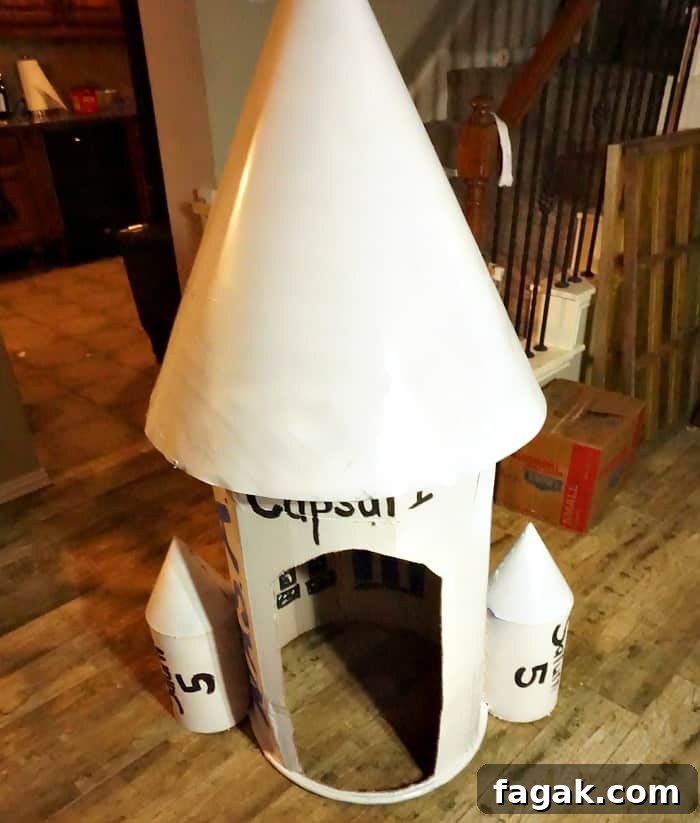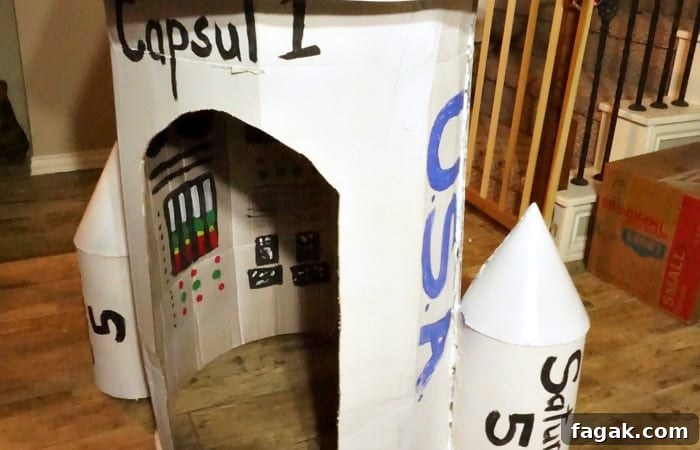
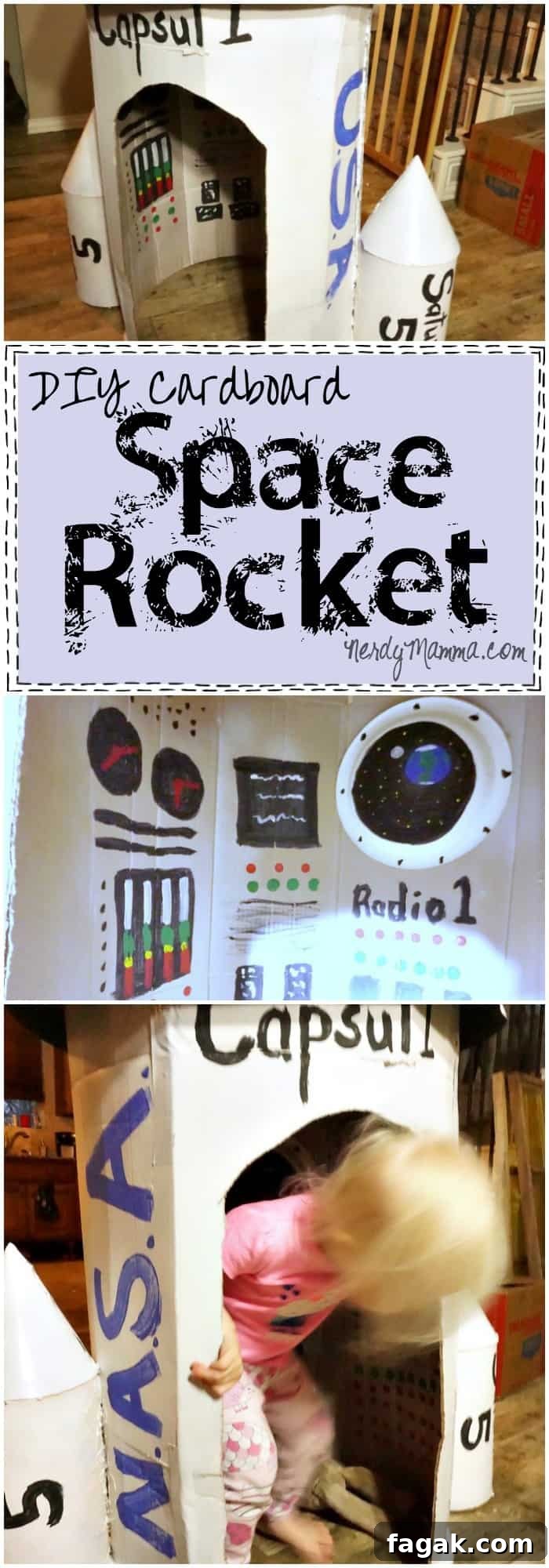
I’ve been working on a fun DIY project and finally put together a cardboard space rocket I couldn’t wait to share. This post explains the materials and steps I used to build our rocket and includes a brief review of the book that inspired the idea: The Astronaut Instruction Manual by Mike Mongo.
What You Need to Make Your DIY Cardboard Space Rocket
Main Rocket Body
- 2 small hula hoops
- 1 very large cardboard box (for the body)
- 1 short tube from concrete forms (for boosters)
- 2 pieces of poster board
- Extra cardboard for reinforcement and details
- Hot glue gun and glue sticks
- Clamps to hold pieces while drying
- Rope or strong string
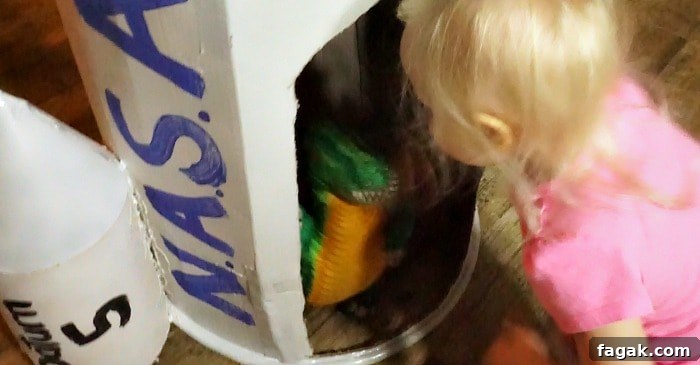
Decorations
- White paint (base coat)
- Assorted tempera or craft paints for details
- Paper plate or palette for mixing paint
How to Make Your DIY Cardboard Space Rocket
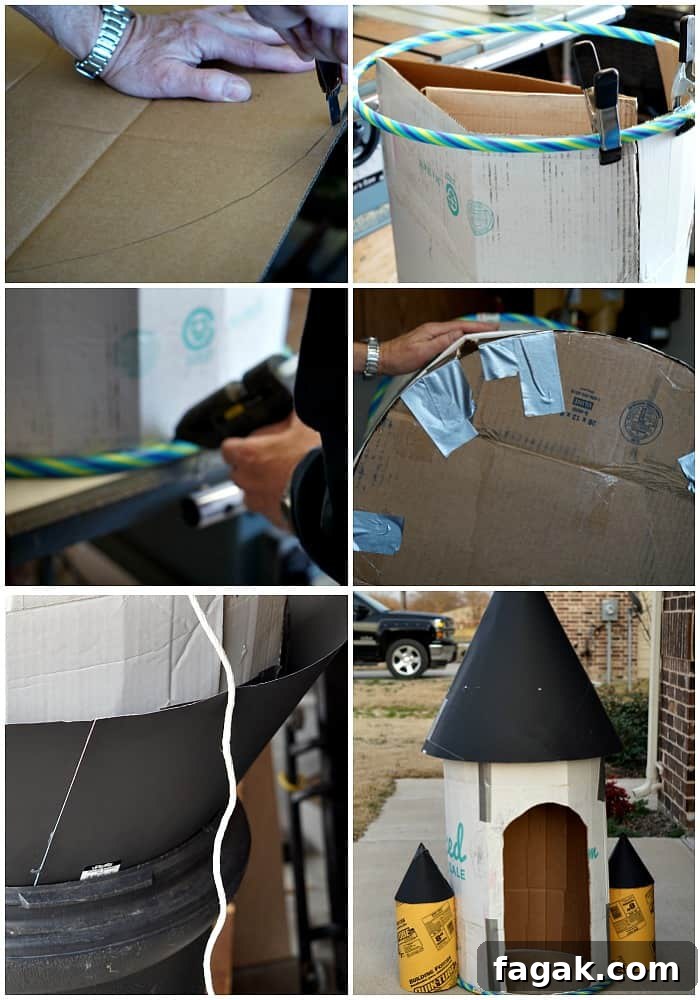
- Trace the hula hoops onto cardboard and cut out two round discs sized to fit over the hoop edges.
- Layer the discs with the corrugation grain in opposite directions and glue them together for strength. Let dry.
- Cut one end of the large box flat, then curl the cardboard into a tube to match the diameter of the hula hoops. Slide a hula hoop onto each end of the tube to form the rocket’s circular openings. Use clamps to hold the cardboard edge to the hoops and rope to cinch the middle until glue sets. Trim height and remove excess interior cardboard as needed.
- Glue the hula hoops to the cardboard tube permanently and remove clamps when dry.
- Attach the double-thickness cardboard discs to the top of the body to close the nose area; tape can help hold them while the glue dries.
- Cut the concrete tube into sections for side boosters (half or thirds depending on desired size).
- Glue the booster pieces to opposite sides of the rocket body and allow to dry.
- Form a cone from one poster board to fit the rocket’s top and glue it in place. Supporting the cone upside down in a trash can or box can make holding it easier while it sets.
- Cut the second poster board in half and make two smaller cones for the side boosters; glue them on.
- Cut a doorway or hatch in the rocket for entry.
- Paint the entire structure white, inside and out; multiple coats may be needed for full coverage.
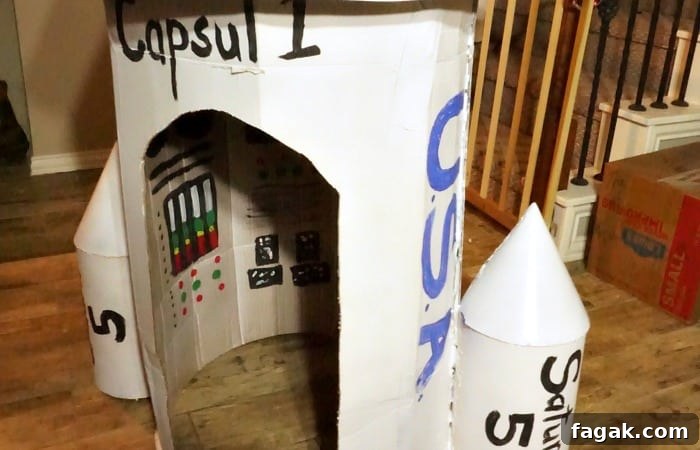
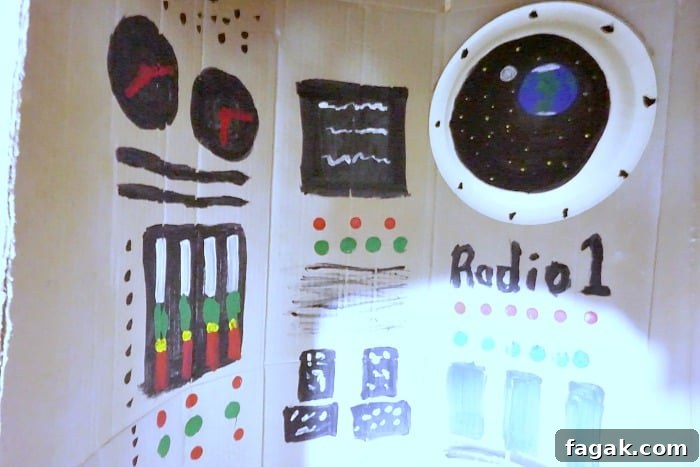
- After the white base dries, add interior details like control panels, screens, buttons, portholes and labels. Personalize the exterior—add NASA-style markings or any creative design you prefer.
When we finished, we realized the structure could double as a castle, but we stuck with the rocket theme. My daughters wanted to play roles beyond princesses—one chose doctor and the other scientist—so the rocket became part of their imaginative play.
The Astronaut Instruction Manual by Mike Mongo
The idea for this project came after my son picked up The Astronaut Instruction Manual by Mike Mongo. The book mixes fun activities with practical information about aeronautics and what it takes to be an astronaut. It encourages kids to explore STEM topics and think critically about science and space-related careers. Even if a child doesn’t become an astronaut, the concepts and curiosity the book inspires are valuable.
My son enjoyed the book so much he read it to his younger sister, which then led to building the cardboard rocket together. That shared project sparked hours of imaginative play and hands-on learning—exactly the kind of experience I love to see.
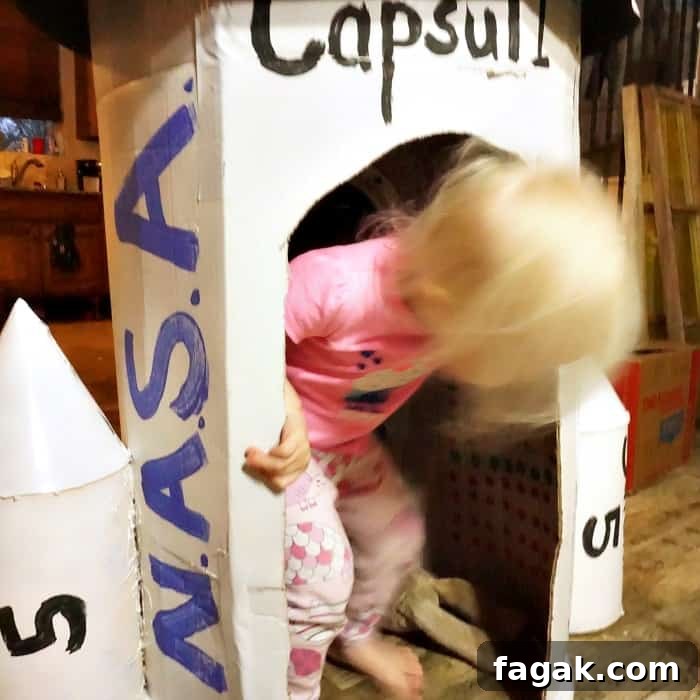
This build is a great example of story-inspired science and creativity. If you try this rocket, encourage kids to add their own scientific details and play scenarios—mission control checklists, countdowns, simulated experiments and more.
I’d love to hear how your cardboard rocket turns out. Share any adaptations or decorating ideas you use, and enjoy the process of making and playing together.