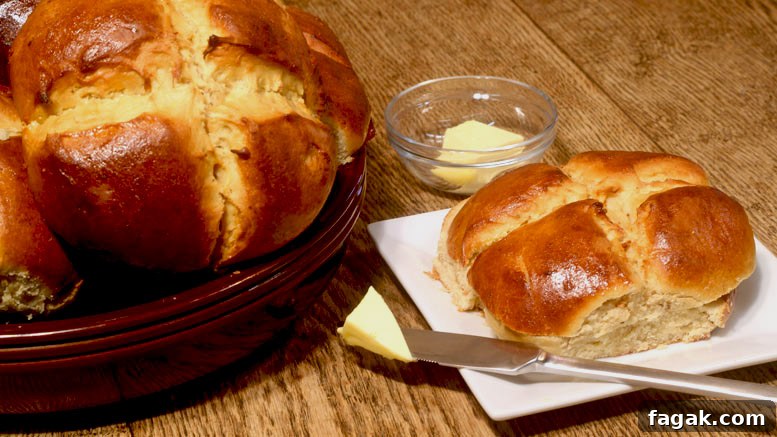
Traditional Good Friday Buns For Easter
Good Friday Buns, historically called “Cross Buns” and commonly known today as Hot Cross Buns, are a spiced yeast bun traditionally eaten on Good Friday. For centuries Christian communities have served them at breakfast, warmed or toasted with butter. The characteristic cross on each bun recalls the Crucifixion, while the gentle blend of spices—often including caraway or coriander—gives the buns a distinctive, comforting flavor. These buns are especially pleasant served warm, lightly buttered, with the spices and sweetness balanced so they are neither cloying nor bland.
Origins and Early Versions: Early Good Friday Buns differ from modern Hot Cross Buns in a few important ways. The cross was originally a simple incision cut into the dough before baking, a medieval practice believed to help ward off evil. Early recipes omitted dried fruit and relied instead on ground seeds such as coriander or caraway for texture and flavor, along with warm spices like allspice, mace, cinnamon, and nutmeg. Over time, currants or raisins and candied peel were introduced, and by the 19th and early 20th centuries richer versions—including some with mashed potato—were recorded in trade recipe books.
Good Friday Buns Recipe
This recipe reflects the more traditional seeded and spiced style, with currants optional. For best results, allow the full rising times at each stage so the yeast can develop properly and the buns become light and well textured.
Makes 9 very large or 12 large Good Friday Buns
Recipe Ingredients:
- Between 1kg and 1.25kg plain flour (adjust according to dough moisture)
- 200ml warm water
- 200ml warm milk
- 20g active dried yeast or 40g fresh yeast
- 300g natural brown sugar (Demerara)
- 300g butter, melted
- 3 eggs, beaten
- 1 tsp coriander seeds, ground fine
- 2 tsp caraway seeds, ground fine
- 1/4 tsp ground mace
- 1/4 tsp ground cinnamon
- 1/4 tsp ground nutmeg
- Optional: 400g currants
For the bun glaze:
- 1 egg yolk, beaten
- 1 tbsp milk
- 1 tbsp sugar
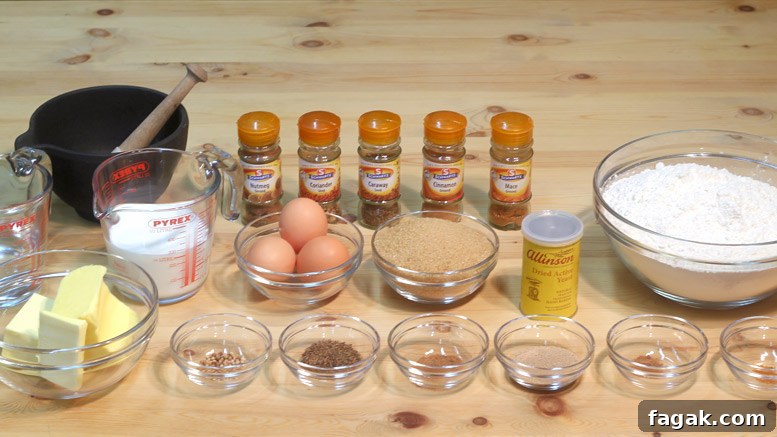
Ingredients To Make Good Friday Buns
Recipe Method:
1. In a large mixing bowl combine the warm milk and warm water (about 30°C) with the brown sugar. Stir until the sugar begins to dissolve, then sprinkle in the yeast and stir briefly. Cover and leave for 15 minutes.
2. After 15 minutes, stir in about 300g of flour to make a wet batter. Cover with a clean cloth and leave in a warm place for roughly two hours until it becomes a bubbly, yeasty sponge (barm).
3. While the sponge rises, grind the spices and seeds finely, beat the eggs, and melt the butter. After two hours stir the barm, then add the beaten eggs, ground spices, melted butter, and any optional currants. Gradually add the remaining flour and mix until you have a firm, springy dough. Use a wooden spoon at first, finishing by working the dough with your fingers to ensure even distribution of ingredients.
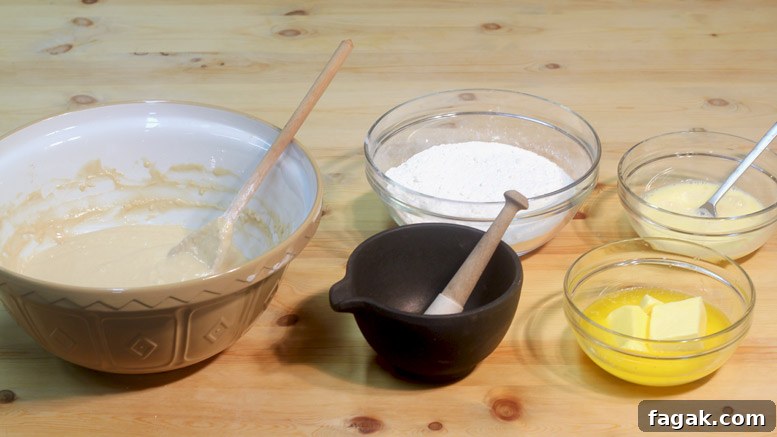
Making The Good Friday Bun Dough
4. Cover the bowl again and leave in a warm place for about two hours, until the dough has almost doubled in size.
5. Turn the risen dough out onto a lightly floured surface and knead briefly. Grease two baking sheets with butter. Shape the dough into a long log and divide it into equal portions. Roll each portion into a ball and place them on the prepared trays, flattening gently to form buns. Leave the shaped buns to rise for 1 hour in a warm place; sealing them in a large polythene bag can help maintain humidity.
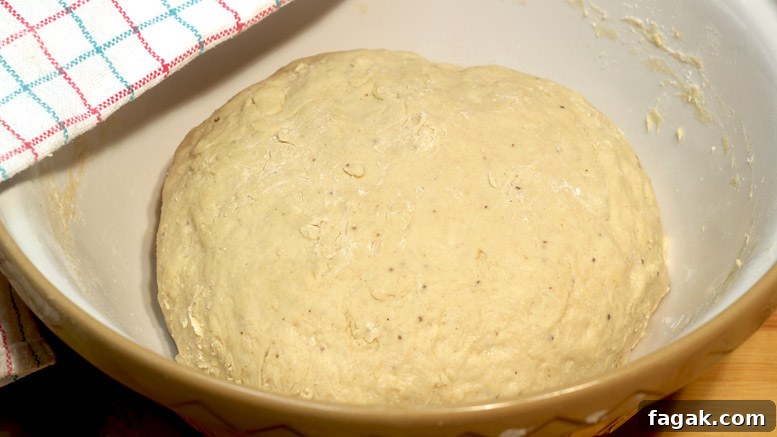
The Good Friday Bun Dough Having Risen – Now Ready To Shape Into Buns
6. Traditional bakers sometimes cut right through each bun into four segments and then reassemble them for the final rise; as the dough proofs the quartered pieces come back together, creating a clear cross when baked. If you follow this method, cut the buns carefully with a very sharp knife and return them to rise on the tray for about 40 minutes.
7. Mix the glaze: beat the egg yolk with the milk and sugar, and brush it over the buns just before baking.
8. Preheat your oven to 240°C. Bake the buns for 10–15 minutes, checking after 10 minutes: they should be golden brown and cooked through. Remove from the oven and cool on a wire rack.
Serve the Good Friday Buns warm on the day they are baked, or store them in an airtight tin for the next day. They are excellent split and lightly buttered, or toasted before serving.
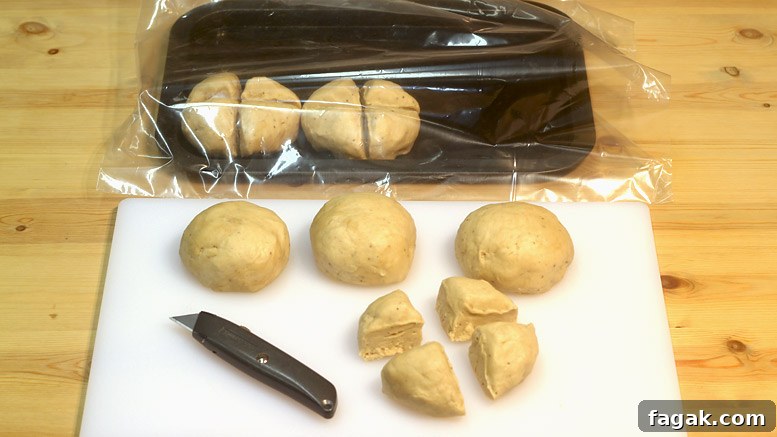
Cutting The Good Friday Buns Into Quarters And Letting Them Rise
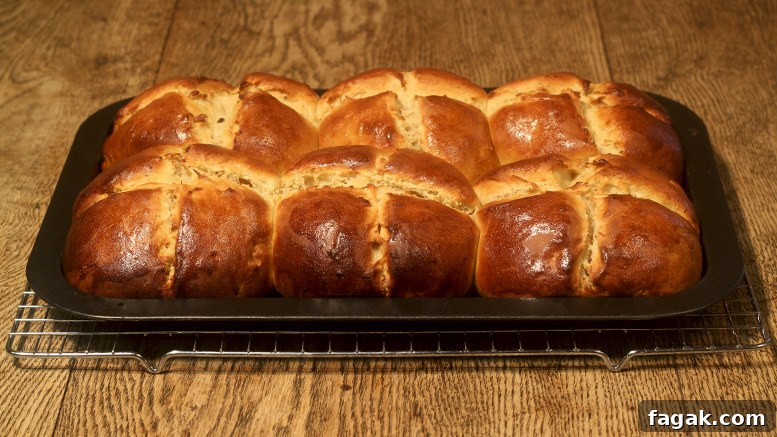
Good Friday Buns Baked From The Oven
‘Mrs. Hale’s New Cook Book’, By Sarah Josepha Buell Hale, Published 1857
Good Friday Buns
Buns made with these additions are eaten on Good Friday. Spice may be added; as three-quarters of an ounce of allspice and cinnamon mixed; and an ounce of coriander-seeds, ground very finely.
Plain Buns.—Weigh 2 lbs. of flour, and set sponge with half of it, three tablespoons of yeast, and half a pint of warmed milk; cover it, and in about an hour, or when it has risen, add a quarter of a pound of sugar, the same of butter warmed, and the remainder of the flour, with warm milk enough to make a light dough; let it rise an hour, then work it into cakes or buns, place them on a buttered tin to rise, and bake them in a brisk oven about ten minutes; when done, brush them over with milk and sugar.
‘Cassell’s Dictionary of Cookery’, By Cassell And Co, Published 1875
Good Friday Buns (commonly called Hot Cross Buns)
Rub a quarter of a pound of butter into two pounds of flour. Add a pinch of salt; then mix a wine-glassful of fresh, thick yeast with a pint and a half of warmed milk, and stir these into the flour till it forms a light batter. Put the batter in a warm place to rise. When sufficiently risen, work into it half a pound of currants, half a nutmeg, grated, and a quarter of an ounce of powdered mace. Knead these well into the dough, make it up into buns, and place them on buttered baking tins. Make a cross on them with the back of a knife, brush a little clarified butter over the top, and let them stand a quarter of an hour before the fire. Bake in a good oven.
‘The British Baker’s Selected Recipes’, By Maclaren & Sons, Published 1890-1920
Good Friday Buns
3 quarts milk; 3 quarts water; 5½ lbs moist sugar; 3 lbs butter; 6 lbs currants; 1 lb finely shred lemon peel; ¾ lb yeast; 6 eggs; colour, lemon flavour, and spice; sufficient flour;
Set a ferment with the ¾ lb yeast, half the milk and water at about 90°F, 3 lbs moist sugar, and add the colour required for a golden tint. Stir into the ferment sufficient flour to make a batter, and leave until it has well dropped. When ready, add the remainder of the ingredients, having gently melted the butter, and make into a tough, springy dough. Leave to prove one hour, then cut back and prove another two hours, when it will be ready to scale. Bake with the heat high.
Bun Glazes: 2 oz sheet gelatine; 1 quart hot water; ½ lb molasses or golden syrup: soak the gelatine in cold water, add to the hot water and syrup, and brush the hot buns with it after baking.
This Good Friday Buns recipe is based on traditional methods and historic trade recipes, including material from early cookery publications aimed at both household and professional bakers.
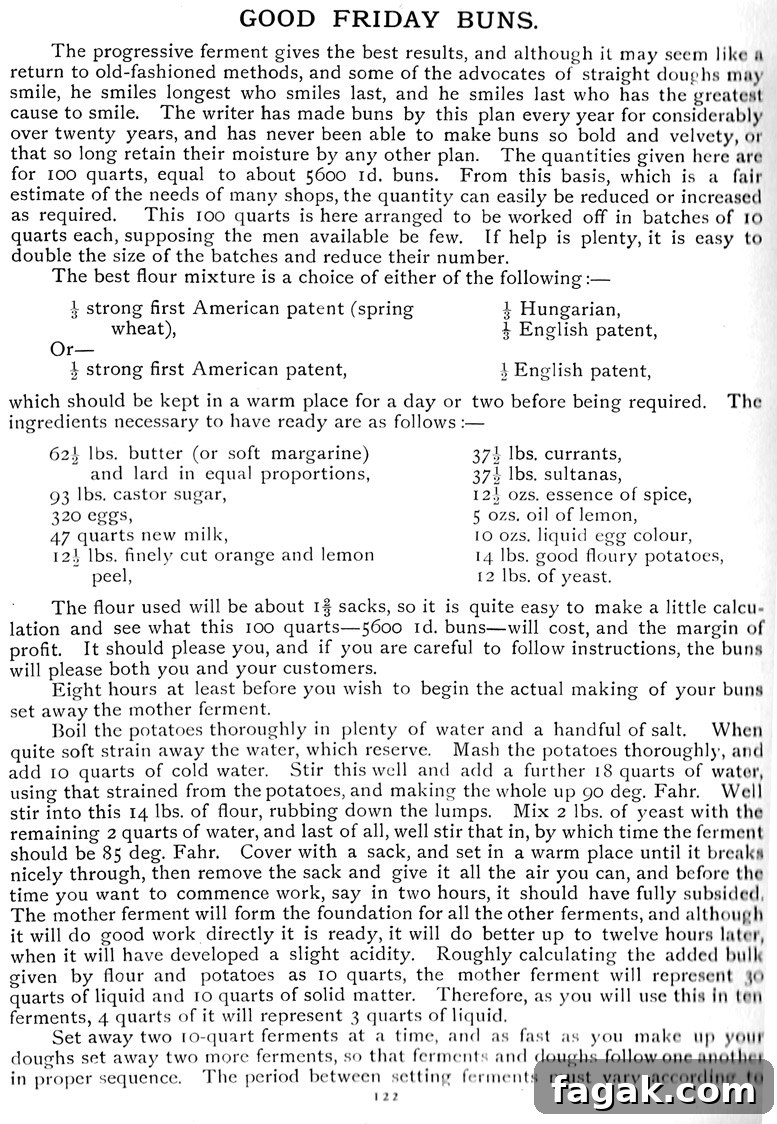
Good Friday Buns Recipe : Page 1 From “All About Pastries” 1910
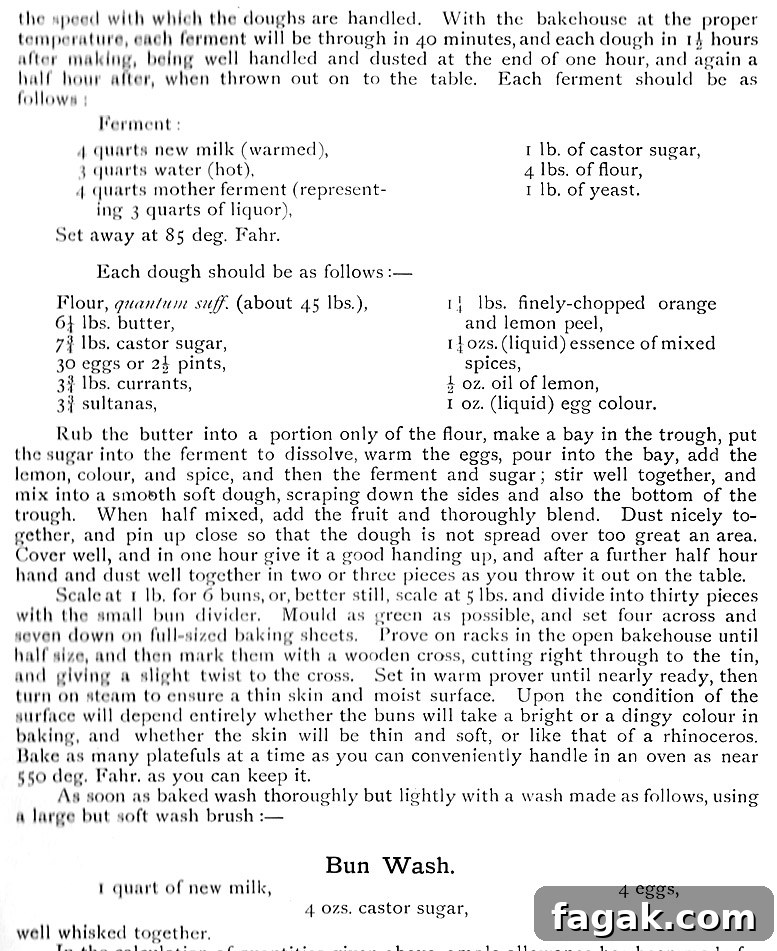
Good Friday Buns Recipe : Page 2 From “All About Pastries” 1910