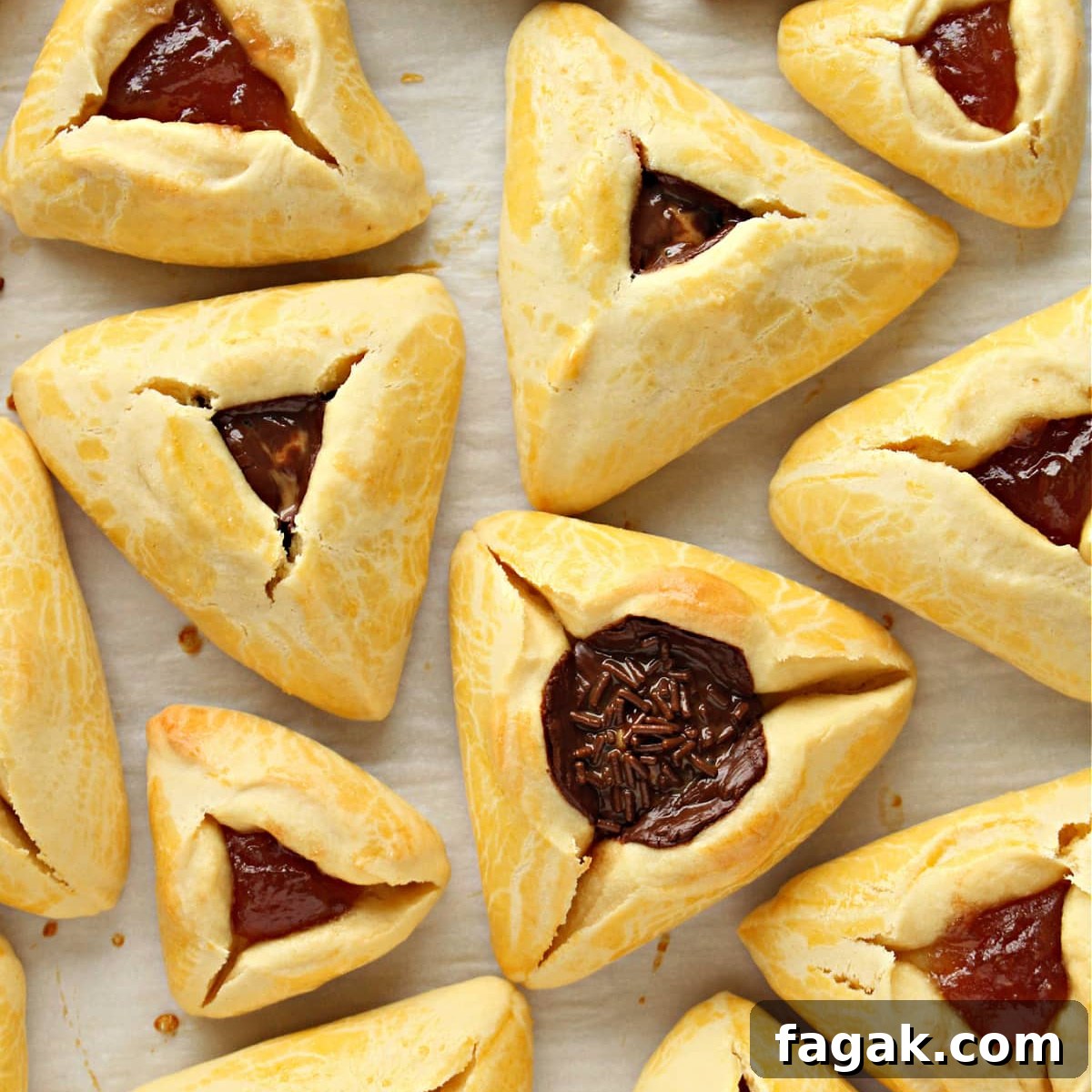
This hamantaschen recipe yields soft, cake-like Purim cookies with a tender crumb and a pocket for your favorite fillings—jam, chocolate, or mini candy cups. A chocolate drizzle, a dusting of sparkling sugar, or dipped corners add a festive finish.
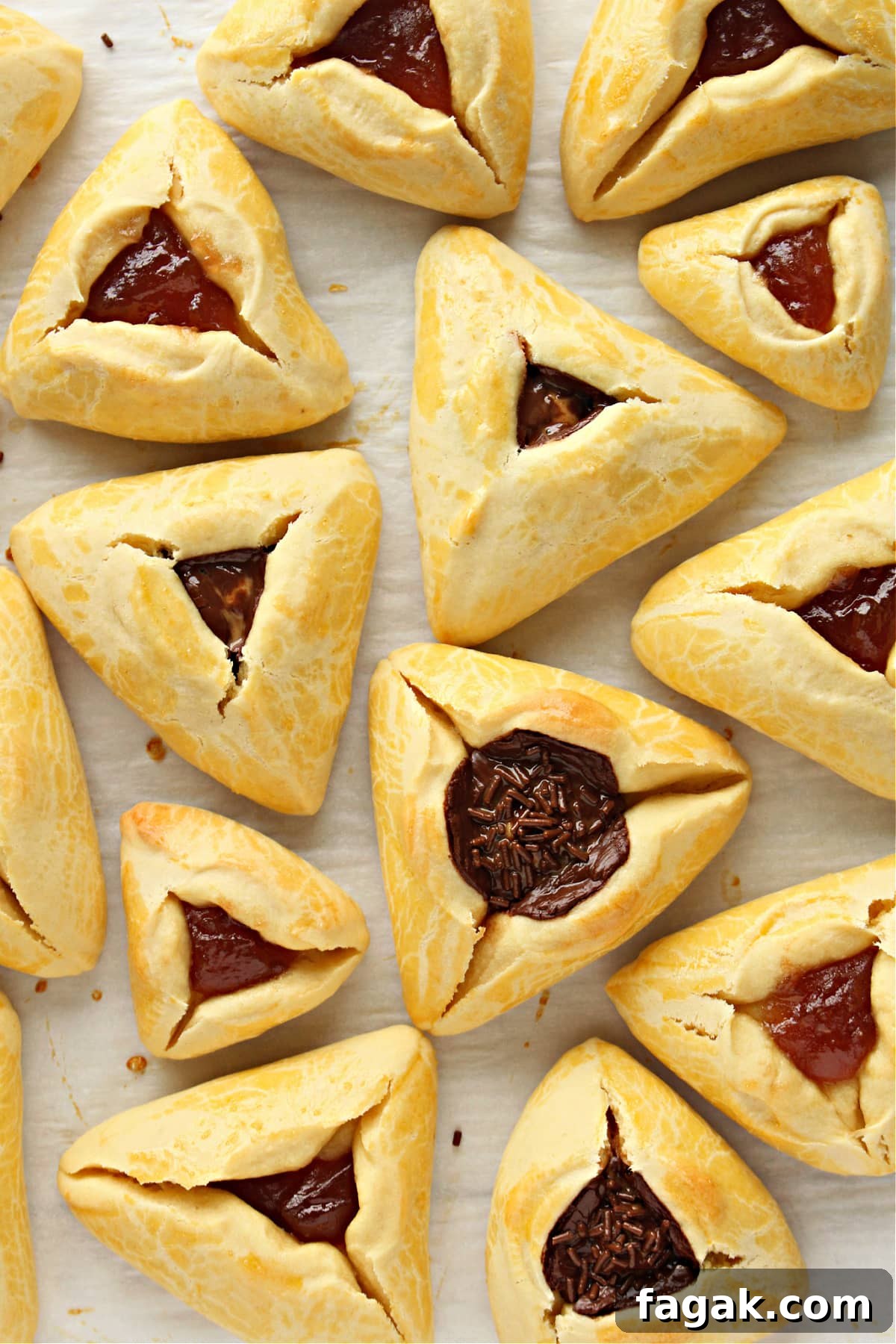
Why you’ll love this recipe
- These triangular Purim cookies stay fresh for days, making them perfect for baking ahead, gifting, or shipping.
- The soft, cakey dough actually improves in flavor after resting a day or two.
- The filling is fully customizable to suit dietary preferences or allergies—use jam, chocolate, nut butter cups, or other favorites.
Purim is a joyful Jewish holiday celebrated with costumes and storytelling. Hamantaschen are the traditional three-cornered cookies associated with the holiday. The name comes from Yiddish, often interpreted as “Haman’s pockets,” and the triangular shape is also said to represent Haman’s hat or ears.
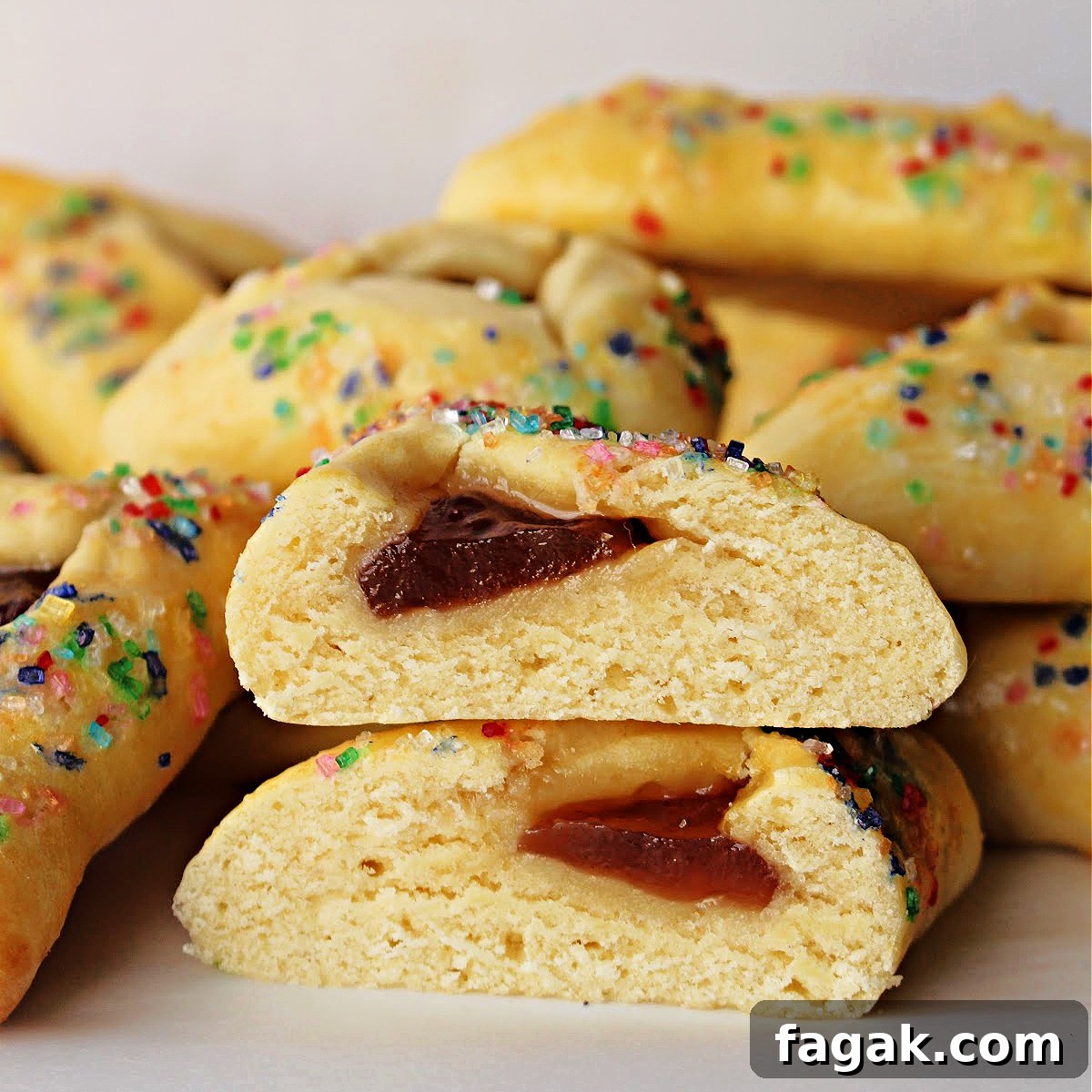
Traditional fillings include prune or poppy seed, but modern variations use fruit preserves, chocolate, or candy. Many hamantaschen recipes produce a firm, dry cookie, but this dairy-free version uses oil for a moist, cakey texture that stays tender for several days.
Ingredients
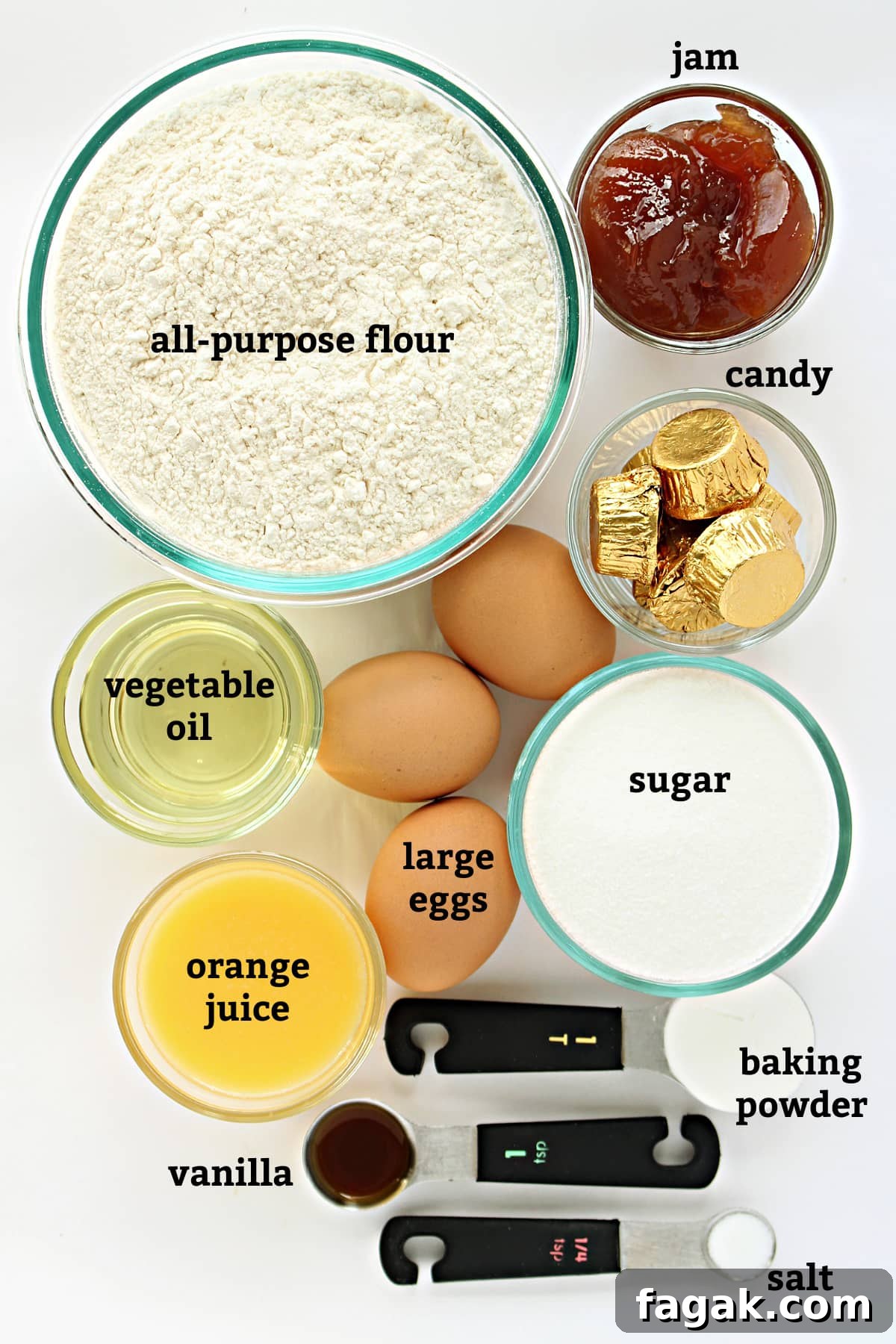
Cookie dough
- 4 ½ cups all-purpose flour (plus up to 1 extra cup if not chilling, and extra for rolling)
- 1 tablespoon baking powder
- ¼ teaspoon salt
- 4 large eggs (reserve 1 for egg wash)
- 1 cup granulated sugar
- ¾ cup neutral oil (vegetable or canola)
- 1 teaspoon vanilla extract
- ½ cup orange juice (or water)
Fillings
- ½ cup jam (apricot, raspberry, or your favorite)
- 12 miniature round candy cups (or 24 unwrapped mini candies), or other small chocolate pieces
Instructions
Overview: prepare a soft, cakey dough, chill it (recommended), roll and cut circles, add a small amount of filling, form triangles, and bake until lightly golden. Full step-by-step instructions below.
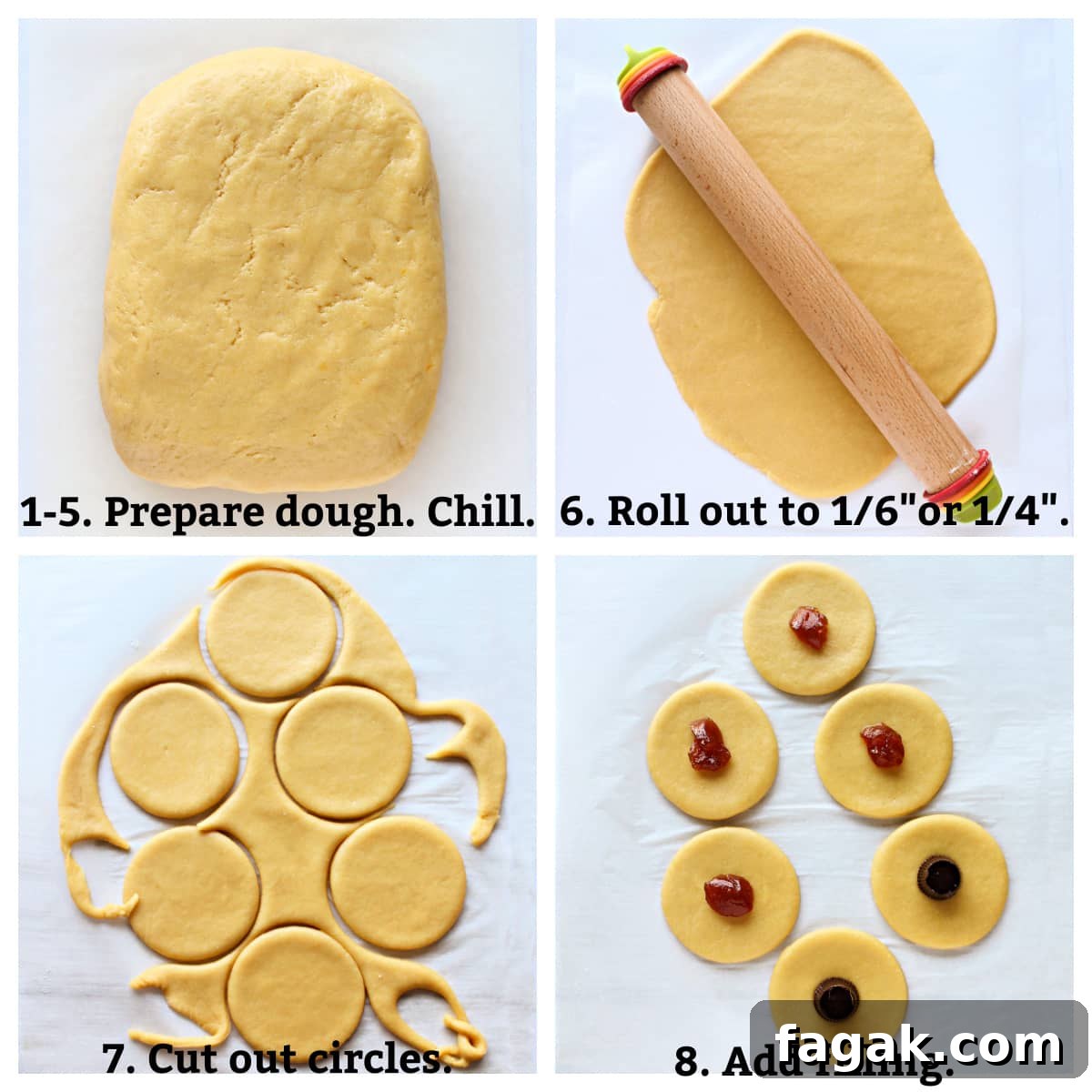
Prepare the dough
- In a medium bowl, whisk together the flour, baking powder, and salt. Set aside.
- In the bowl of a mixer, beat together 3 eggs, the sugar, and the oil until the mixture lightens in color, about 2 minutes.
- Add the vanilla and orange juice, mixing until incorporated.
- Add the dry ingredients and mix until the dough is fully combined. The dough will be very soft—about the consistency of thick brownie batter. If you cannot chill the dough, add about 1 cup more flour and mix until the dough reaches a roll-out consistency.
- Wrap the dough in plastic wrap and refrigerate overnight for best texture. If short on time, chill at least 2 hours.
When ready to bake
- Preheat the oven to 350°F (175°C). Line baking sheets with parchment paper.
- Flour the rolling surface generously (about 2 heaping tablespoons).
- Work with half the dough at a time. Knead lightly on the floured surface, adding more flour as needed, until the dough is smooth and no longer sticky.
- Roll the dough to 1/6″–1/4″ thickness. Use a 3-inch round cookie cutter or the rim of a glass to cut circles. Re-roll scraps as needed.
- Place a ½ heaping teaspoon of jam or one small candy piece in the center of each circle. Use a minimal amount—too much filling will overflow while baking.
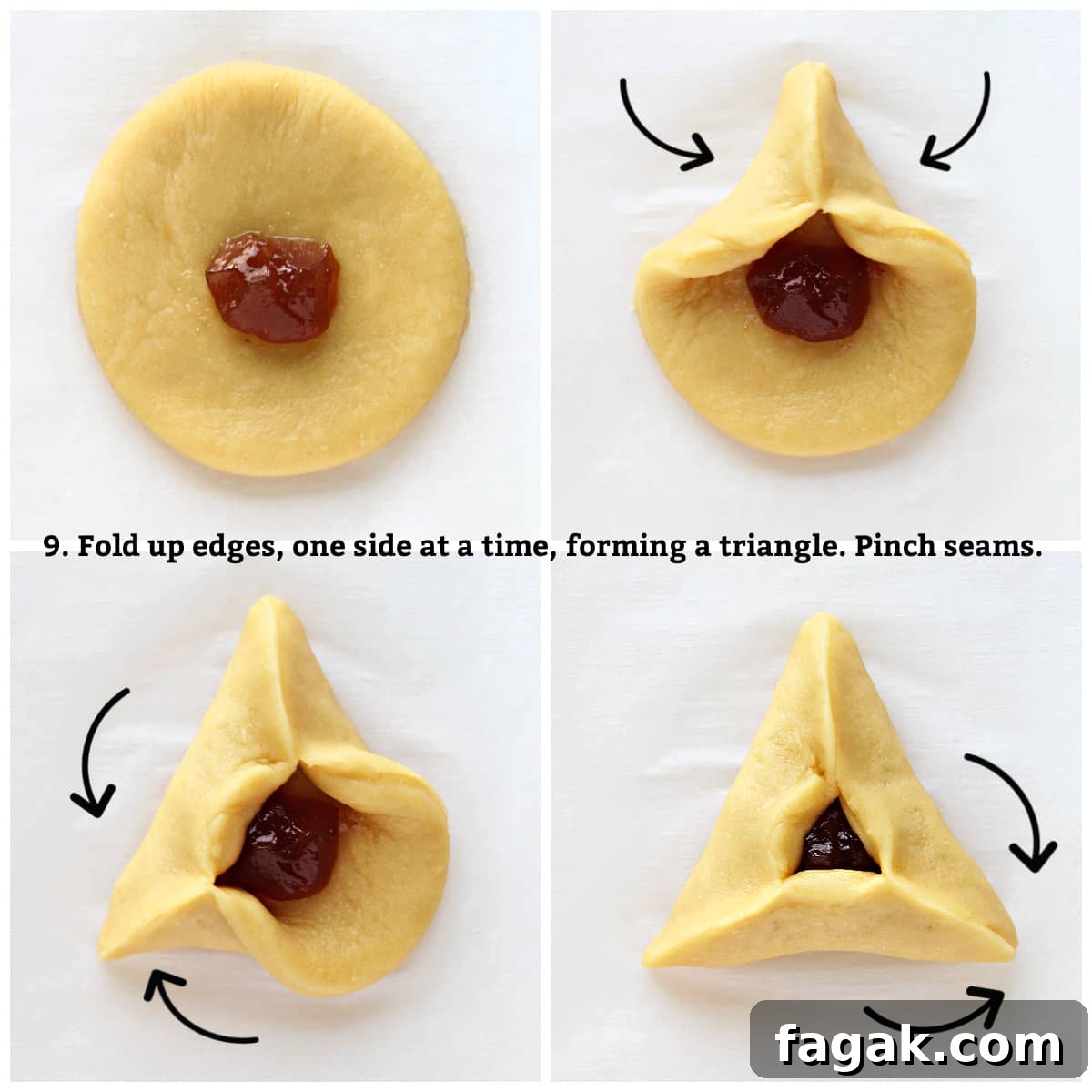
- Fold up the edges to form a triangle, pinching the seams firmly so the pocket stays closed during baking.
- Place the cookies about 2 inches apart on the prepared baking sheets.
- Beat the remaining egg and brush the tops of the cookies with egg wash.
- Bake 12–15 minutes, until the cookies are very lightly golden at the edges.
- Cool on a wire rack. Once completely cool, optionally drizzle with melted chocolate, dip a corner in chocolate, or add decorating sugar.
- Store hamantaschen in an airtight container at room temperature for up to 10 days.
Tips
- The dough is intentionally soft. Chilling overnight gives the best texture and makes the dough much easier to handle. Even after chilling, you may need to add a little flour while rolling.
- If you don’t have time to chill, add an extra cup of flour during mixing and knead until the dough is no longer sticky.
- Orange juice contributes mild flavor and moisture; water is an acceptable substitute.
- Use a small amount of filling to avoid leaks. Thicker fillings (thick jam, nut butter, or solid candies) reduce the risk of overflow.
- Pinch seams tightly and use egg wash as a “glue” to help keep pockets closed. If seams separate while forming, add a touch more egg wash and re-pinch.
- Line baking sheets with parchment for easier cleanup—overflows do happen occasionally.
- If mailing cookies, avoid soft or drippy toppings unless the weather is cold; choose decorating sugar or firmly set chocolate instead.
Decorating ideas
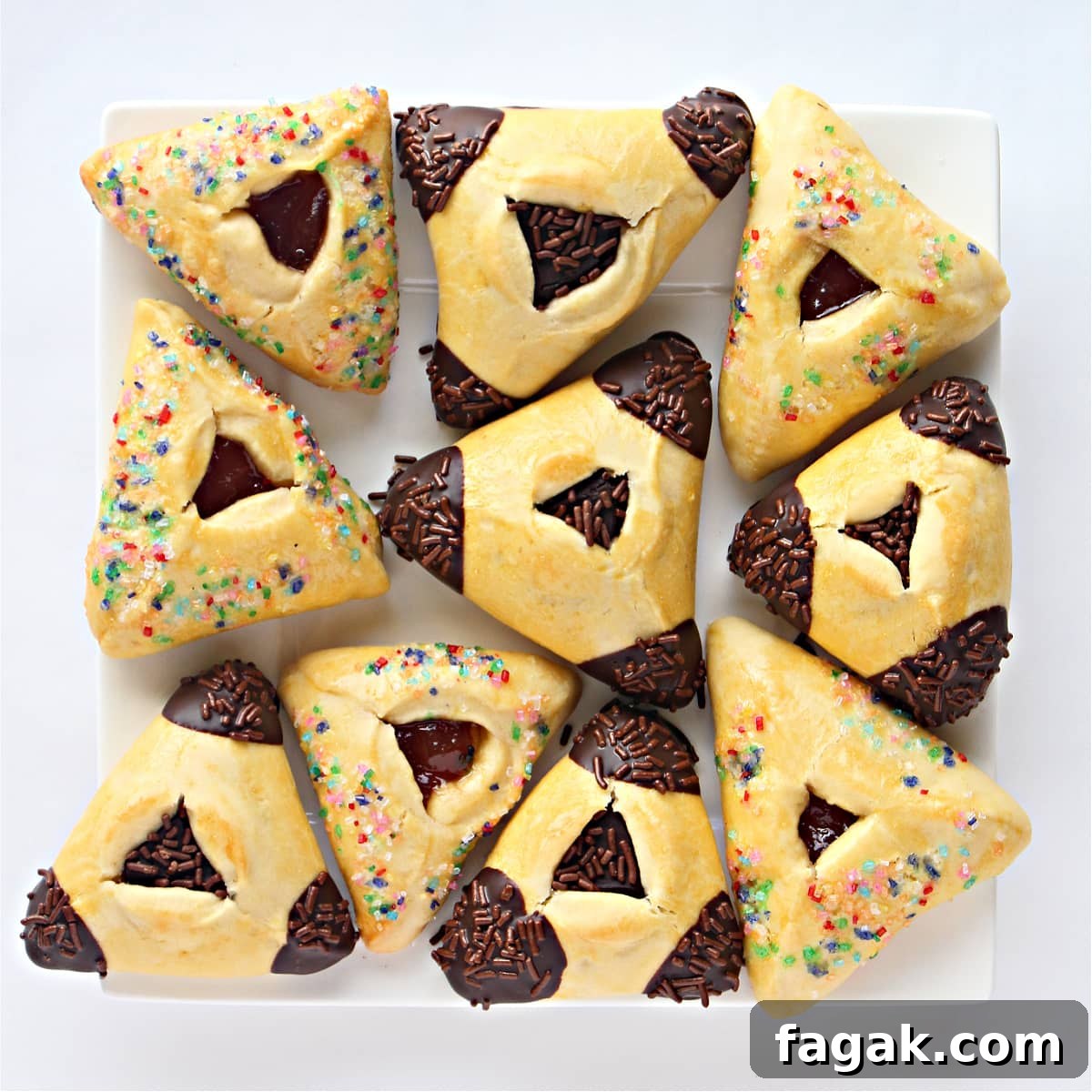
- Drizzle with melted chocolate or a simple icing.
- Sprinkle decorating sugar or non-melting sprinkles over the egg wash before baking—suitable for shipping.
- Dip one or more corners in melted chocolate and add chopped nuts or sprinkles.
- Brush the sides with simple syrup and roll in poppy seeds for a textured finish.
Frequently asked questions
Hamantaschen comes from Yiddish and is commonly interpreted as “Haman’s pockets.” The triangular cookie is symbolic and has been said to represent Haman’s pockets, ears, or hat in the Purim story.
Use only a small amount of filling, pinch the seams firmly, and brush the edges with egg wash before closing to help seal the pockets. Thicker fillings are less likely to leak.
Yes. Hamantaschen can be frozen baked or unbaked for several weeks. Thaw at room temperature before serving.
More Jewish holiday recipes
Try other holiday classics like triangular slice-and-bake hamantaschen, a moist honey cake for Rosh Hashanah, or chocolate-studded mandel bread for Passover. Rugelach, with its flaky pastry wrapped around jam or chocolate, is another favorite for celebrations.

Hamantaschen Recipe
Sweet, soft cookie dough that forms a pocket around your chosen filling, perfect for Purim celebrations.
Notes and packing tips
- Chill the dough for the easiest handling and best texture. If you must skip chilling, add extra flour until the dough is workable.
- When shipping, avoid soft toppings that could melt or smear. Wrap cookies in pairs or small groups in plastic, then place in a larger airtight bag or container for maximum freshness.
- Cookies remain tender because this recipe uses oil instead of butter; flavor develops over the first few days.
First Published: February 22, 2013. Last Updated: February 15, 2024. Updated for extra information and improved user experience.