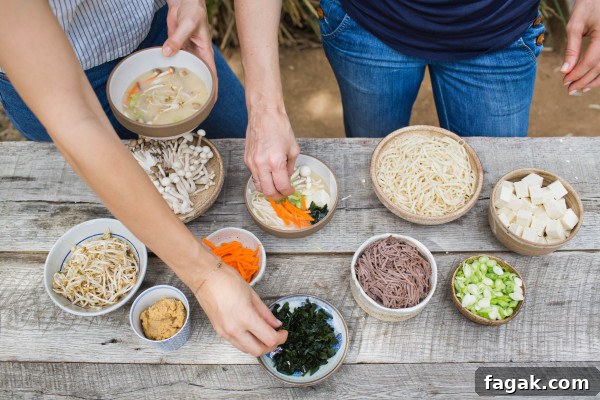
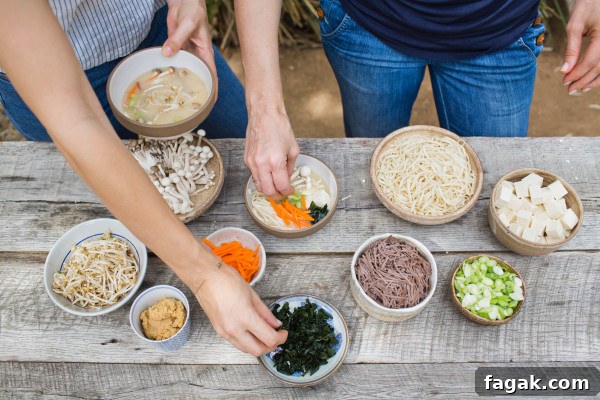
I’ve long loved the concept of a toppings bar. Letting people assemble their own bowls makes meals more fun, encourages picky eaters (kids included) to try a wider variety of foods, and makes hosting easier for the cook. Preparing a soup or toppings bar ahead of time means you can enjoy your guests instead of juggling timing and individual dietary needs.

The inspiration for this miso soup bar came from a conversation about a ski-lodge soup bar—why not recreate that at home? We set everything up at Jenni’s house after a class and photographed the result. Miso soup is simple, nourishing, and widely enjoyed. The key is choosing quality miso and assembling fresh toppings so everyone can customize their bowl.
Why miso is great
Miso paste delivers a rich, savory umami flavor that enhances a simple broth. It’s a fermented product, which affects nutritional and digestive properties. Below are commonly cited benefits to help you decide how to use miso in your kitchen:
- Miso is a fermented food, which can support healthy gut bacteria.
- It provides all essential amino acids, making it a complete protein source.
- Miso contains antioxidants and phytonutrients that contribute to overall well-being.
- It is alkalizing and includes fatty acids that support healthy skin.
- Miso contains isoflavones, which can influence hormonal balance for some people.
- Because miso is not the same as table salt, its sodium behaves differently in culinary contexts; still, use it judiciously if you are watching sodium intake.
- Some varieties provide vitamin B12, a nutrient of particular interest to vegetarians and vegans.
These attributes depend on the type and quality of miso you buy. Choose carefully and follow the tips below to get the most out of your miso.
Buying and preparing miso: do’s and don’ts
DO:
- Choose organic or certified non-GMO miso when possible, since soy is often genetically modified unless labeled organic.
- Look for naturally fermented miso. Fermentation increases beneficial bacteria and improves digestibility—check the label for fermentation-related wording or live cultures.
- Prefer unpasteurized (refrigerated) miso if you want live probiotics; this will usually be found in the refrigerated case.
- Use miso as a savory substitute in recipes where you might otherwise add cheese, adjusting salt accordingly.
- Store miso in the refrigerator—most miso keeps well for months when stored properly.
DON’T:
- Boil miso. High heat destroys the beneficial enzymes and alters flavor. Stir miso into warm broth off the heat.
- Assume all miso is gluten-free—some contain barley or other gluten grains. Read the label if you need a gluten-free product.
- Buy unrefrigerated miso expecting live cultures—shelf-stable miso is typically pasteurized and will not contain live probiotics.
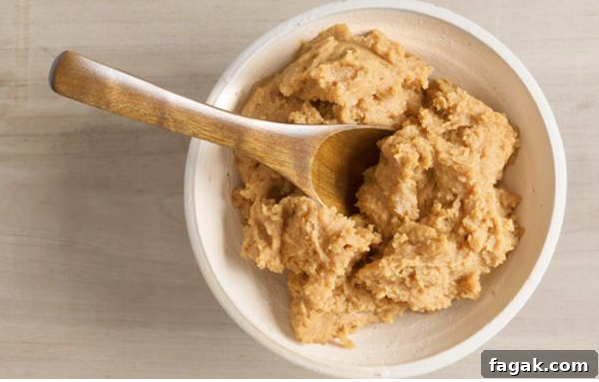
Different miso colors reflect fermentation time and ingredients. White miso is fermented the shortest and is mild and slightly sweet; yellow and red miso are progressively stronger and saltier; darker miso (brown) has the most intense, robust flavor. Choose the type that best suits the flavor profile you want for your soup.
Setting up a miso soup bar
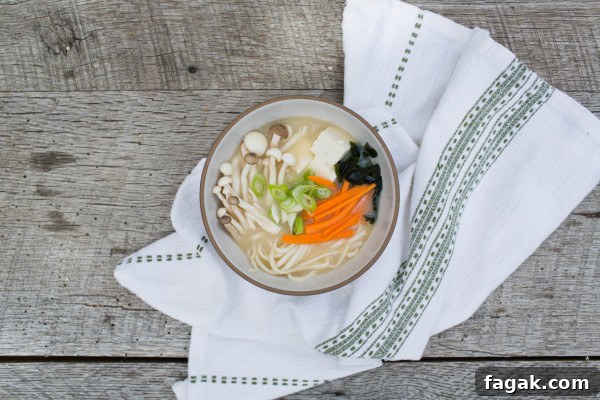
For a soup bar, prepare the broth and mise en place for toppings in advance. The broth is quick to make and keeping all toppings ready allows each guest to assemble a personalized bowl. Below is the assortment we used for this miso soup bar—feel free to mix and match based on dietary needs and preferences.
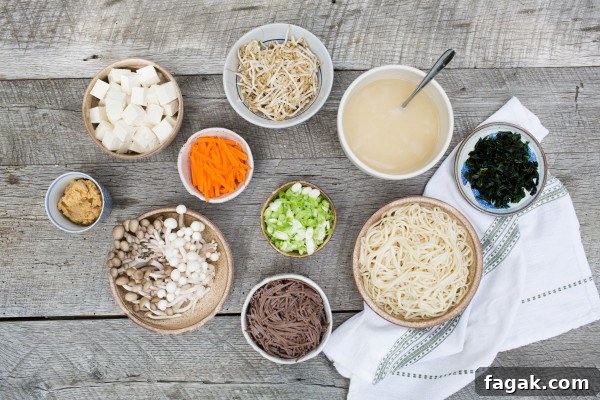
- Organic white miso (mild, slightly sweet)
- Sprouted organic tofu, cubed
- Grated or julienned carrots
- Bean sprouts
- Rehydrated wakame (seaweed)
- Udon noodles
- Soba noodles (100% buckwheat for a gluten-free option)
- Enoki mushrooms (brown or white)
- Scallions (thinly sliced)
Other excellent toppings: soft-boiled eggs, cooked shrimp or pork, shelled edamame, cabbage, spinach, bok choy, or any seasonal greens. Arrange toppings in bowls so guests can assemble bowls quickly and customize texture and flavor.
Miso Soup Recipe
Ingredients (serves 4)
- 4 1/4 cups water
- 1 6-inch piece kombu (dried kelp)
- 1 cup dried bonito flakes (optional; these are smoked, dried fish flakes)
- 1/2 cup rehydrated wakame, drained and chopped if needed
- 4 tablespoons organic unpasteurized miso (white miso recommended)
- Shoyu or tamari, to taste (optional)
- Toppings as desired: grated carrots, thinly sliced mushrooms, scallions, baby spinach, cubes of firm tofu, cooked shrimp or pork, soft-boiled egg, bean sprouts, seaweed, noodles
Instructions
- Make the dashi (broth): In a medium saucepan over medium-high heat, combine the water and the piece of kombu. Bring to a simmer, then remove from heat just before boiling. Add the bonito flakes, cover, and let steep for 5 minutes.
- Strain the stock through a fine-mesh sieve or a cheesecloth-lined colander into a bowl or another saucepan. If not using immediately, cool uncovered, then refrigerate covered for up to a week.
- Return most of the strained stock to a saucepan and heat until hot but not boiling.
- Reserve 1/2 cup of hot stock in a small bowl and whisk in the miso until smooth. Either stir the miso mixture back into the saucepan if serving right away, or add a spoonful of the miso mixture to each individual serving bowl and ladle the hot stock on top. Finish each bowl with desired toppings and a splash of shoyu or tamari if needed.
Note: Because miso is a live, fermented food, avoid boiling it; add it off the heat to preserve its enzymes and delicate flavor.
 Like this recipe? Rate and share your thoughts in comments or with friends after trying the soup bar at your next gathering.