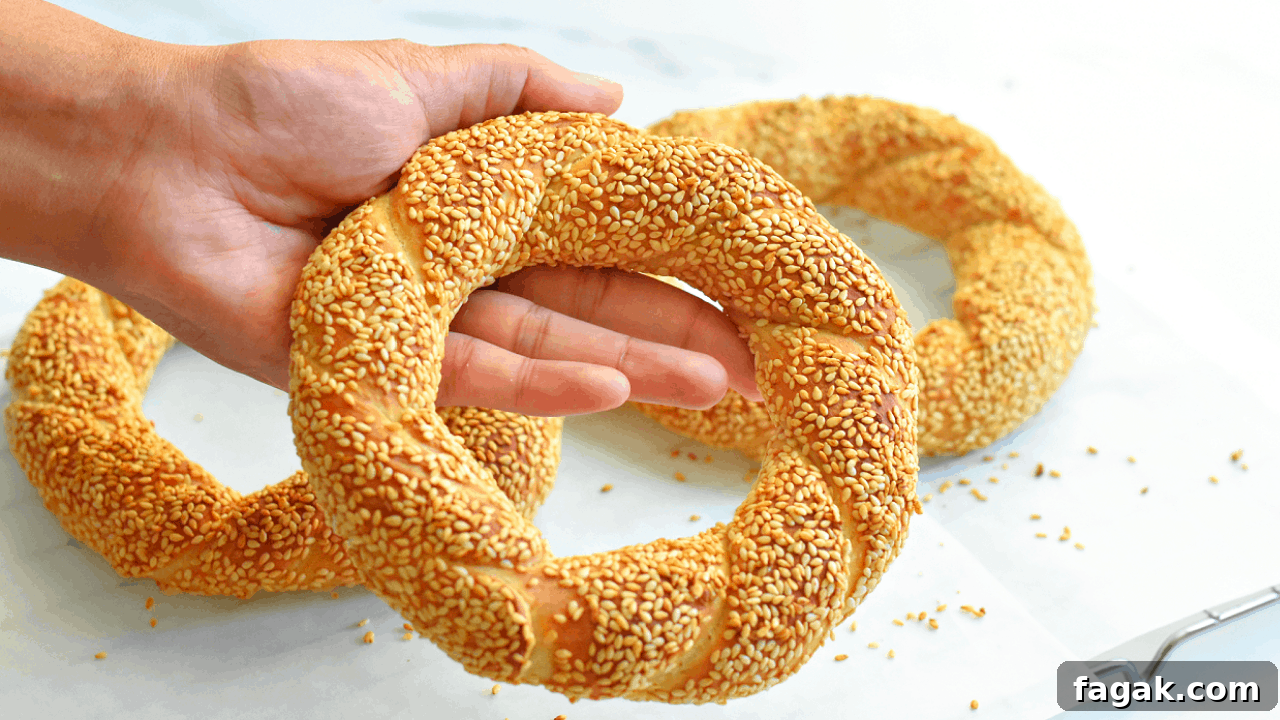
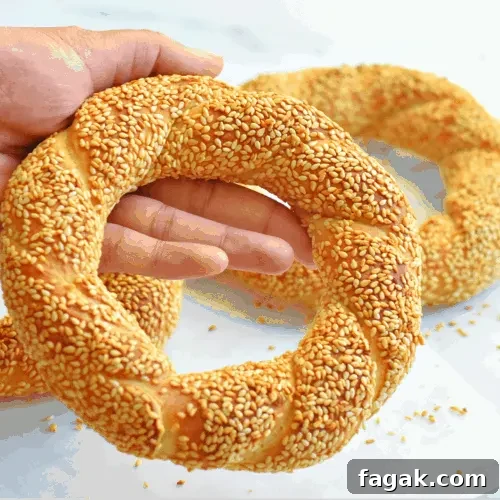
This Turkish Simit recipe shows how to make classic simit with a crisp, sesame-encrusted crust and a soft, airy interior.
Simit is a beloved Turkish street food and breakfast bread — a sesame-coated ring that you’ll find sold from carts and bakery windows across Istanbul and throughout Turkey.
If you enjoy traditional Turkish breads, try this simit recipe after our other posts on Turkish flatbread (bazlama) and Ramadan pide. Simit captures the flavors of the city: a slightly sweet, nutty crust and a tender crumb inside.
What is simit
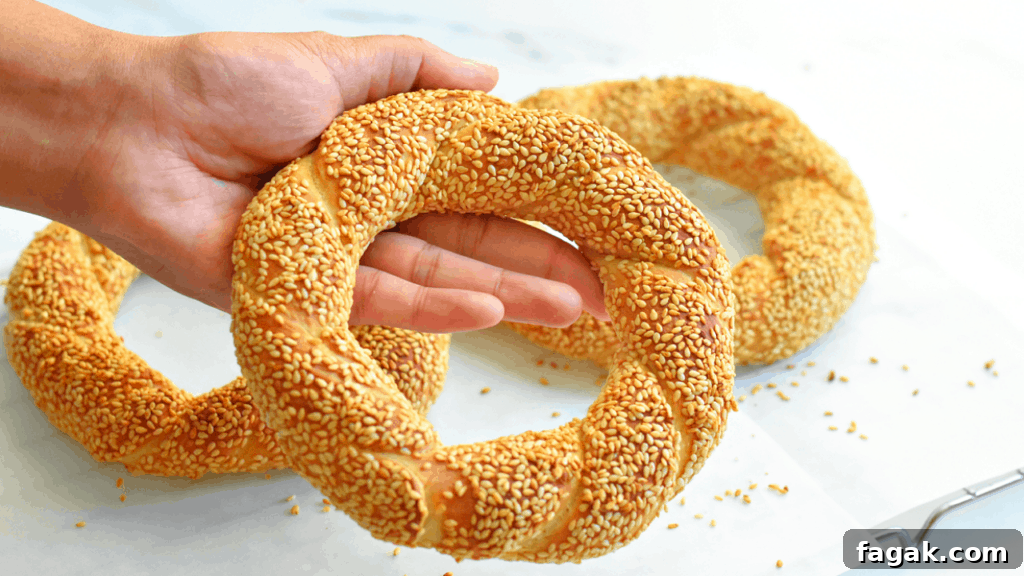
Simit is a circular, sesame-crusted bread from Turkey, sometimes called a Turkish bagel. Traditionally the rings are dipped in a sweet molasses mixture and rolled in sesame, creating a crisp exterior and a flavorful crust. Variations of simit exist across regions that were part of the Ottoman Empire and throughout the Middle East. It is also known by names like gevrek, bokeh, or koulouri in different areas.
How does simit taste
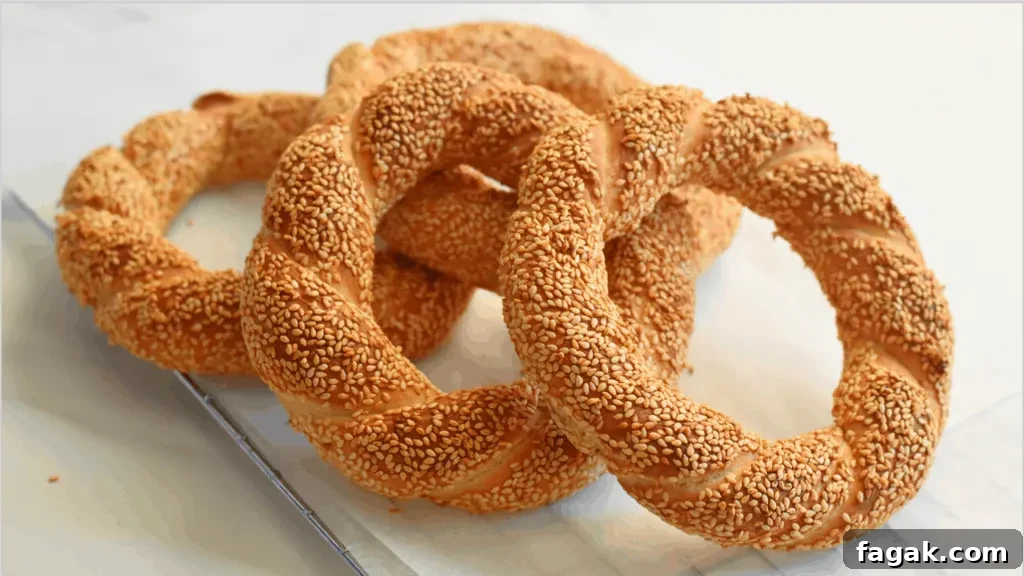
Simit is a yeast bread with a distinctive aroma and taste. It delivers a satisfying contrast of crunchy crust and chewy interior with a mild malt-like sweetness from the molasses and a toasty nuttiness from the sesame seeds. Street-style simit tends to be thinner and denser, like a twisted bagel, while bakery versions can be softer and more bread-like.
Turkish simit ingredients
This recipe uses simple ingredients to recreate authentic homemade simit.
For the dough
- Flour: 325 g (about 2 1/2 cups, loosely packed)
- Water: 195 ml (3/4 cup + 1 tbsp), lukewarm
- Salt: 1 tsp
- Sugar: 1 tbsp
- Instant yeast: 1 tsp (or 1 1/4 tsp active dry yeast)
For the topping
- Grape molasses (üzüm pekmezi): 100 ml
- Water: 60 ml (1/4 cup)
- Roasted sesame seeds: 150 g (about 1 cup)
How to make Turkish simit
This method produces street-style simit with a crisp, sesame-coated crust and a tender interior.
1. Prepare the dough
Combine lukewarm water (about 90°F / 32°C) with sugar, salt and yeast in a bowl. Stir to dissolve. Add the flour and mix to form a dough. Simit dough is drier than many bread doughs — you want a tight, non-sticky dough similar to a panini or sandwich dough.
Knead for about six minutes until it becomes soft. The surface may not appear perfectly smooth; that’s normal for simit.
2. Portion the dough
Divide the dough into four equal pieces. Roll each piece into a cylinder roughly 12 cm long.
3. Rest
Cover the dough pieces and rest them for 10 minutes.
4. Pre-shape and braid the rings
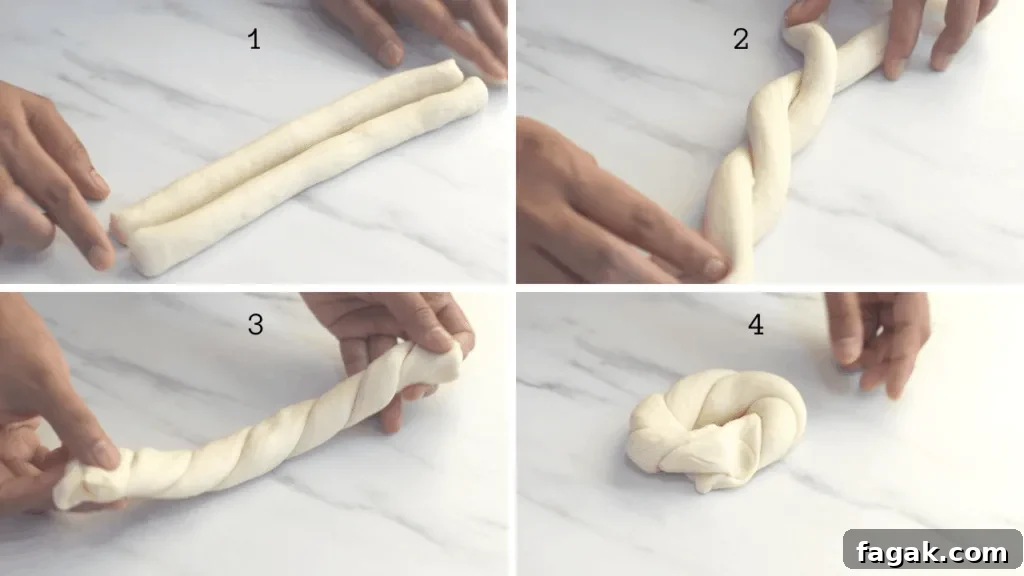
After resting, divide each portion into two equal parts. Roll each piece into a strand about 30–32 cm long. Lay two strands side by side and twist the ends in opposite directions to braid them together. Join and pinch the ends to form a ring. Repeat with the remaining pieces.
5. Coat with molasses and sesame
Mix the grape molasses with water to make a thin glaze. Dip each ring into the molasses mixture, then press into the roasted sesame seeds until fully coated. Transfer the coated simit to a baking sheet.
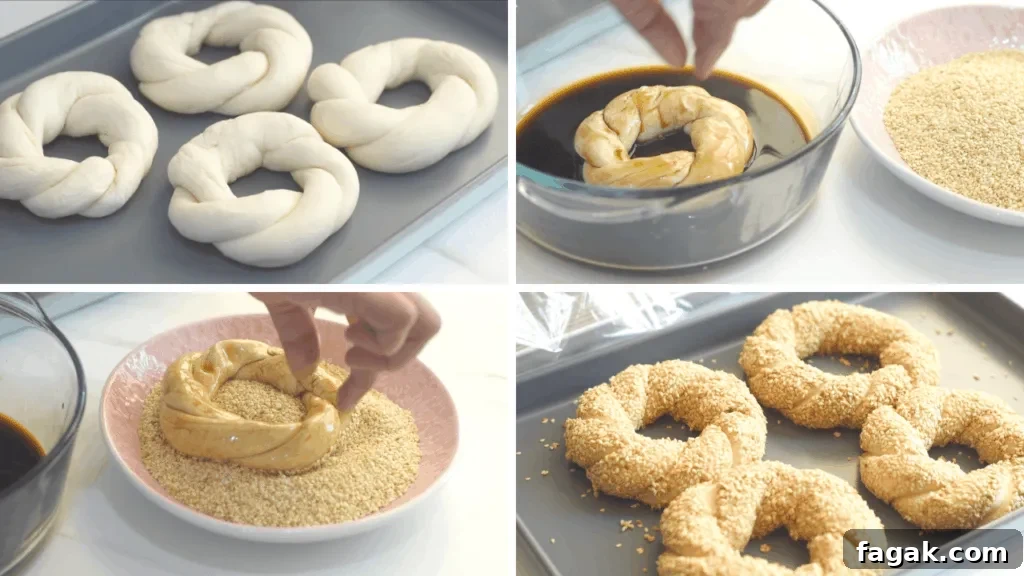
6. Final proof
Cover the coated simit and let them rise in a warm place for about 30 minutes. They should puff slightly.
7. Final shaping
After proofing, gently stretch or even out each ring so the shape is uniform. Arrange the simit on your baking tray, leaving space between rings.
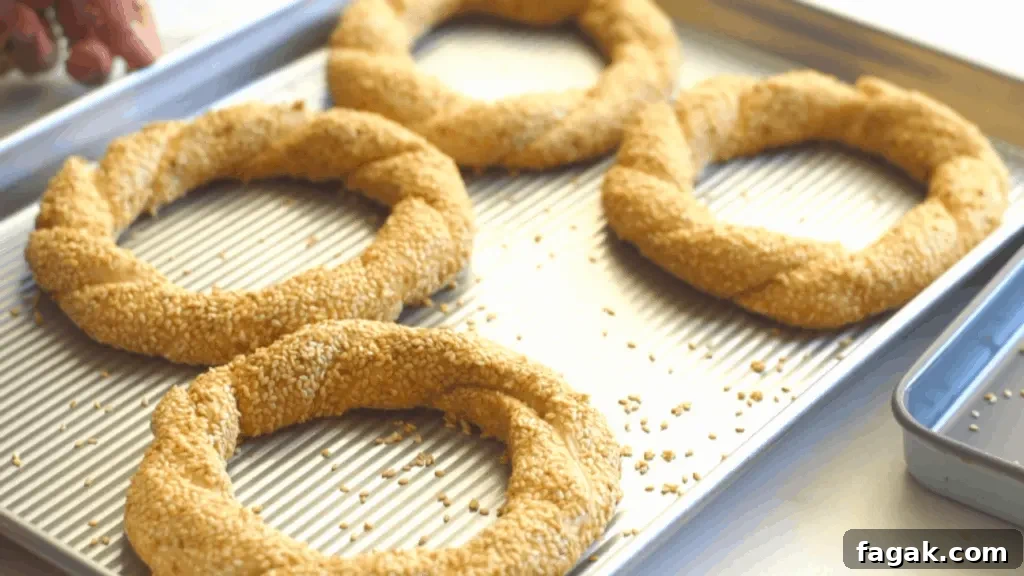
8. Bake the simit
Preheat the oven to 230°C (450°F). Bake the simit for 10 minutes, then reduce the temperature to 200°C (400°F) and bake an additional 8–10 minutes until golden brown and crisp. The finished simit should be golden, crunchy outside and soft inside.
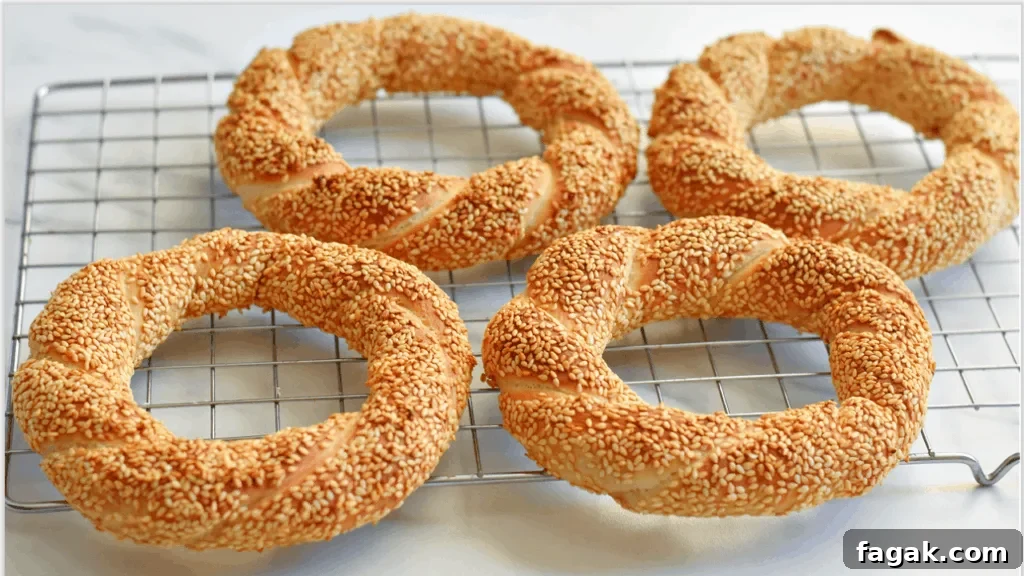
How to eat simit
Simit is excellent for breakfast with feta and olives, alongside tea, or spread with butter, jam, or chocolate spread. It’s a versatile snack any time of day.
Why use grape molasses?
- It gives the simit a distinctive flavor.
- It helps the sesame seeds adhere to the dough.
- It contributes to a rich, golden color after baking.
Substitutes for grape molasses
- Pomegranate molasses (more tart — adjust sugar if needed)
- Honey
- Brown sugar or white sugar (brown preferred)
- Other sweet syrups such as date syrup
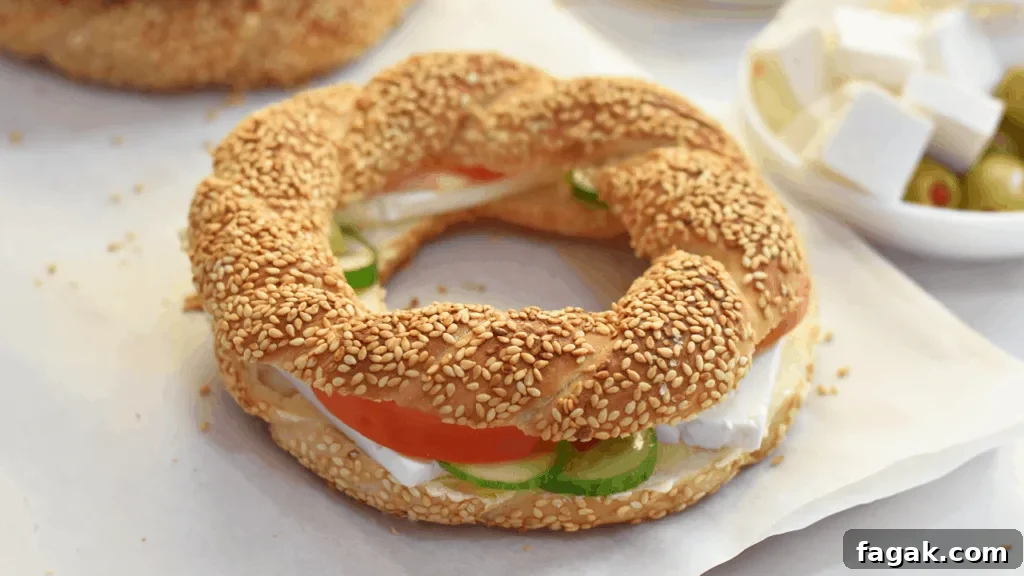
Is simit the same as a bagel?
No. Although both are ring-shaped, simit and bagels differ in preparation and texture. Bagels are typically boiled before baking, resulting in a dense, chewy interior. Simit is not boiled; it has a crisp exterior and a lighter, airier inside. The molasses-and-sesame coating of simit gives it a more pronounced toasted, slightly sweet flavor compared with a sesame bagel.
How to store simit
Let simit cool to room temperature, place in a plastic bag removing as much air as possible, and store at room temperature for up to two days. Reheat or toast briefly before serving to restore crispness.
How to freeze simit
Cool to room temperature, place in a freezer bag with the air removed, and freeze. Thaw for about 10 minutes at room temperature and reheat in a preheated 150°C (300°F) oven for 10–12 minutes to refresh.
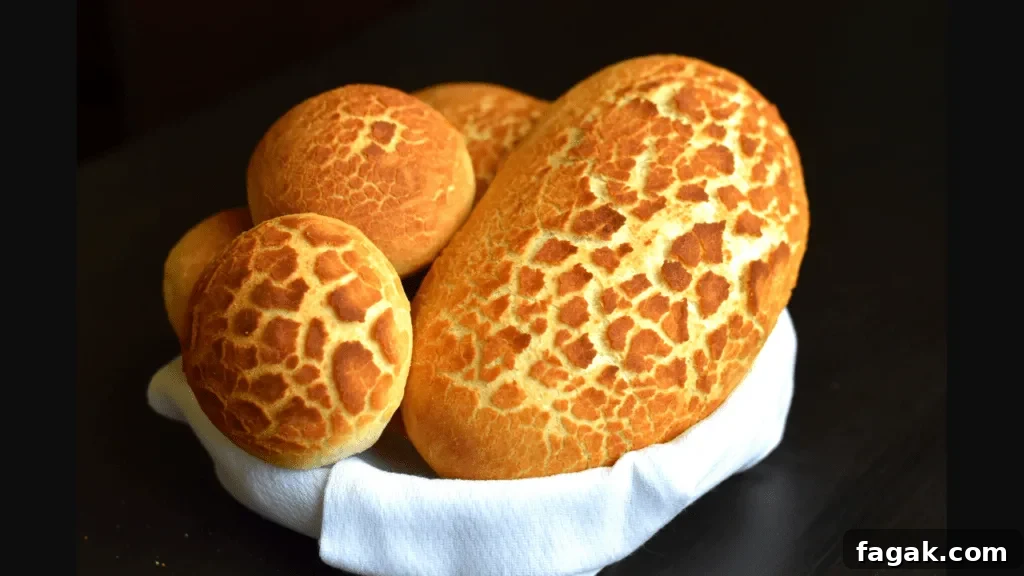
You may also like this Tiger Bread Recipe, which has a crunchy crust and soft bread inside.
If you love Turkish bread recipes you might also like:
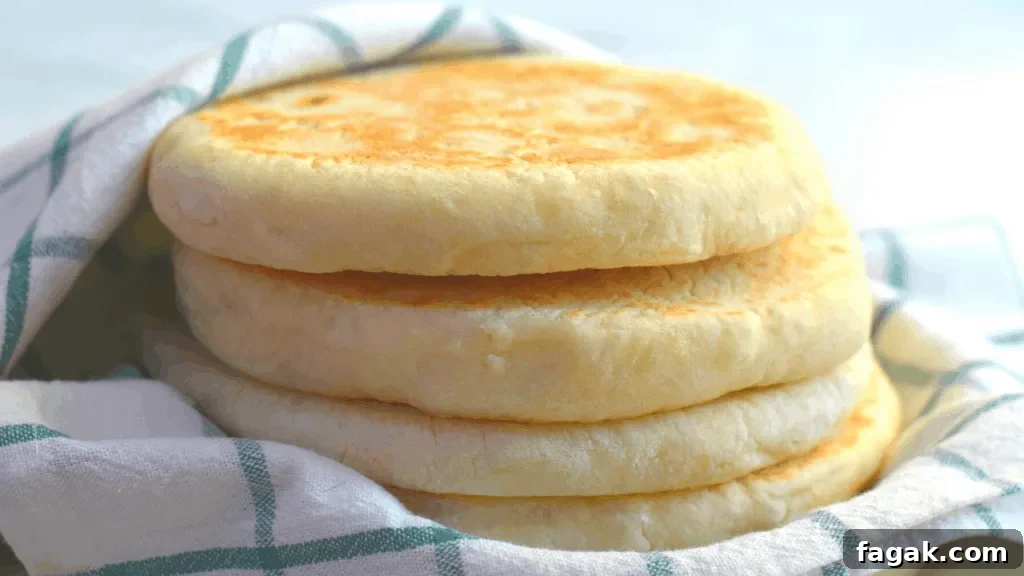
Soft Village Style Turkish Flatbread (Bazlama)
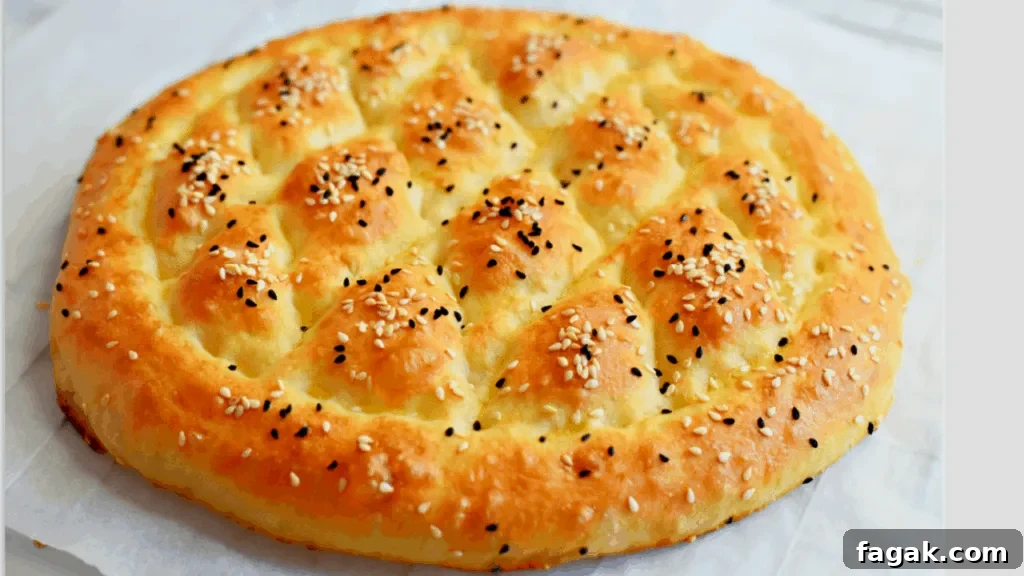
Easy Turkish Ramadan Pidesi
Turkish Simit Recipe: Step by step video
Turkish Simit Recipe
Pin Recipe
Save Recipe
Ingredients
For the bread dough
- 325 g Flour (about 2 1/2 cups)
- 195 ml Water (3/4 cup + 1 tbsp), lukewarm
- 1 tsp Salt
- 1 tbsp Sugar (about 12.5 g)
- 1 tsp Instant yeast (or 1 1/4 tsp active dry yeast)
For topping
- 100 g Grape molasses (üzüm pekmezi), about 1/3 cup
- 60 ml Water (1/4 cup)
- 150 g Roasted sesame seeds (about 1 cup)
Instructions
1. Prepare the dough
- Mix lukewarm water with sugar, salt and yeast. Stir to dissolve, add flour and combine. Knead about 6 minutes until soft. The dough may look slightly rough — this is normal.
2. Divide the dough
- Divide into four equal portions and roll each into a cylinder about 12 cm long.
3. Rest
- Cover and rest for 10 minutes.
4. Pre-shape
- Split each portion into two, roll each into a 30–32 cm strand. Place two strands side by side and twist the ends in opposite directions to braid, then pinch ends together to form a ring. Repeat.
5. Coat with molasses and sesame
- Dip rings into the grape molasses mixture and coat thoroughly with sesame seeds. Place on a baking sheet.
6. Final proof
- Cover and let rise in a warm place for 30 minutes until slightly puffed.
7. Final shaping
- Gently stretch each ring to even out the shape and place on a baking tray.
8. Bake
- Bake at 230°C (450°F) for 10 minutes, then reduce to 200°C (400°F) and bake another 8–10 minutes until golden and crisp.