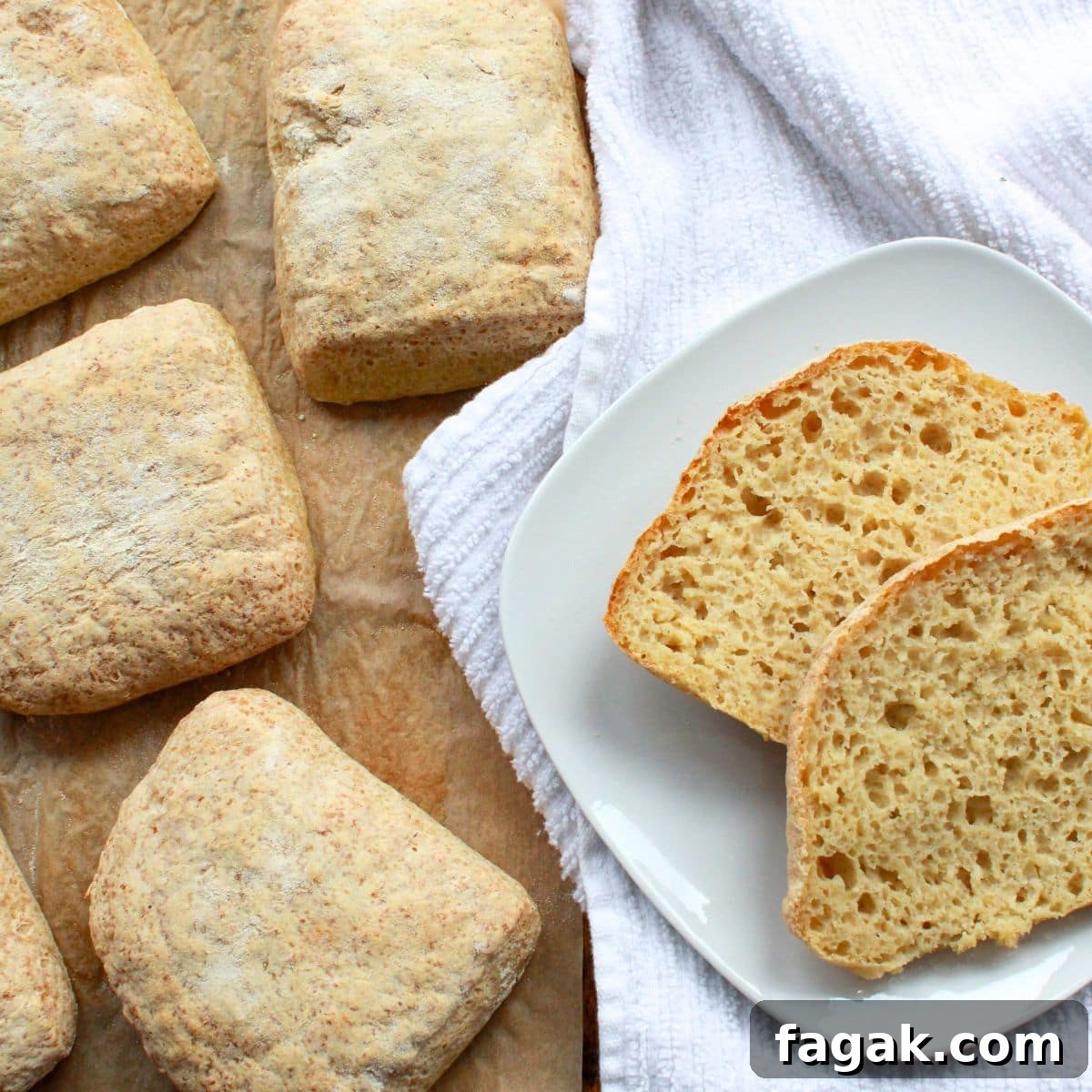
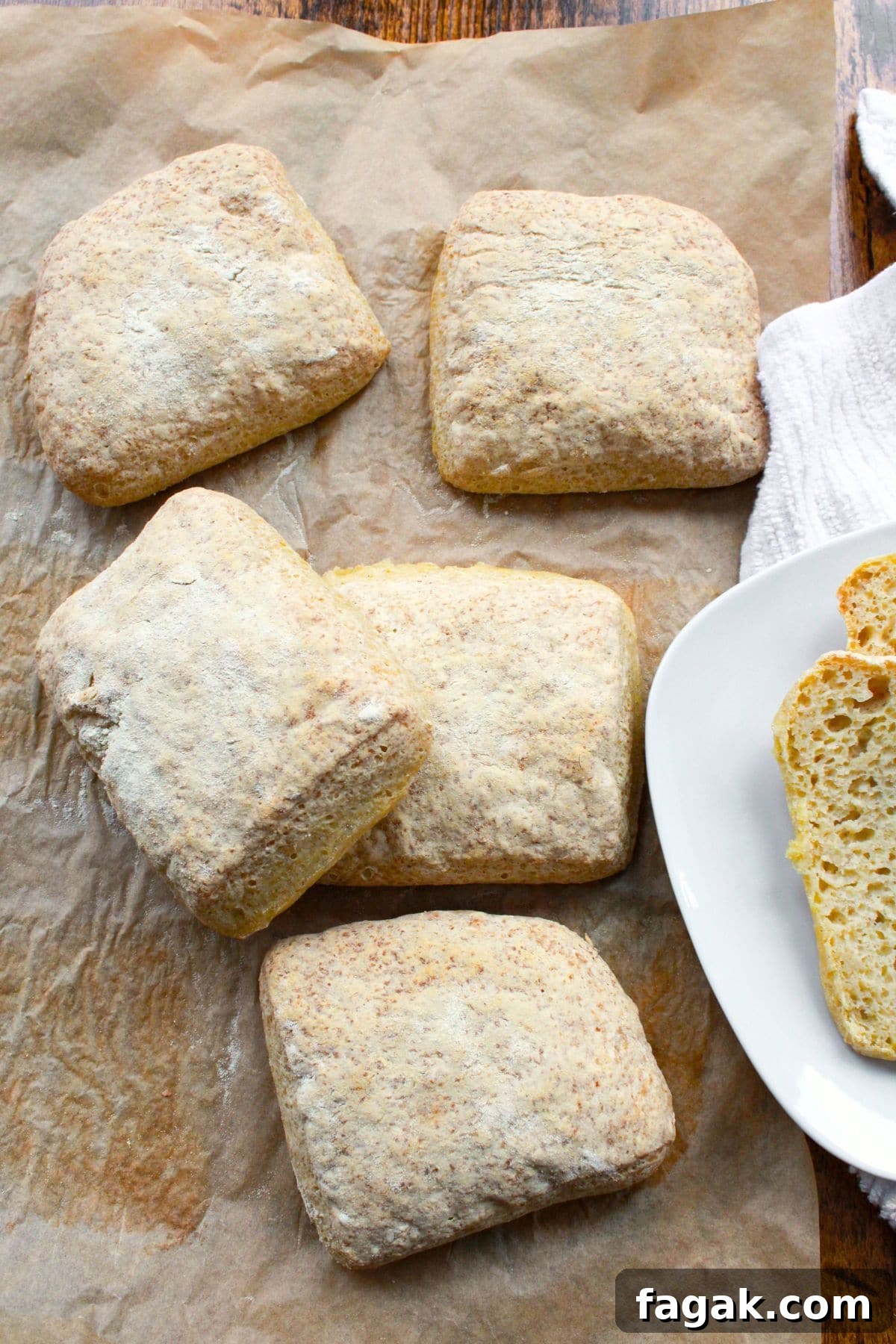
This gluten-free ciabatta delivers the airy, open crumb of classic Italian ciabatta without gluten or dairy. It’s ideal for toasting, making sandwiches or serving alongside soups. Make a double batch and freeze extras to enjoy homemade bread anytime.
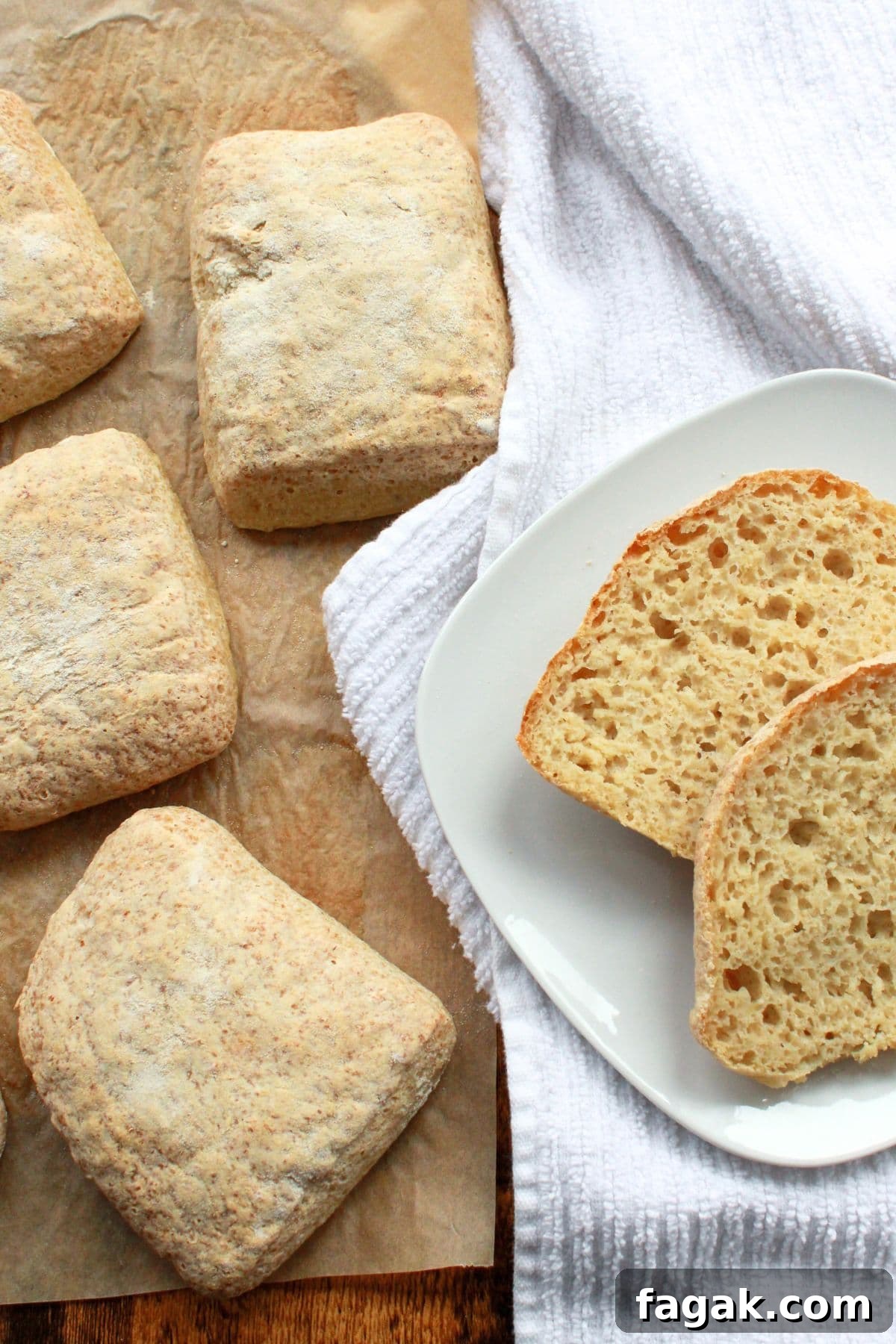
Delicious Ciabatta Bread
Ciabatta is a beloved Italian loaf with a flat, rectangular shape. We enjoy slicing a roll lengthwise, toasting it until crisp and building hearty sandwiches. Its crisp golden crust and airy interior also make it perfect for dipping in olive oil or serving with a steaming bowl of soup.
While traditional ciabatta is made with wheat flour, this recipe uses gluten-free and dairy-free ingredients so everyone can enjoy that classic texture and flavor.
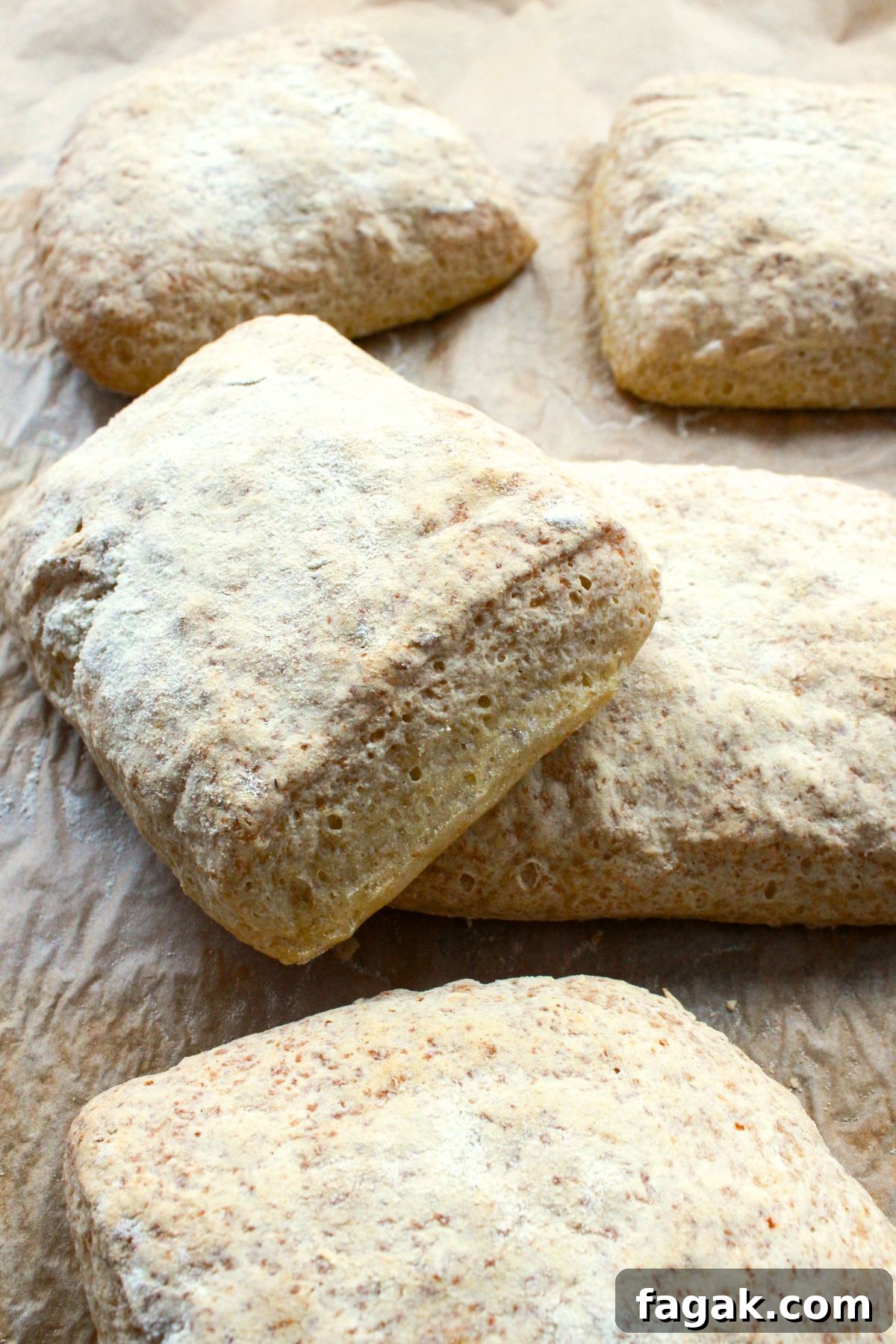
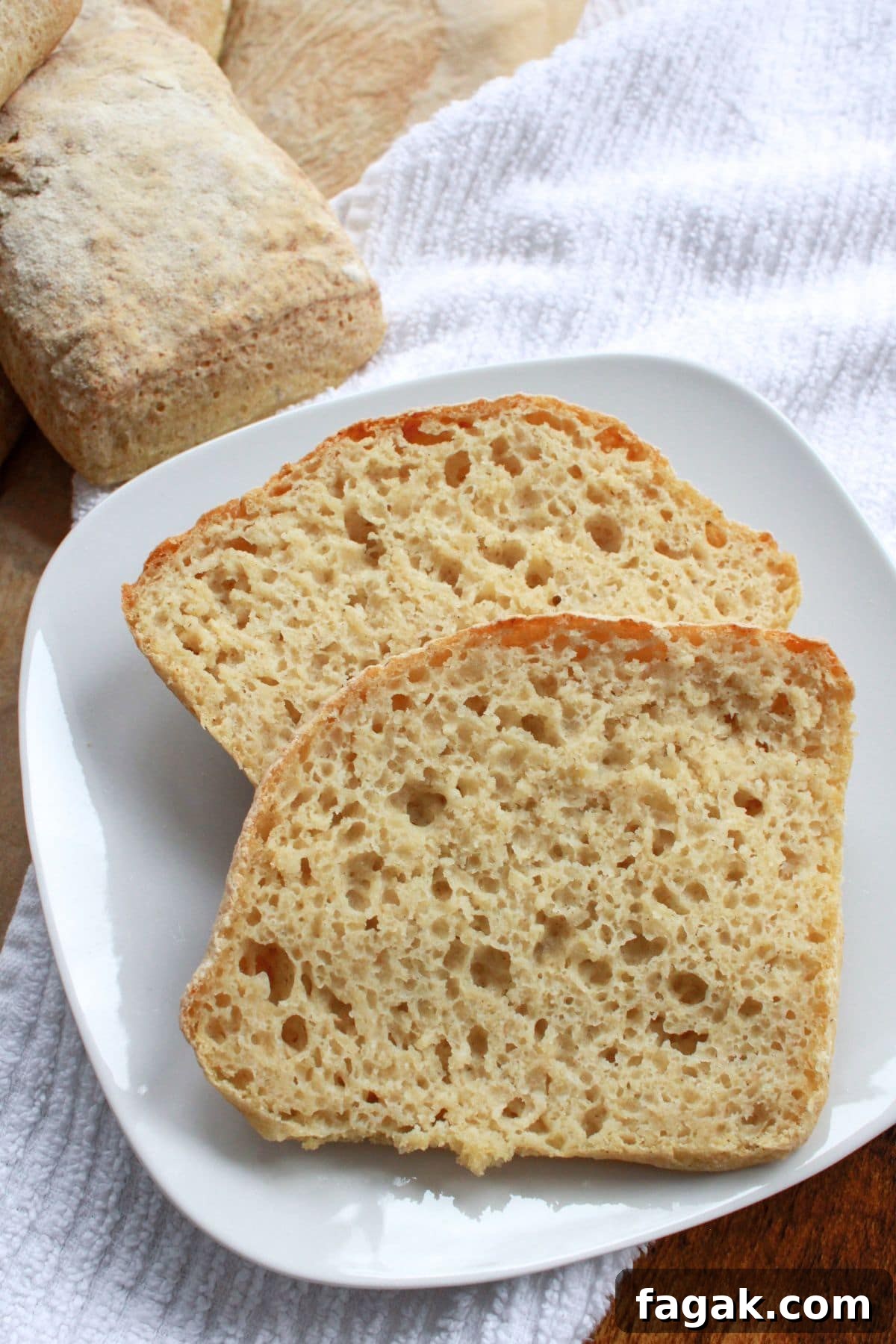
Why You’ll Love this Recipe:
- Simple Ingredients: All ingredients are easy to find at a regular grocery store.
- Easy to Make: The process is straightforward — combine wet and dry ingredients, shape, let rise and bake.
- Gluten-Free & Dairy-Free: This version is suitable for those with Celiac disease or lactose intolerance.
Ingredients You’ll Need:
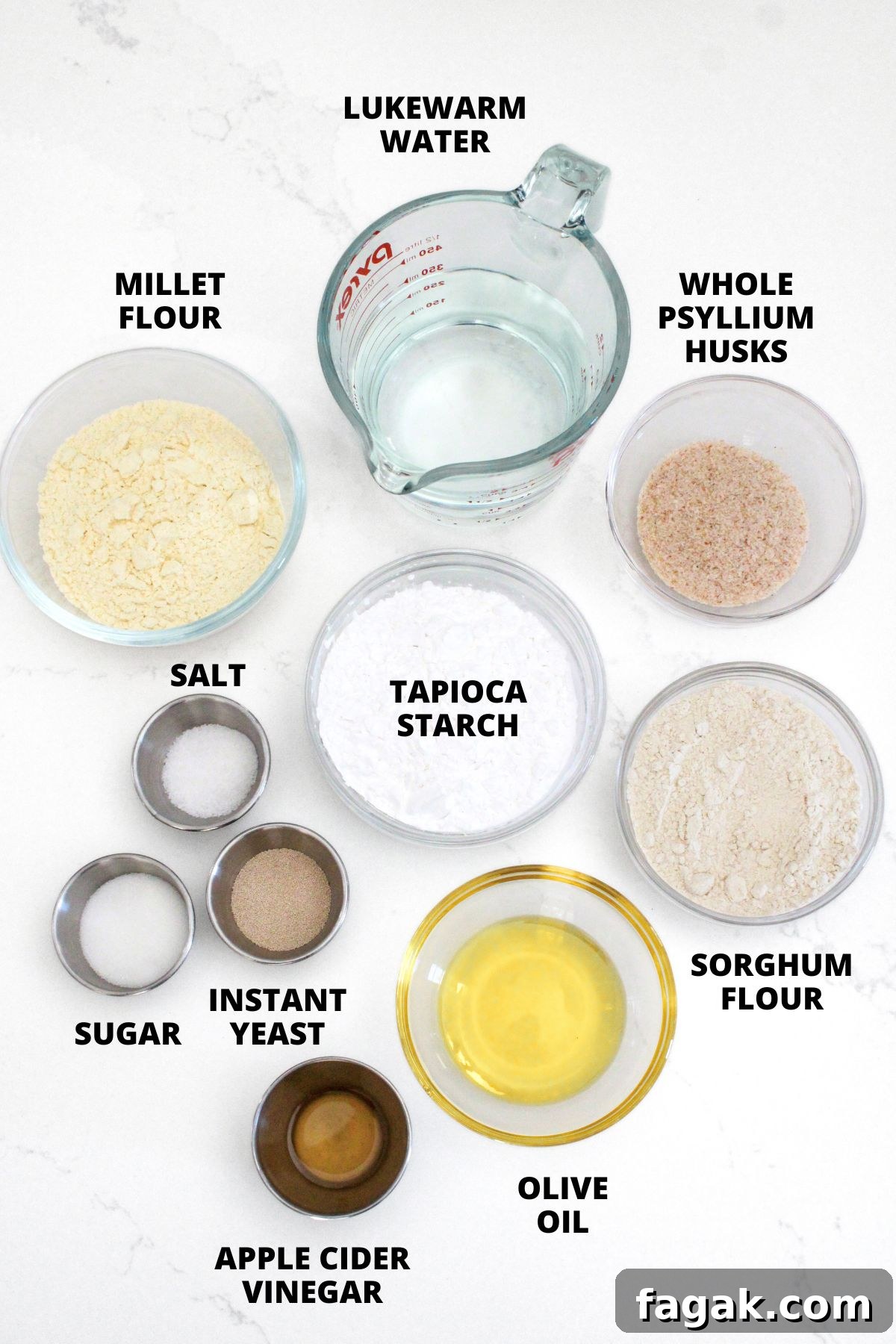
Below is an overview of the ingredients used for this gluten-free ciabatta. Exact measurements are available in the printable recipe card at the bottom.
Recipe Notes & Substitutions:
- Psyllium Husk: Use whole psyllium husks rather than powdered psyllium for best texture; powdered psyllium can be used if needed but in a reduced amount.
- Water: Warm water (105–115°F) helps activate the yeast and improves rise.
- Millet Flour: Millet is the primary flour here and provides structure; avoid substituting unless you account for texture changes.
- Tapioca Starch: Tapioca adds binding and chewiness; arrowroot can be substituted 1:1 if necessary.
- Sorghum Flour: Sorghum can be swapped for brown rice or buckwheat flour, but results will vary slightly.
- Yeast: Instant dry yeast is convenient because it mixes directly with dry ingredients.
- Olive Oil: Extra virgin olive oil adds flavor, but any neutral vegetable oil will work.
- Apple Cider Vinegar: Adds subtle tang and helps create a favorable environment for yeast rise.
How to Make Gluten-Free Ciabatta:
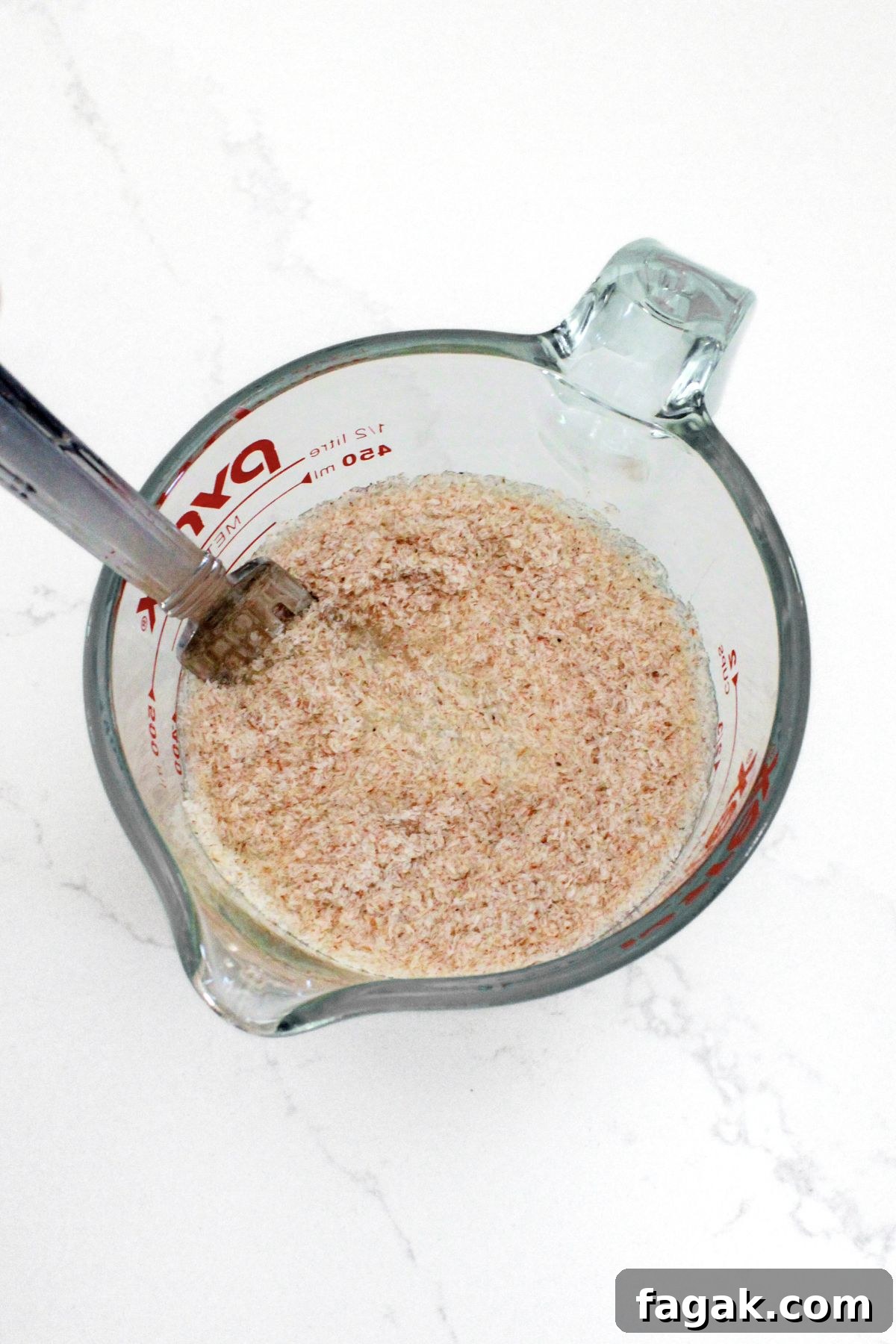
Prepare Psyllium Gel: Stir whole psyllium husks into the lukewarm water and set aside to allow a gel to form while you prepare the dry ingredients.
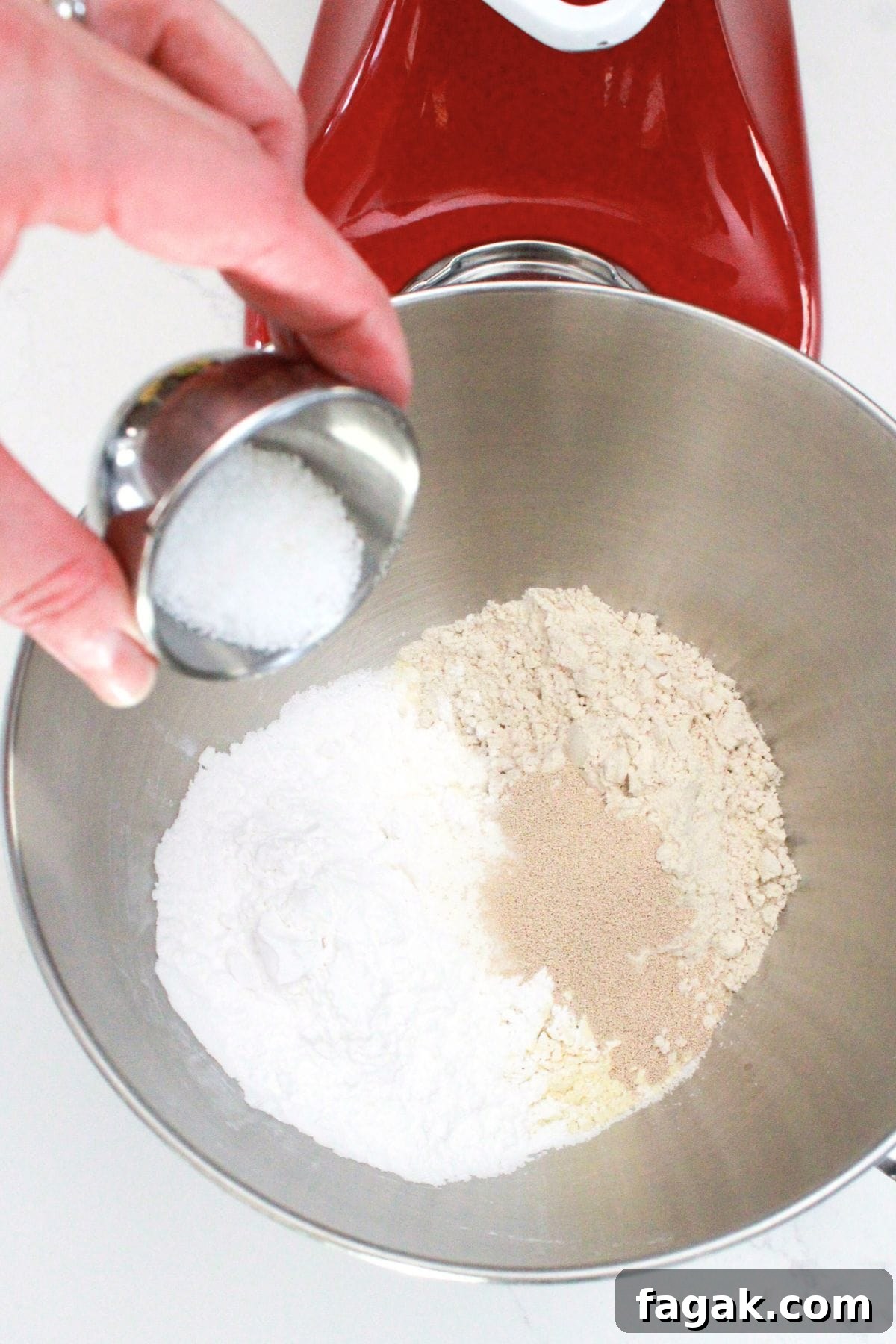
Whisk Dry Ingredients: In a mixing bowl, combine millet flour, tapioca starch, sorghum flour, sugar, instant yeast and salt. Whisk until evenly mixed.
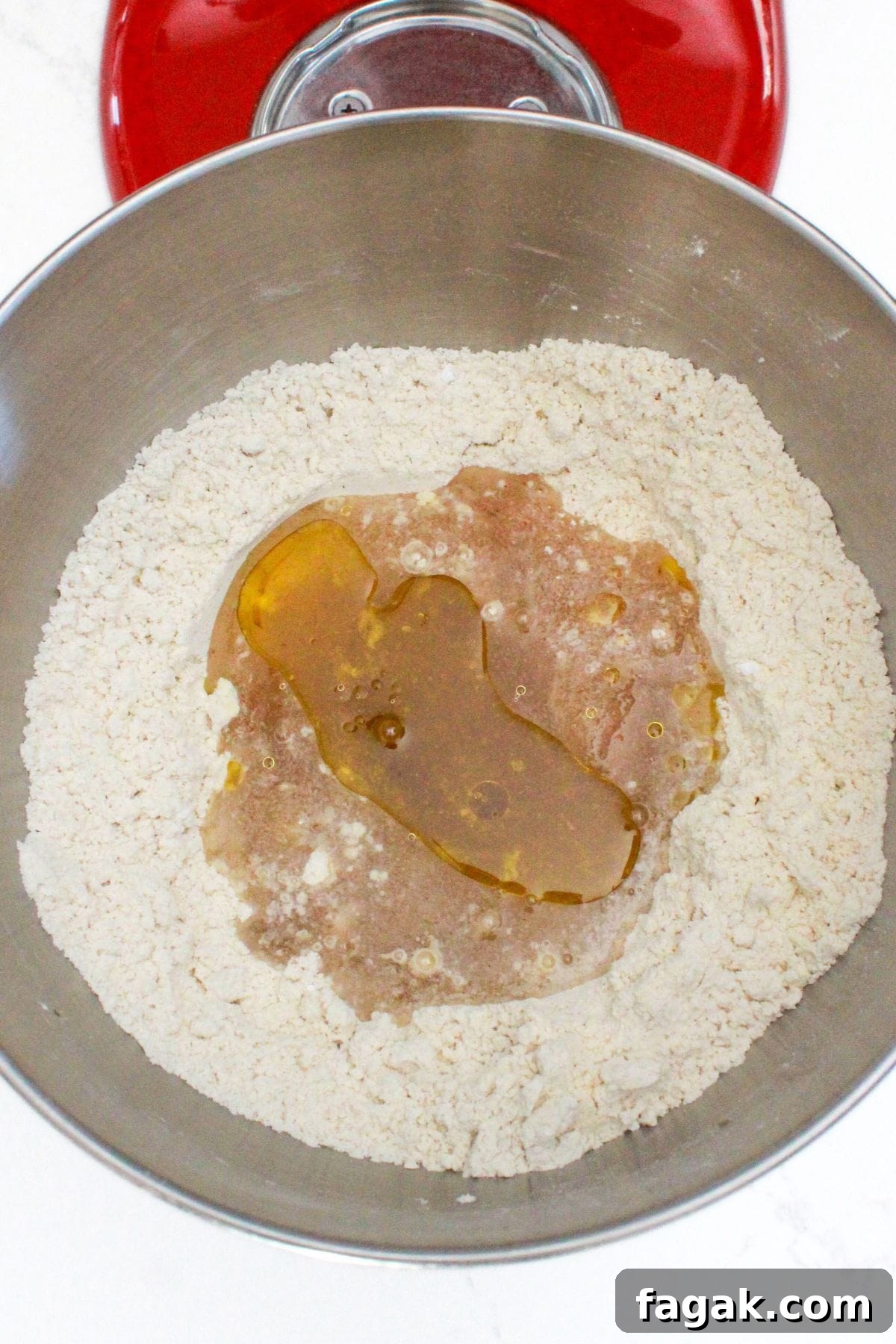
Add Psyllium Gel, Oil & Vinegar: Make a well in the dry ingredients and add the psyllium gel, olive oil and apple cider vinegar. Knead with a dough hook or by hand until the dough pulls away from the bowl and becomes slightly sticky but smooth. Scrape the bowl as needed.
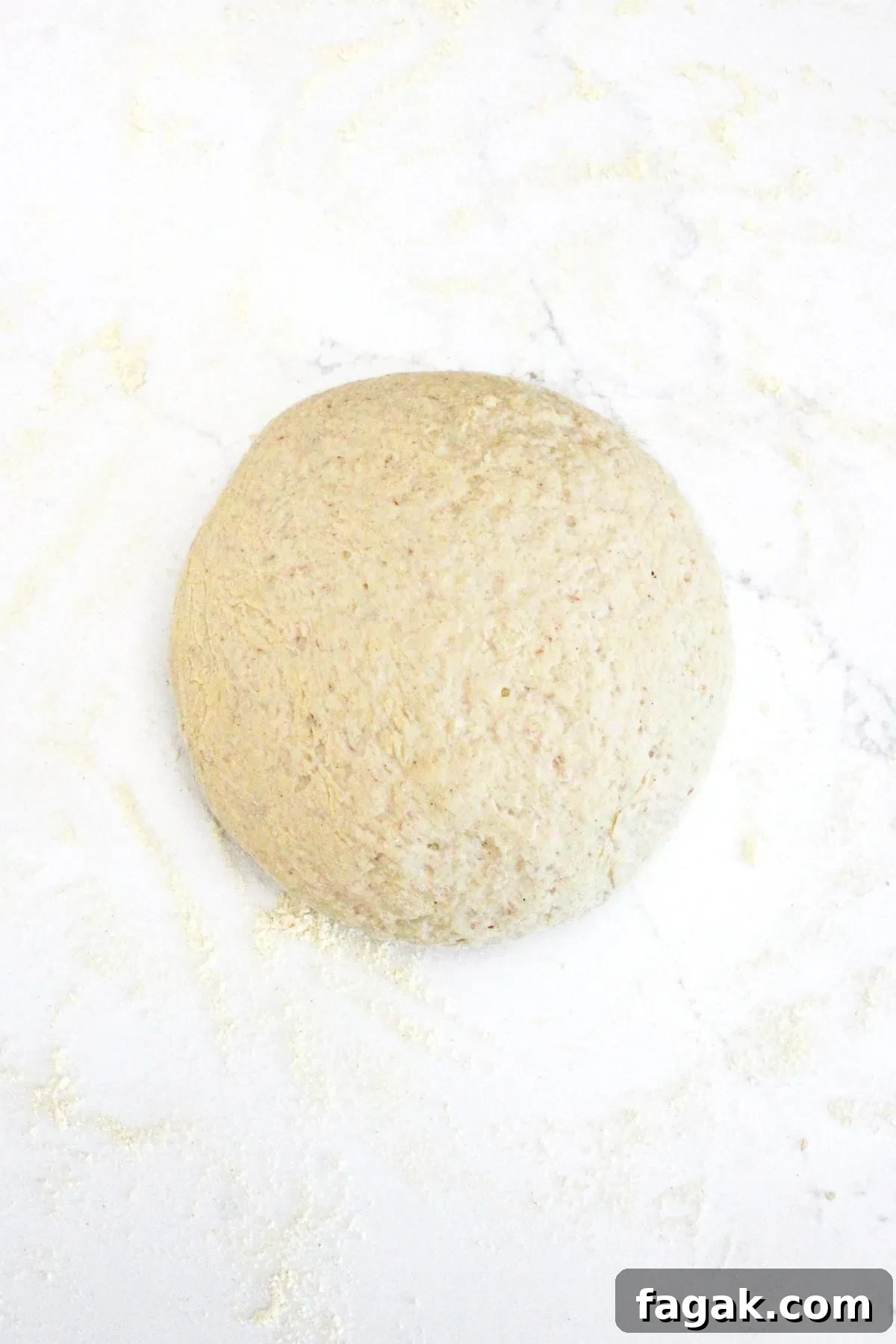
Shape Dough: Turn the dough onto a lightly floured surface, knead briefly by hand and shape into a ball.
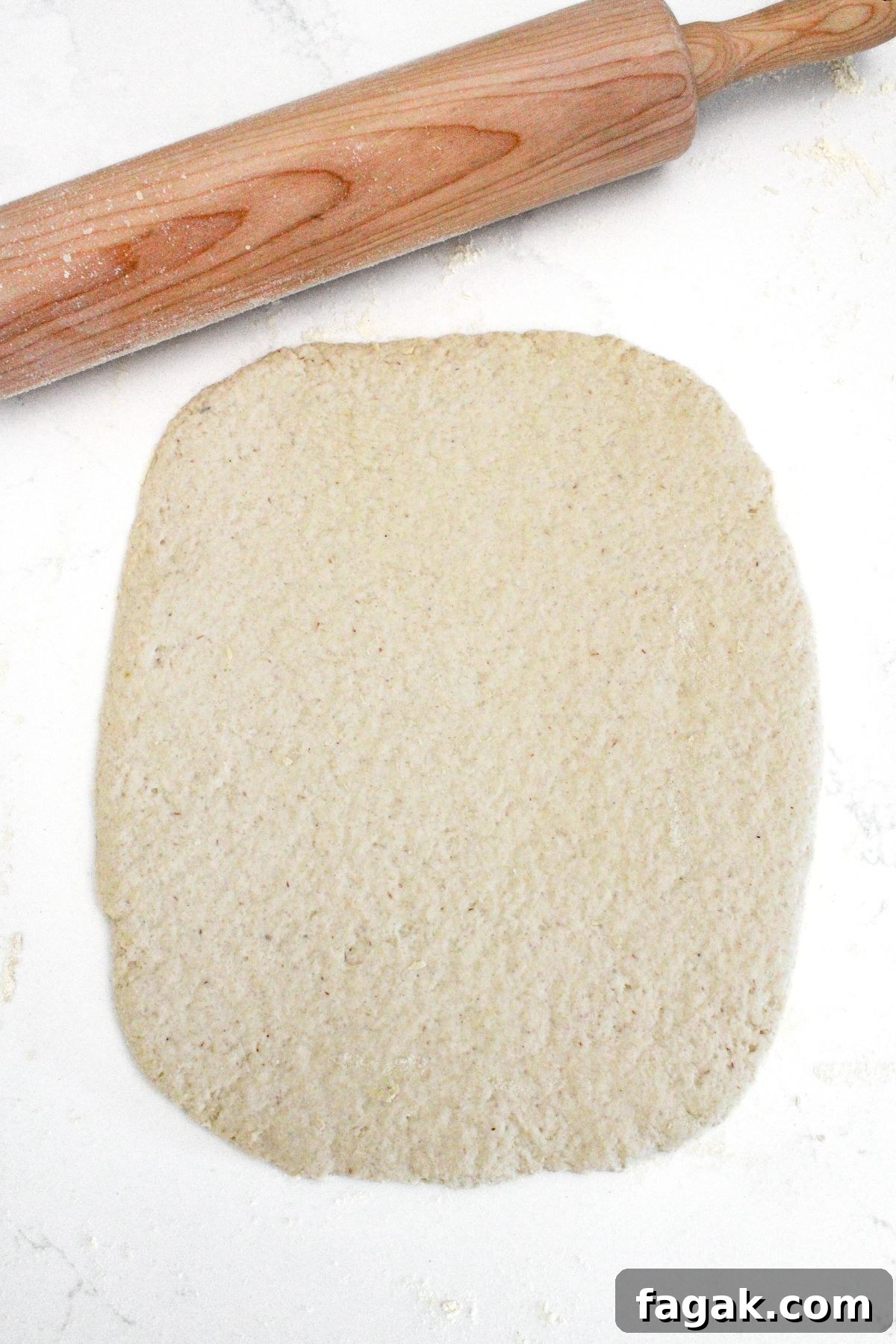
Roll to Even Thickness: Dust a rolling pin with millet flour and roll the dough into a rectangle about 10 inches long by 8 inches wide and roughly 1/2 inch thick.
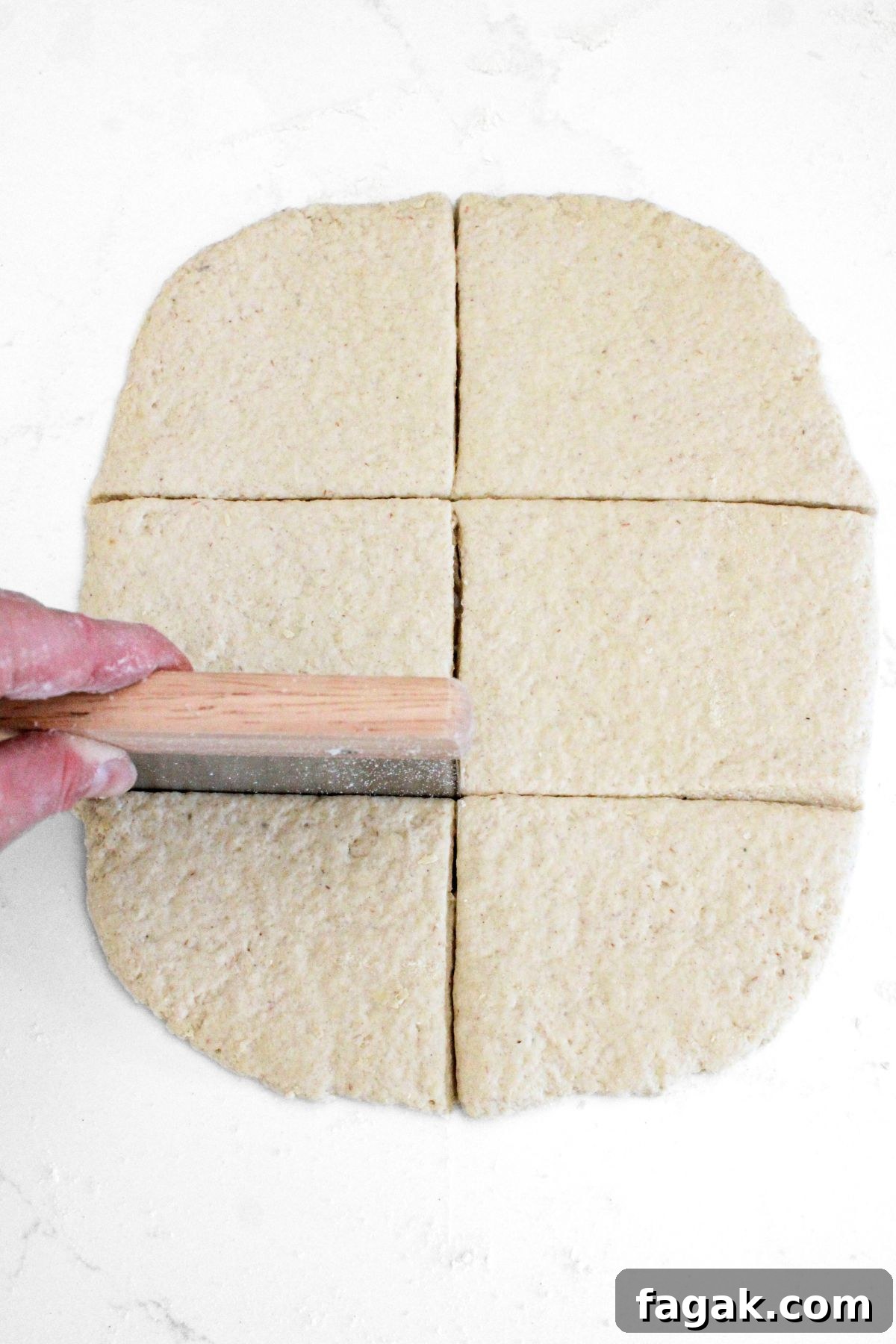
Cut into Rectangles: Cut the dough into six rectangles and place them on parchment paper at least 1 inch apart. Dust the tops generously with millet flour.
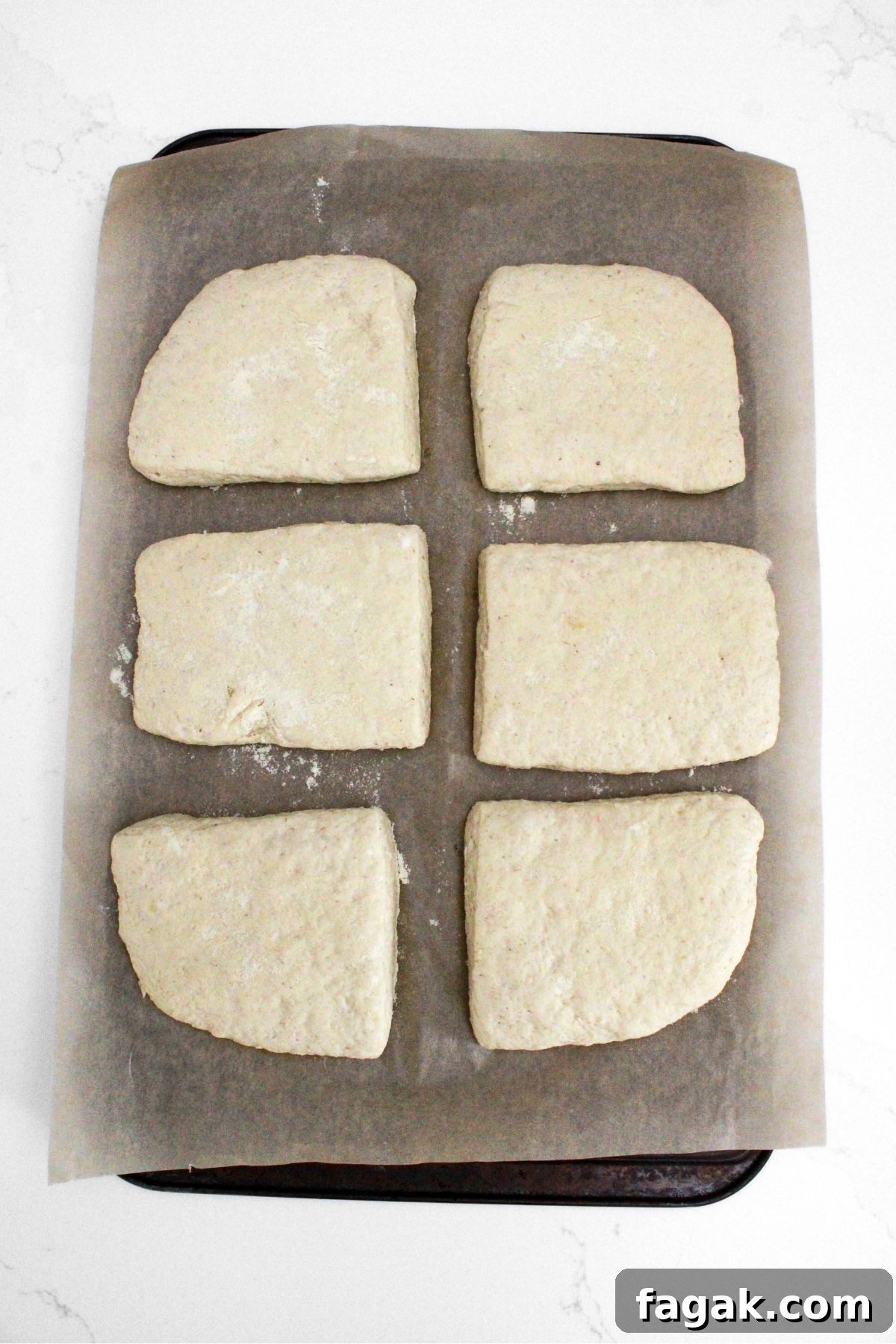
Let Rise: Cover the shaped pieces with plastic wrap and let them rise for about 1 hour, until doubled in size.
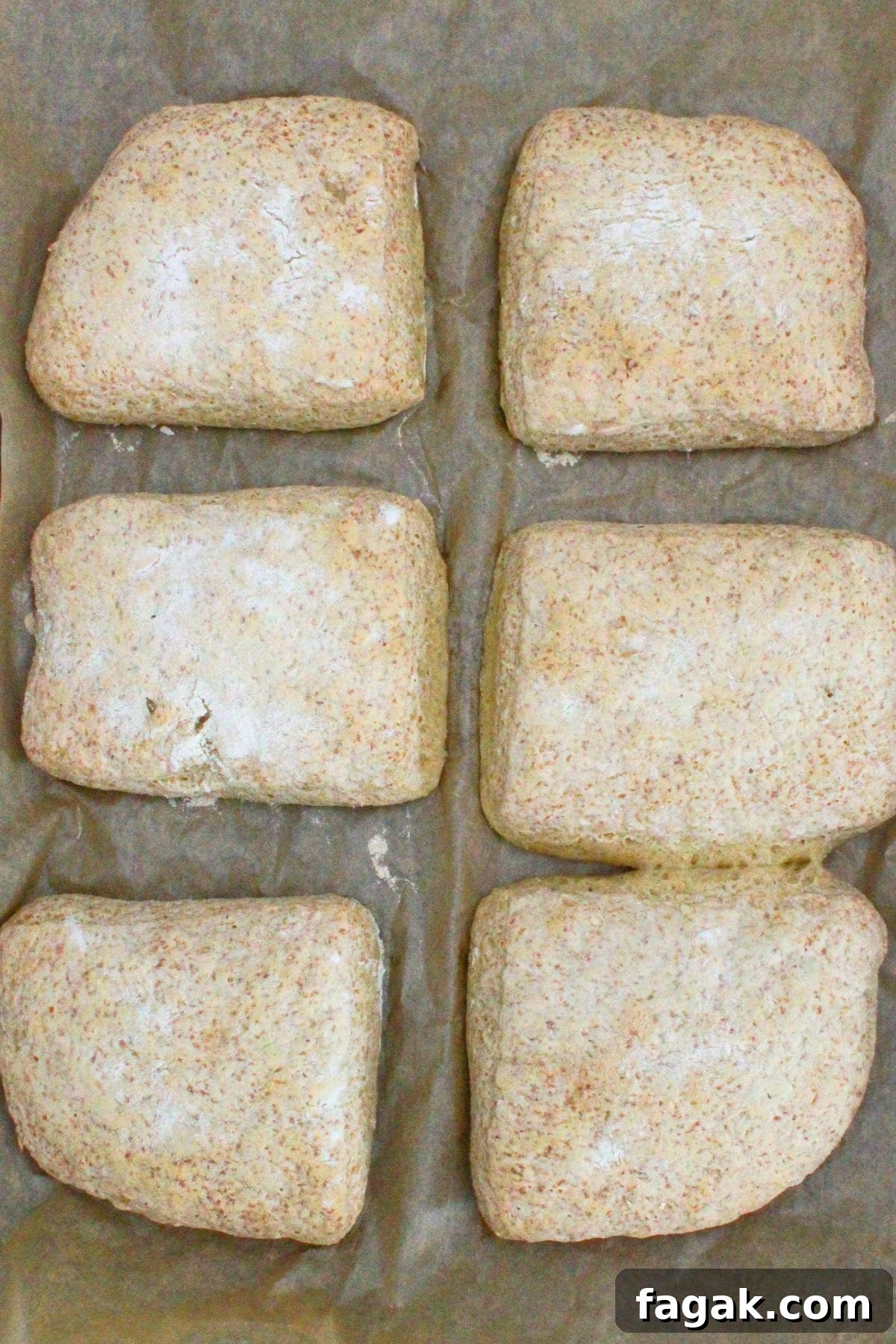
Bake with Steam: About 45 minutes into the rise, place a heavy baking sheet on the middle-lower rack and a small metal tray or skillet on the bottom rack. Preheat the oven to 475°F. When ready, add five ice cubes to the bottom tray to create steam, place the sheet pan with rolls on the middle rack, immediately reduce temperature to 425°F and bake for 10 minutes with steam. Do not open the oven door during this time.
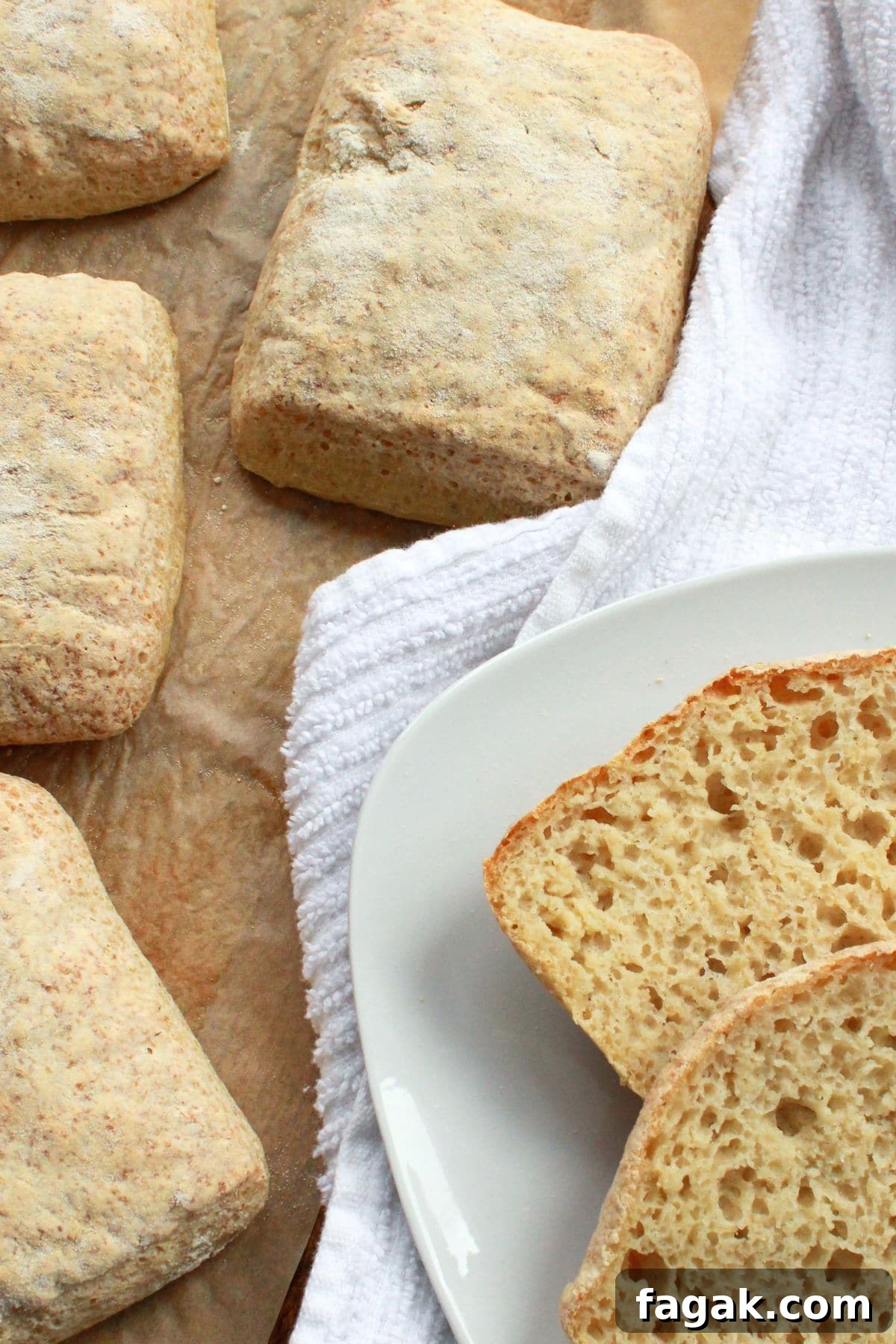
Finish Baking & Cool: After 10 minutes, remove the bottom tray to release steam and continue baking for 15 more minutes until golden brown. Remove the buns from the oven and cool on a wire rack to room temperature before slicing.
Tips:
- No Stand Mixer? Knead by hand — it takes a bit longer but works well.
- Storage: Best the day of baking; store in an airtight container at room temperature up to 3 days. Reheat briefly to soften before serving.
- Freezing: Freeze cooled rolls for up to 2 weeks; thaw and reheat when needed.
- Why Steam? Steam during the first minutes of baking keeps the crust from drying out while it browns, producing a crisp exterior.
- Flour Selection: Using specific flours with lower starch content helps prevent a gummy or dense crumb common with some commercial gluten-free blends.
- Rustic Look: Ciabatta should have a rustic, artisan appearance — perfectly even shapes aren’t necessary.
Other Gluten-Free Bread Recipes to Try:
-
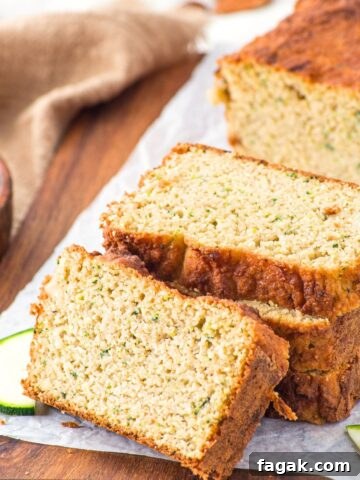
Almond Flour Zucchini Bread (Gluten-Free, Dairy-Free)
-
Easy Almond Flour Cornbread (Gluten-Free, Dairy-Free)
-
Almond Flour Pizza Crust (Gluten-Free, Dairy-Free)
-
Fluffy Almond Flour Biscuits (Gluten-Free, Dairy-Free)
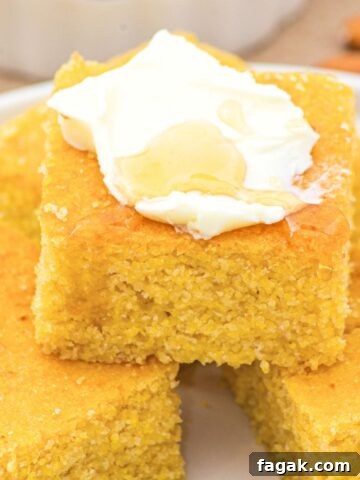
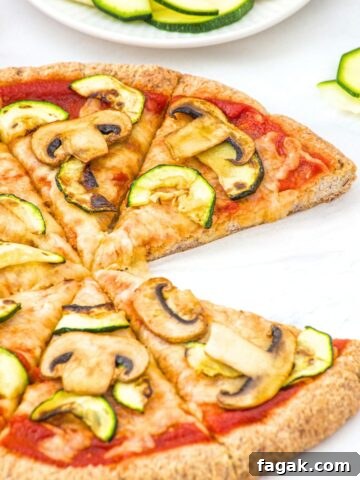
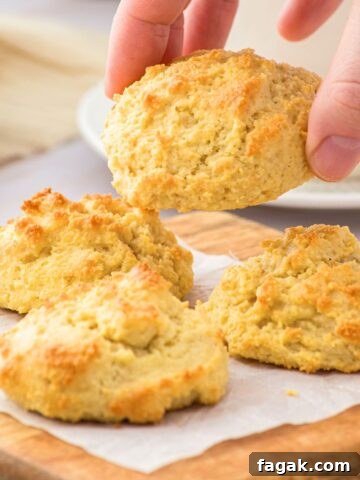
P.S. If you make this recipe, please consider leaving a star rating or a review. Your feedback is appreciated.
Gluten-Free Ciabatta (Dairy-Free)
5 from 1 review
- Author: Felicia Lim
- Total Time: 1 hour 55 minutes
- Yield: 6 buns
- Diet: Gluten Free
Description
This gluten-free ciabatta provides an airy, open crumb and crisp crust like traditional ciabatta, without gluten or dairy. Toast, sandwich or serve with soup — it freezes well for later enjoyment.
Ingredients
- 3 tablespoons whole psyllium husks
- 1 1/2 cups lukewarm water (105–115°F)
- 1 cup millet flour, plus more for dusting
- 1 cup tapioca starch
- 1/2 cup sorghum flour
- 1 tablespoon granulated sugar
- 2 1/2 teaspoons instant dry yeast
- 1 teaspoon salt
- 2 tablespoons olive oil
- 1 1/2 teaspoons apple cider vinegar
Instructions
- Prepare Psyllium Gel: Stir whole psyllium husks into lukewarm water and set aside to form a gel.
- Whisk Dry Ingredients: Combine millet flour, tapioca starch, sorghum flour, sugar, instant yeast and salt in a bowl and whisk to combine.
- Add Wet Ingredients: Make a well in the dry ingredients and add psyllium gel, olive oil and apple cider vinegar. Knead with a dough hook or by hand until the dough pulls away from the sides and is slightly sticky but smooth.
- Shape Dough: Turn the dough onto a lightly floured surface, knead briefly and shape into a ball.
- Roll and Cut: Roll into a rectangle about 10″ x 8″ and 1/2″ thick. Cut into six rectangles and place on parchment, spaced 1″ apart. Dust generously with millet flour.
- Let Rise: Cover and let rise for about 1 hour until doubled.
- Preheat with Tray: After 45 minutes of rising, place a heavy baking sheet on a middle-lower rack and a small tray or skillet on the bottom rack. Preheat oven to 475°F.
- Bake with Steam: When dough has doubled and oven is preheated, add five ice cubes to the bottom tray, place rolls on the middle rack, immediately reduce oven to 425°F and bake 10 minutes with steam. Do not open the door.
- Finish Baking: Remove the bottom tray to release steam and bake 15 more minutes until golden.
- Cool: Cool on a wire rack to room temperature before slicing and serving.
Notes
Psyllium Husk: Whole husks create the best gel; if using psyllium powder, reduce the quantity (about 1 1/2 tablespoons powder).
Water: Use warm water (105–115°F) to help activate the yeast.
Flour Options: Millet is recommended as the main flour. Tapioca can be swapped with arrowroot, and sorghum can be substituted with brown rice or buckwheat if needed.
Yeast: Instant dry yeast is convenient because it can be mixed with dry ingredients without proofing.
Vinegar & Oil: Apple cider vinegar adds flavor and supports a good rise; olive oil adds richness but any neutral oil will work.
- Prep Time: 30 mins
- Rising Time: 1 hour
- Cook Time: 25 mins
- Category: Bread
- Method: Baking
- Cuisine: Italian