
Erin’s Recipe Rundown

Texture: Soft and chewy, yet sturdy enough to hold their shape.
Taste: Classic sugar-and-spice gingerbread flavor.
Ease: Simple to make and delightful to decorate with kids or guests.
Top Tips: A long chill time is essential — it helps the cookies keep their shape while baking and improves texture.
Recommended GF Flour: Use a reliable gluten-free measure-for-measure flour that contains a binder (xanthan gum works well).
Would I make these again? Absolutely — gingerbread cookies are a holiday favorite and decorating them can become a fun family tradition.
xoxo erin

This post was originally published in November 2021 and updated with new photos and instructions in October 2024.
‘Tis the season for baking! If you’re planning gingerbread this holiday, this gluten-free adaptation of my grandmother’s gingerbread is a dependable choice. A few small adjustments make these cookies soft, chewy, and perfect for decorating.
Featured Comment
From Rachel: “This is the best gluten-free gingerbread recipe I’ve found — super easy and great texture.”
45 more comments
Table of Contents
- Erin’s Recipe Rundown
- Ingredients You’ll Need
- How to Make Gluten-Free Gingerbread Cookies
- Make-Ahead/Storage/Freezing
- Dairy-Free / Egg-Free Options
- Chilling the Dough
- About Almond Flour
- Keeping Gluten-Free Cookies Together
- Making a Gingerbread House
- More Gluten-Free Christmas Cookies
- Soft, Gluten-Free Gingerbread Cookies Recipe
Ingredients You’ll Need
Notes on key ingredients — scroll to the recipe card below for exact measurements.
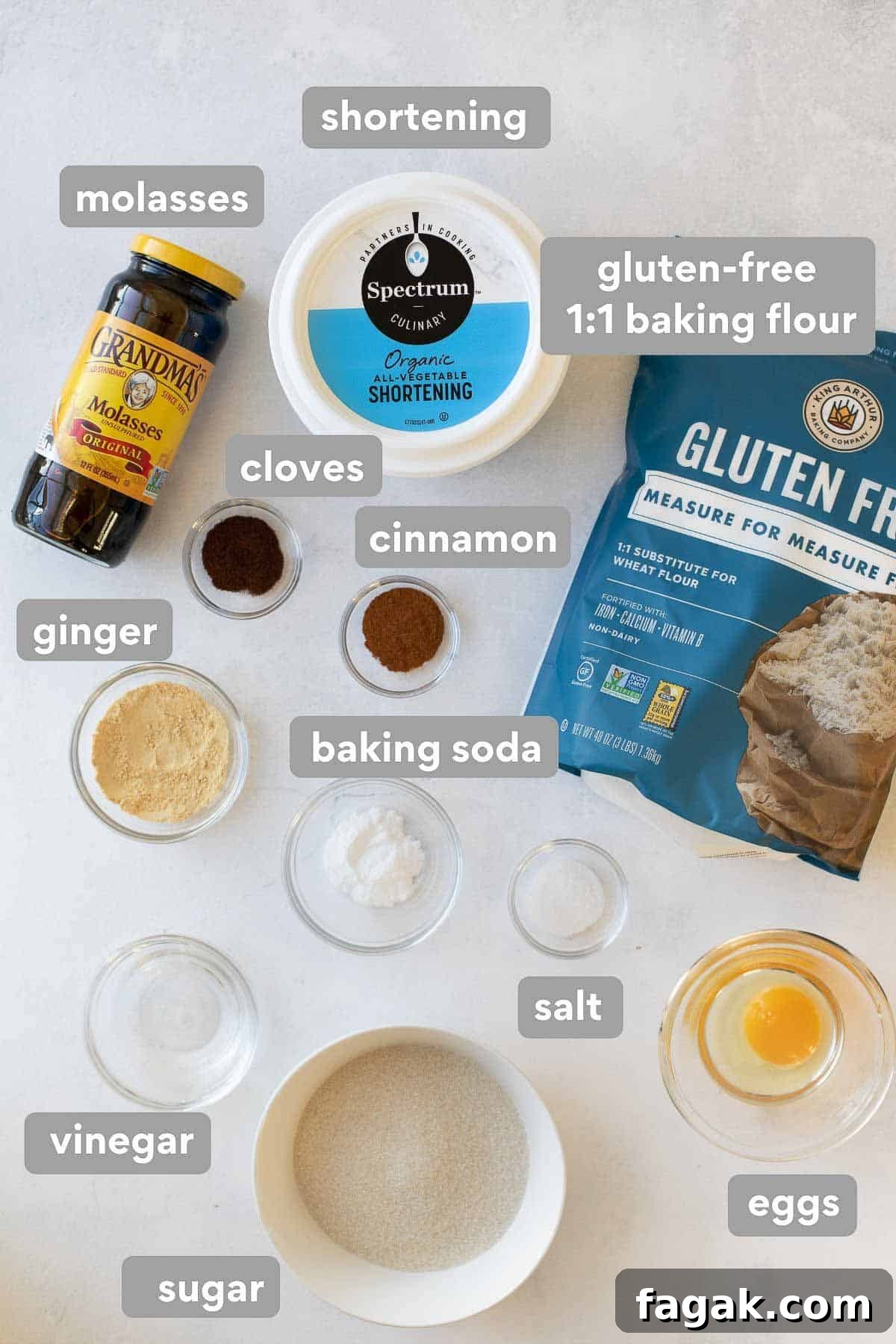
- Gluten-free flour: Use a reliable gluten-free measure-for-measure blend that includes a binder like xanthan gum for best texture and structure.
- Shortening: These cookies use shortening instead of butter to achieve a soft, chewy consistency and help the shapes hold during baking. Butter-flavored shortening is an option if you prefer that taste.
- Molasses: Adds color, depth of flavor, and tenderness — essential for authentic gingerbread flavor.
- Vinegar: A secret trick from my grandmother. It reacts with the baking soda to lighten the dough without affecting flavor.
- Ground ginger: A full tablespoon gives these cookies their signature warming spice; cinnamon and cloves round out the taste.
How to Make Gluten-Free Gingerbread Cookies
Overview of the process — full step-by-step instructions are in the recipe card below.

- Dry mix: Whisk flour, baking soda, salt, ginger, cinnamon, and cloves in a medium bowl.
- Cream: In a mixer with a paddle attachment (or with a hand mixer), beat shortening and sugar on medium speed for about 2 minutes.
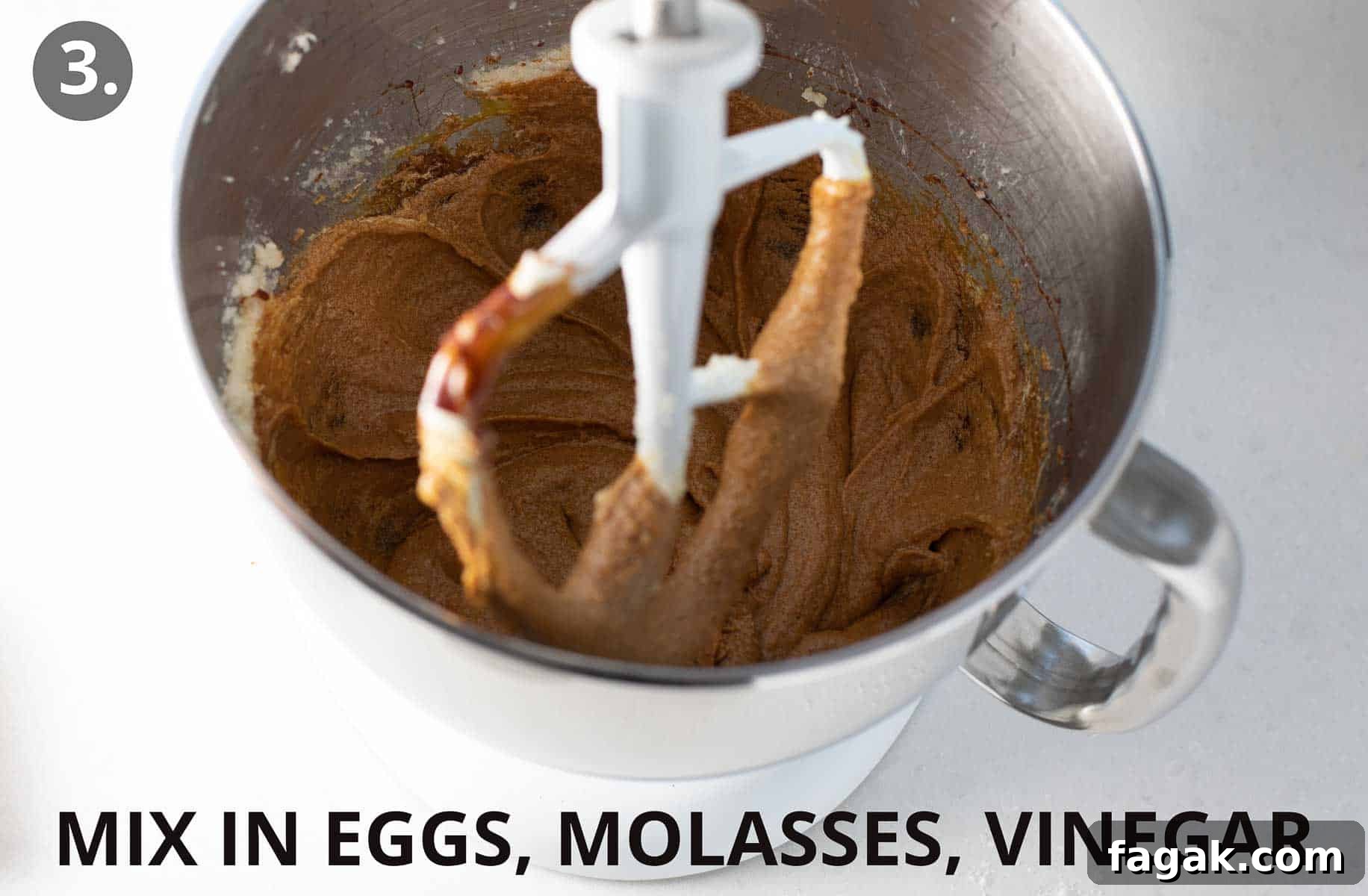
- Add wet: Stir in the egg, molasses, and vinegar, scraping the bowl as needed.
- Combine: With the mixer on low, gradually add the dry ingredients until fully incorporated.
- Roll and chill: Divide the dough, roll each half 1/4-inch thick between sheets of parchment (or plastic wrap), then stack and chill 4 hours or overnight. For a quicker option, freeze 15–20 minutes until firm.
- Cut and bake: Work one sheet at a time, remove the top parchment, cut shapes, and transfer to prepared baking sheets. If dough becomes sticky, chill briefly. Bake at 375°F (190°C) for 9–10 minutes until set. Cool on the sheet 3 minutes, then transfer to a rack to cool completely.
- Work quickly when cutting: Peel the top parchment away, cut shapes, and use a thin metal spatula to transfer cookies. Re-roll scraps to maximize yield.
- Serving: Decorate with royal icing, buttercream, or a simple frosting once cooled.
Best Icing for Gluten-Free Gingerbread Cookies
These cookies are great for decorating. A simple, easy-to-pipe icing follows:
- 1 1/2 cups powdered sugar
- 1 tablespoon milk
- 1 tablespoon corn syrup
- 1/2 teaspoon vanilla extract
- Pinch of salt
Whisk until smooth. Add a few drops of milk if needed to reach a spreadable but pipeable consistency.
Make-Ahead / Storage / Freezing
Make-ahead: Dough can be wrapped tightly and refrigerated up to 3 days. Freeze wrapped dough in an airtight container for up to 1 month; thaw overnight in the fridge.
Store: Keep baked cookies in an airtight container at room temperature for up to 1 week.
Freeze: Freeze undecorated cookies between sheets of parchment in an airtight container for up to 3 months. Thaw at room temperature before decorating.
Dairy-Free and Egg-Free Options
Because this recipe uses shortening rather than butter, it is effectively dairy-free. The recipe calls for a single egg, so you can substitute an egg replacer if needed; Bob’s Red Mill Egg Replacer or similar products work well.
Do I Have to Chill the Dough?
Yes. Chilling is important to prevent spreading and to give the gluten-free flour time to hydrate, yielding better texture and shape retention during baking.
Can I Use Almond Flour?
Almond flour behaves very differently from a measure-for-measure gluten-free blend and will not produce the same results in this recipe.
How Do You Make Gluten-Free Cookies Stay Together?
Choose a quality 1:1 gluten-free measure-for-measure flour that contains a binder like xanthan gum. That binder helps the dough hold together and maintain structure while baking.
Can I Use These Cookies for a Gingerbread House?
Yes. Roll the dough evenly to 1/4 inch and be sure to chill fully. Bake toward the longer end of the time so pieces are set but not overbaked to avoid brittleness. Assemble with royal icing.

More Gluten-Free Christmas Cookies
- Gluten-Free Gingerbread House
- Gluten-Free Gingerbread Bars
- Gluten-Free Ginger Snaps
- Gluten-Free Pizzelle
- Gluten-Free Molasses Cookies
- Gluten-Free Spritz Cookies
- Gluten-Free Slice and Bake Cookies

Soft, Gluten-Free Gingerbread Cookies
Comments
Ingredients
Dry Ingredients:
- 3 1/2 cups (525g) gluten-free measure-for-measure flour
- 1 1/2 teaspoons baking soda
- 1/2 teaspoon kosher salt
- 3 teaspoons ground ginger
- 1 teaspoon ground cinnamon
- 1 teaspoon ground cloves
Other:
- 1 cup (195g) shortening
- 1 cup (200g) granulated sugar
- 1 large egg
- 2 tablespoons white vinegar
- 1 cup (240ml) molasses
Instructions
- In a medium bowl, whisk together the flour, baking soda, salt, ground ginger, cinnamon, and cloves.
- In a stand mixer (or with a hand mixer), cream the shortening and sugar on medium speed for about 2 minutes.
- Add the egg, vinegar, and molasses. Scrape the bowl, then with the mixer on low, slowly add the dry ingredients and mix until combined.
- Turn the dough onto a work surface and divide in half. Working with one portion at a time, roll or press the dough 1/4 inch thick between two sheets of parchment paper.
- Keep the dough sandwiched in parchment and stack on a baking sheet. Refrigerate for 4 hours or overnight, or freeze 15–20 minutes until firm.
- Preheat the oven to 375°F (190°C). Line baking sheets with parchment or silicone liners.
- Remove one dough sheet, peel off the top parchment, cut shapes, and transfer to the baking sheet with a thin metal spatula. Chill briefly if the dough becomes sticky. Repeat with remaining dough and scraps.
- Bake 9–10 minutes until set. Cool 3 minutes on the sheet, then transfer to a wire rack to cool completely. Decorate as desired.
Notes
Tip: Chilling the dough prevents spreading and allows the gluten-free flour to hydrate for the best texture.
Make-ahead: Refrigerate wrapped dough up to 3 days or freeze up to 1 month. Thaw in the refrigerator overnight.
To store: Baked cookies keep in an airtight container at room temperature for up to 1 week.
To freeze: Freeze undecorated cookies in layers separated by parchment for up to 3 months; thaw before decorating.
Ingredient notes: Use a 1:1 gluten-free measure-for-measure flour with xanthan gum for best results. Shortening gives a soft, chewy texture. Vinegar helps lighten the dough without affecting flavor.
Gingerbread Cookie Icing:
- 1 1/2 cups powdered sugar
- 1 tablespoon milk
- 1 tablespoon corn syrup
- 1/2 teaspoon vanilla
- Pinch of salt
Whisk until smooth; add a few drops of milk if needed to reach a pipeable consistency.