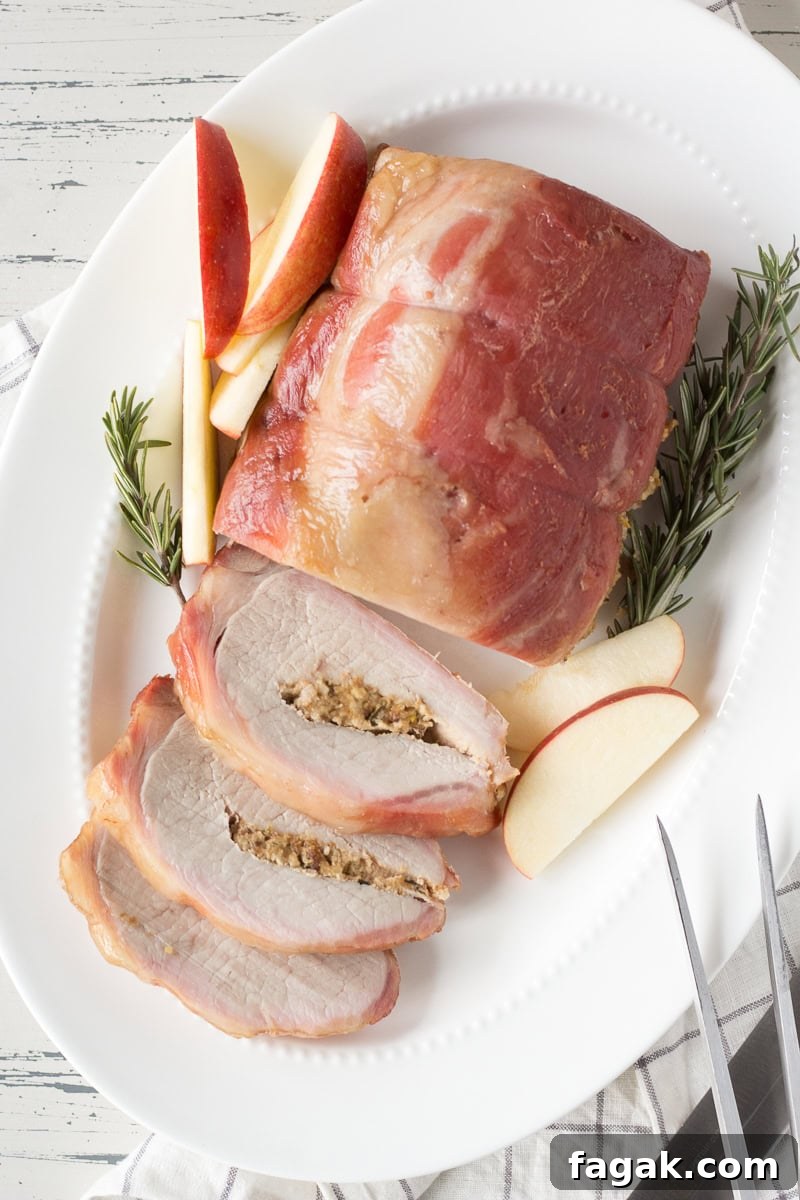
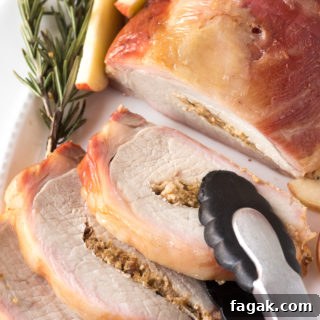
This Smoked Pork Loin Roast is juicy, tender, and both paleo and Whole30 compliant. Brined in an apple juice blend and stuffed with apples, apricots, pine nuts, and rosemary, it’s smoked low and slow on a wood pellet grill. Serve immediately and enjoy leftovers the next day.
As an Amazon Associate, I earn from qualifying purchases.
Finding great Whole30-friendly smoked recipes can be a challenge because many glazes and rubs contain added sugars. This smoked pork loin roast delivers authentic smoky flavor without sweeteners, thanks to a simple apple-juice brine and a savory fruit-and-nut stuffing.
The brine keeps the lean pork loin juicy, while the apple, apricot, pine nut, and rosemary stuffing adds texture and bright flavor. The method takes some prep, but the result is worth the effort.
HOW TO MAKE SMOKED PORK LOIN ROAST
STEP 1: BRINE THE PORK ROAST


Choose a container that fits the pork and brine without too much extra space. Combine apple juice and water, then add the kosher salt and whisk until dissolved. Add a dried bay leaf and a sprig of fresh rosemary, then submerge the pork loin. Cover and refrigerate for 8 to 10 hours.


STEP 2: FIRE UP THE GRILL & PREP THE STUFFING
Remove the pork from the brine, discard the brine, and set the roast on a cutting board to come toward room temperature while you prepare the stuffing.
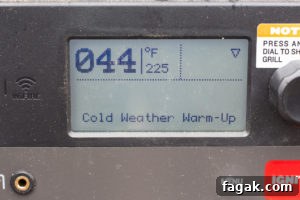
Preheat your pellet grill or smoker to 225°F (about 107°C).
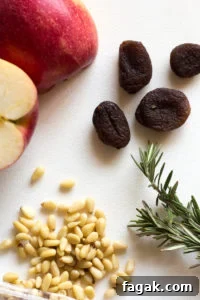
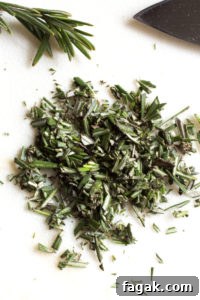

Measure 1/4 cup pine nuts into a mini food processor. Chop 6 dried apricots and about 1 1/2 teaspoons fresh rosemary, add 1/2 teaspoon kosher salt, and pulse a few times to combine. Peel and chop 1 apple, then add it and process until the mixture forms a chunky paste — no pieces should be larger than small peas. Scrape down the sides as needed.
STEP 3: PREP THE PORK ROAST
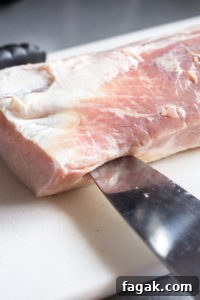
On the shorter end of the roast, estimate the center and make an incision about 1/2″ from that end on one long side. Cut straight down about 1–2 inches for the first pass, then lift the flap and work the knife deeper to form a pocket, stopping well short of cutting through the opposite side.
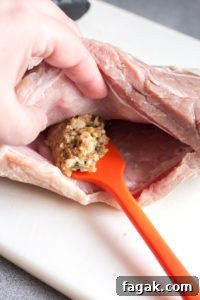
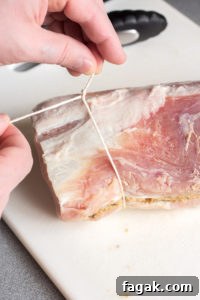
Spoon the apple-apricot mixture into the pocket, pushing it back as far as possible. Use kitchen twine to tie three pieces around the roast — one in the middle and two evenly spaced toward the ends — to hold the stuffing and shape while cooking.
STEP 4: SMOKE THE PORK ROAST
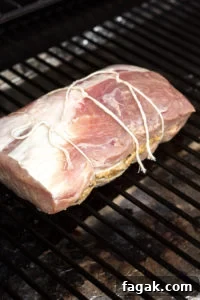
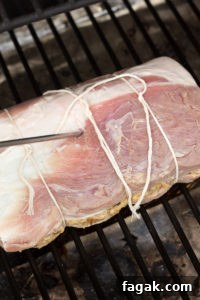
Place the roast on the smoker. Insert a probe into the thickest part and set it for 145°F (63°C). If you don’t have a probe, check after 90 minutes, then every 30 minutes until the internal temperature reads 145°F.
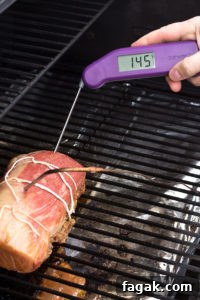

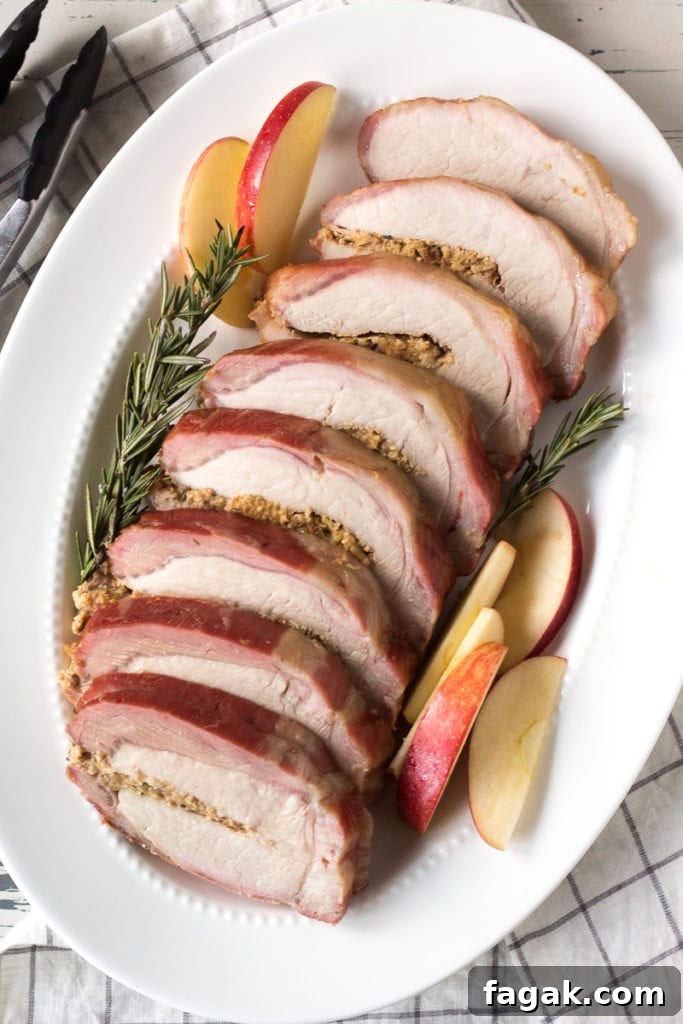
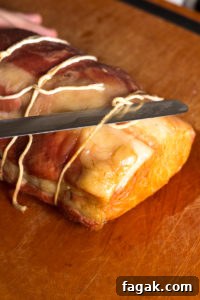
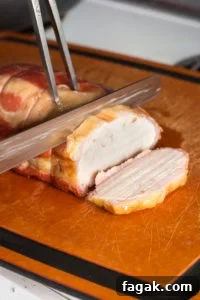
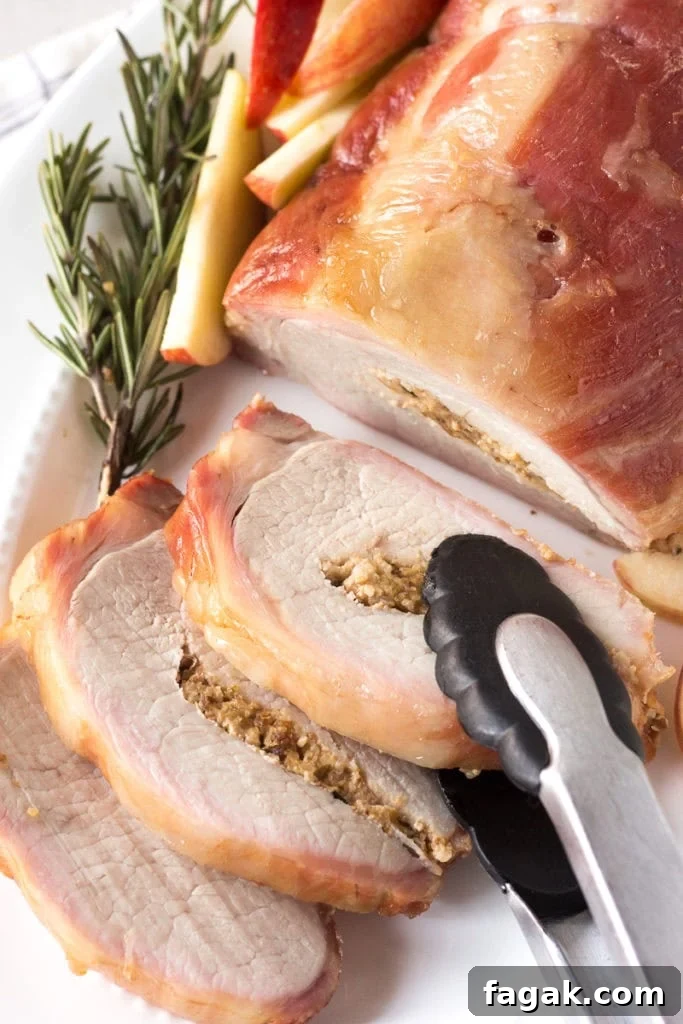
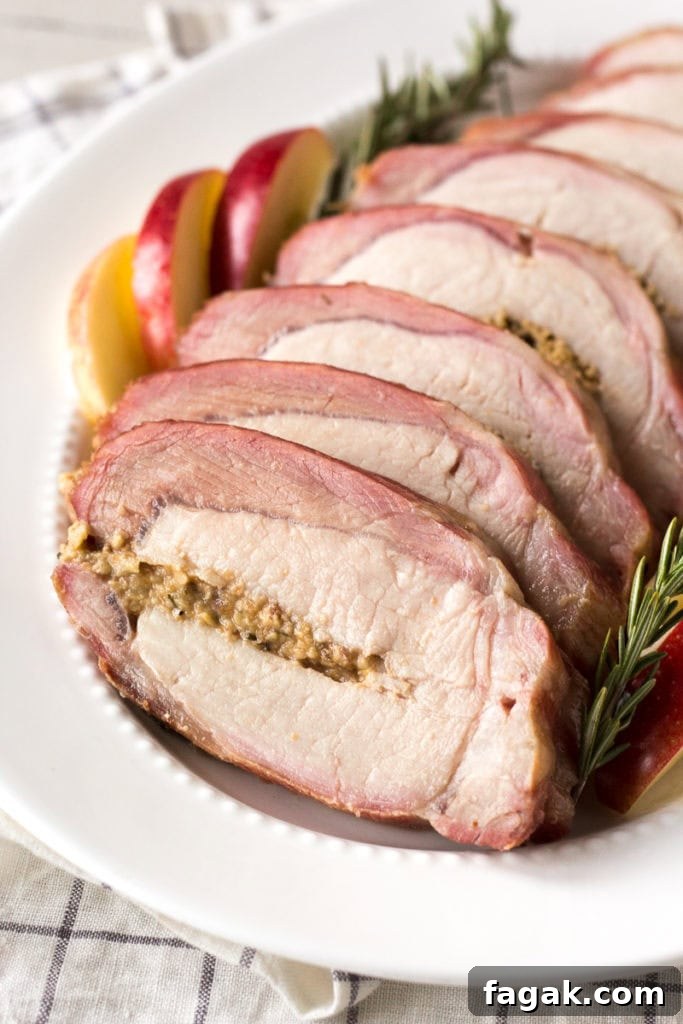
When the roast reaches 145°F, remove it from the smoker and tent loosely with foil. Let it rest 10–15 minutes to allow juices to redistribute, then cut the twine and slice into roughly 1/2″ portions. The stuffing may fall out slightly — spoon it back on the slices or serve it alongside.
COMMON QUESTIONS
What’s the difference between a pork loin and pork tenderloin?
Pork loin is a larger, thicker cut from the back of the pig, often sold as a roast. Tenderloin is a much smaller, narrower muscle that runs along the backbone. They cook differently and are not interchangeable for this stuffed roast method.
Can I use pork tenderloin in this recipe?
No — tenderloin is too small and lean for this stuffing-and-pocket technique.
Do I need to trim the fat before brining?
Trimming is optional. If you leave fat on, place the roast fat-side up on the smoker so it renders over the meat.
How do you keep pork moist when smoking?
Brining is the best safeguard for lean cuts like pork loin. It helps retain moisture during the long, low-temperature smoke.
What internal temperature should a pork loin reach?
Cook to an internal temperature of 145°F (63°C) for safe, juicy pork.
COOKING TIPS
- Bring the roast closer to room temperature while you prepare the stuffing. Very cold meat can cook unevenly on a grill or smoker.
- Use a sharp, non-serrated knife to slice the finished roast for clean cuts that won’t tear the meat.
- Measure twine easily by wrapping it around the short end of the roast three times before cutting; that length usually provides enough with a little extra to tie.
RECIPE VARIATIONS
- Add extra seasoning to the exterior — a brush of avocado oil with chopped rosemary and salt or a little whole-fruit apricot spread (Whole30-compliant if it contains no added sugar) pairs nicely.
- Any apple works for the stuffing. Gala, Honeycrisp, or Granny Smith will each give slightly different sweetness and tartness — choose based on your preference.
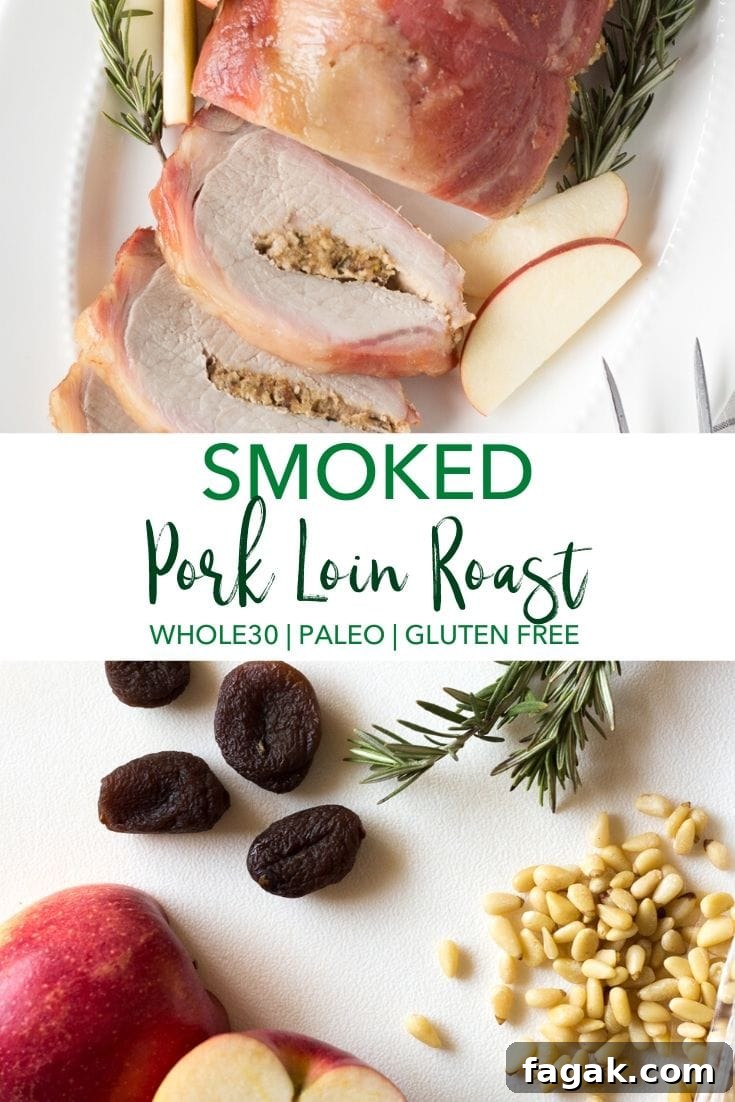
PIN THIS SMOKED PORK LOIN ROAST FOR LATER!
If you make this Smoked Pork Loin Roast, please rate it and share how it turned out in the comments.
YOU CAN ALSO FOLLOW ME ON FACEBOOK, INSTAGRAM AND PINTEREST TO SEE MORE WHOLE30, PALEO, AND GLUTEN-FREE RECIPES.
Smoked Pork Loin Roast (Whole30, Paleo)
Equipment
-
A large container to fit the pork and brine
-
Liquid measuring cup
-
Measuring cup
-
Cutting board
-
Mini food processor
-
Vegetable peeler
-
Large sharp knife
-
Spoon or spatula
-
Kitchen twine
-
Scissors
-
Temperature probe or meat thermometer
-
Carving fork
Ingredients
- 2 pound pork loin roast
For the brine:
- 5 cups apple juice Whole30 compliant
- 3 cups water
- 1 cup Diamond Crystal kosher salt
- 1 dried bay leaf
- 1 sprig fresh rosemary
For the stuffing
- ¼ cup pine nuts
- 6 dried apricots
- 1.5 teaspoons chopped fresh rosemary
- ½ tsp kosher salt
- ¼ apple
Instructions
-
Select a container that fits the roast. Combine apple juice, water, and kosher salt; whisk until dissolved. Add bay leaf and rosemary, submerge the pork, cover, and refrigerate for 8–10 hours.
-
Remove the pork from the brine, discard the liquid, and place the roast on a cutting board while you prepare the stuffing.
-
Preheat your smoker or pellet grill to 225°F.
-
Make the stuffing by pulsing pine nuts, apricots, rosemary, and salt in a mini food processor, then add the apple and process to a chunky paste no larger than small peas.
-
Create a pocket in the roast by cutting into one long side, then work the knife to form a deep cavity without cutting through. Fill the pocket with the apple mixture and tie the roast with three pieces of kitchen twine.
-
Place the roast on the smoker and insert a probe to 145°F. If you don’t have a probe, check after 90 minutes and then every 30 minutes until the internal temperature reaches 145°F.
-
When done, remove the roast, tent with foil, and rest 10–15 minutes. Cut the twine and slice into 1/2″ portions. Serve immediately.
Notes
• Use a sharp, non-serrated knife for clean slices.
• To measure kitchen twine quickly, wrap it around the short end of the roast three times before cutting.